
Ophthalmology Google Ads & PPC Management for Eye Care Clinics
Patients searching for LASIK surgeons, cataract specialists, or eye exams are using Google right now. If your practice is not showing up at the top of those results, a competitor is getting that click, that call, and that consultation. Our ophthalmology Google Ads and PPC management services are built specifically for eye specialists seeking immediate, measurable patient growth. We run paid search campaigns that put your eye care practice in front of high-intent patients at the exact moment they are ready to book.





Why Google Ads for Ophthalmology Requires Specialist Management
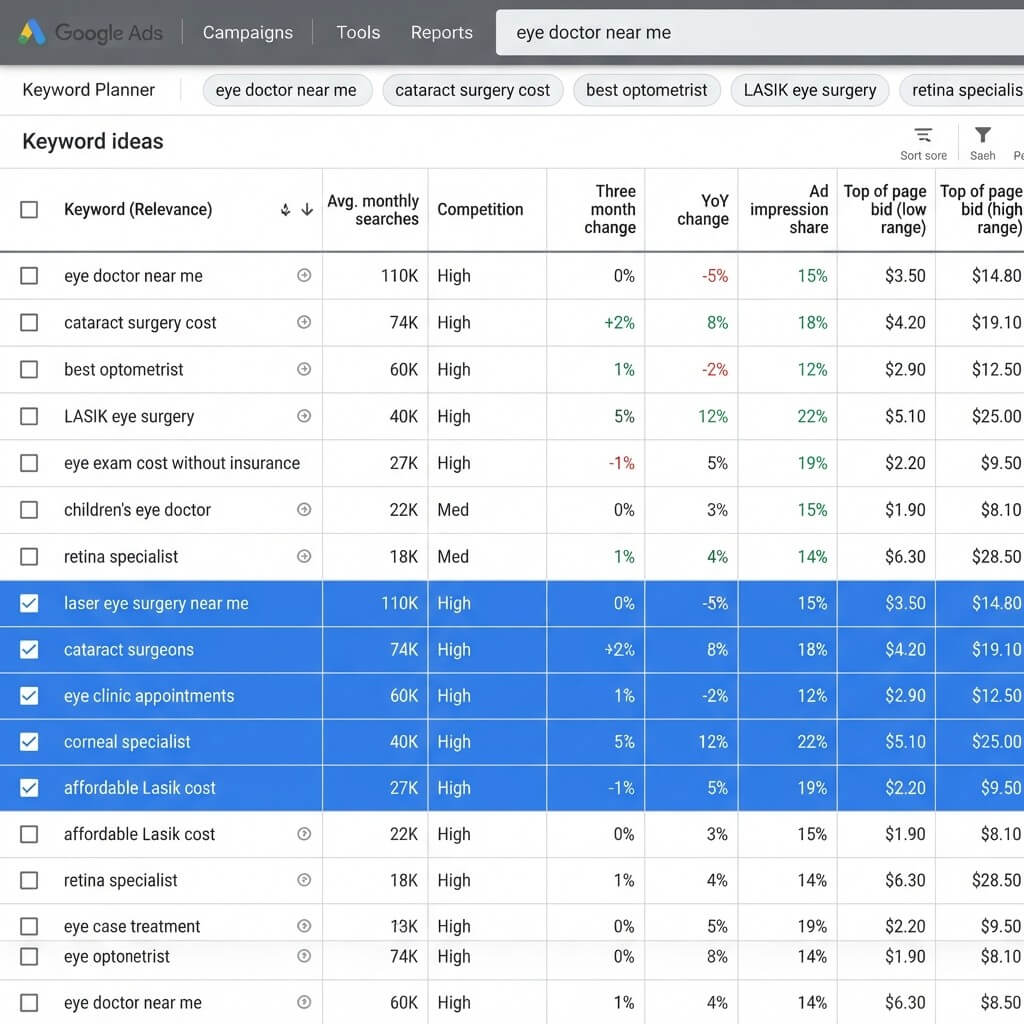
Eye care PPC is not a set-it-and-forget-it channel. Bidding on broad terms without a focused ophthalmology PPC strategy means burning through budget on clicks that never convert.
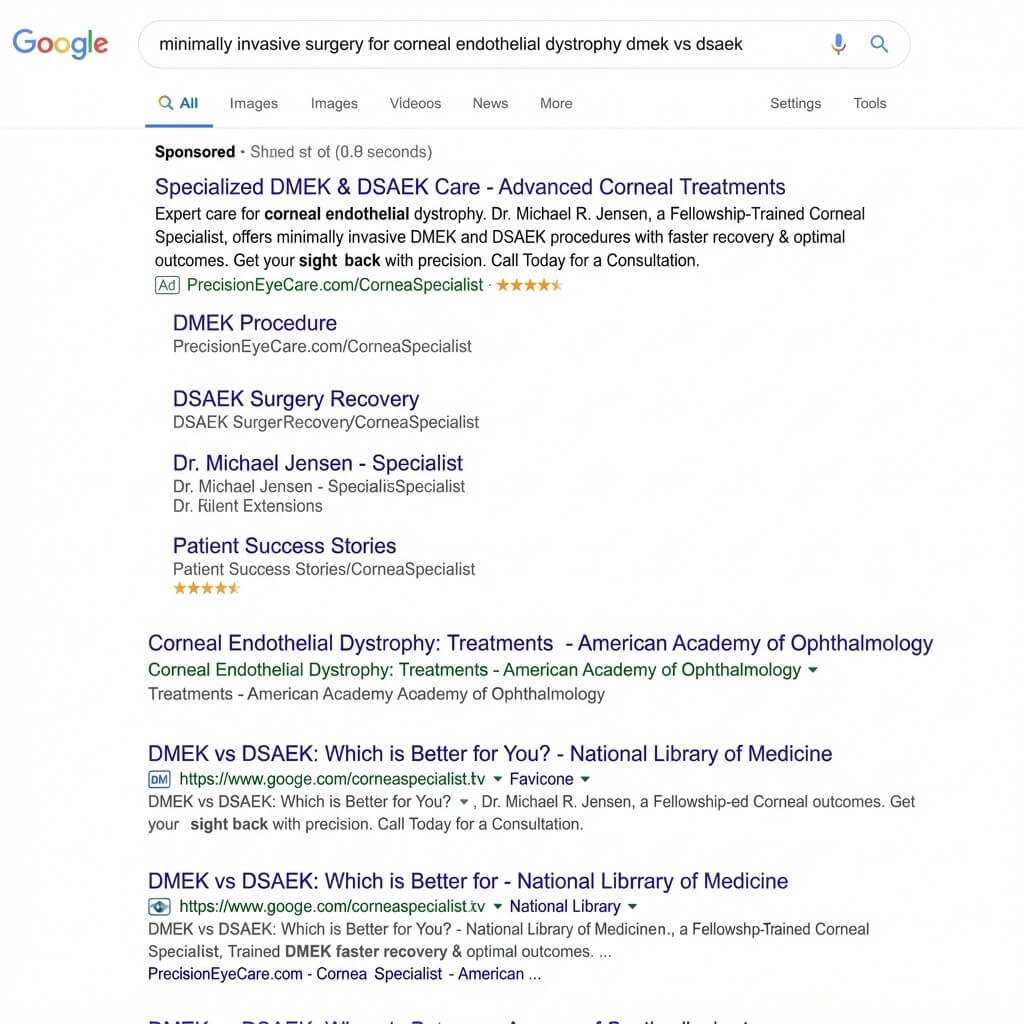
Our medical advertising agency team has managed paid search for eye care practices across competitive U.S. markets. We understand the keyword economics of LASIK advertising, the compliance considerations that apply to healthcare PPC campaigns, and the landing page requirements that turn ad clicks into booked consultations.
What sets ophthalmology Google Ads apart from general medical PPC:
- High cost-per-click keywords require tighter quality score management and ad relevance
- Procedure-based searches like "LASIK cost" or "cataract surgery near me" demand dedicated ad groups
- Geographic targeting needs to reflect a realistic patient travel radius, not just city-level targeting
- HIPAA-compliant conversion tracking is non-negotiable for healthcare paid search
- Ad scheduling, device bidding, and audience layering all affect cost-per-acquisition significantly
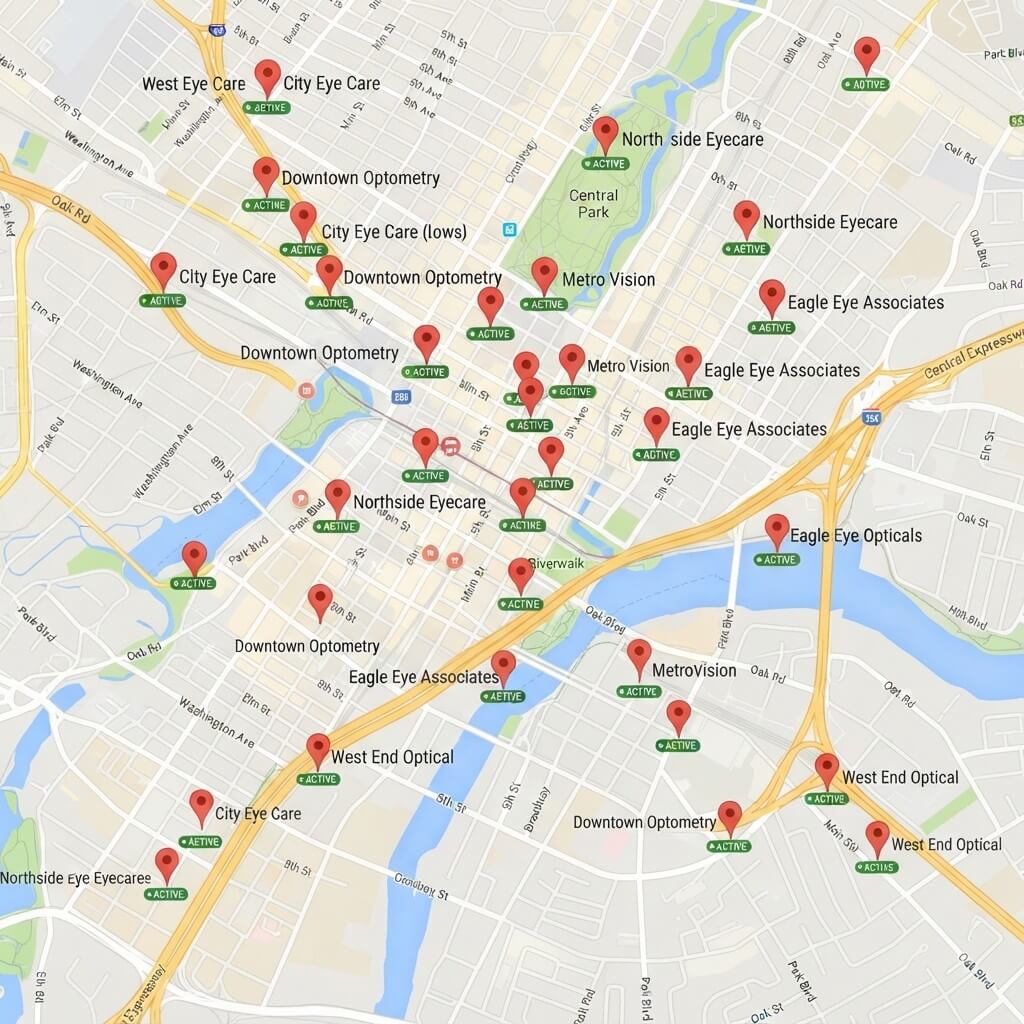
Your Competitors Are Running Ads Right Now. You Should Too!
Google Ads and SEO Work Together, Not Against Each Other
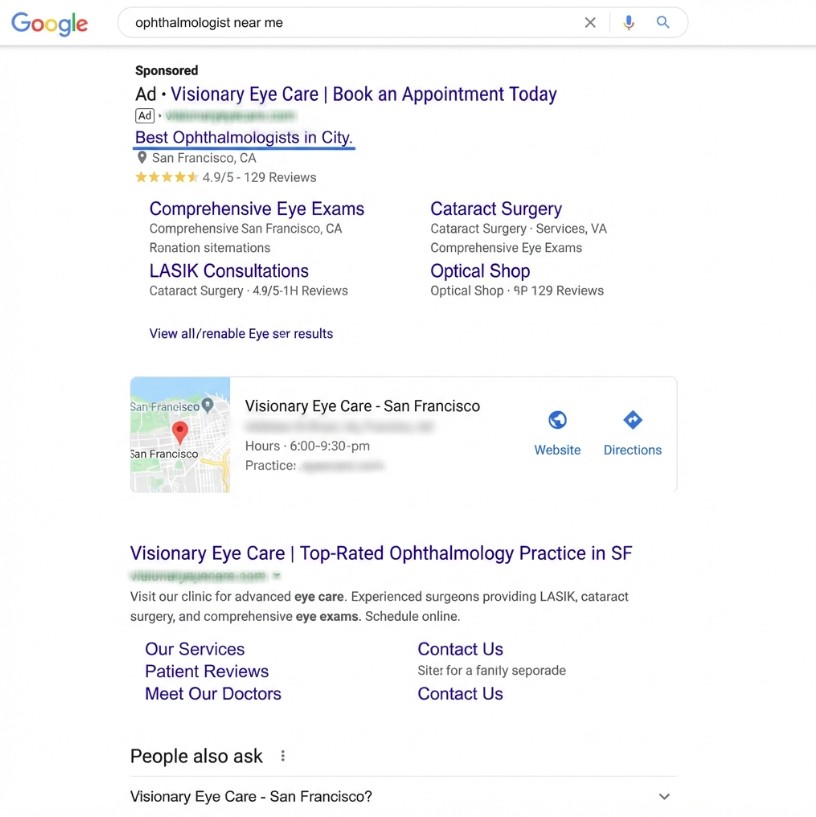
Google Ads captures immediate high-intent traffic while your medical SEO services build long-term organic authority. The practices growing fastest in competitive ophthalmology markets are running both simultaneously.
PPC data also directly improves SEO strategy. The keywords converting in your ad campaigns tell you exactly what patients are searching for before they book. That intelligence feeds into your content strategy, your service page optimization, and your local SEO targeting. When paid and organic are managed with the same strategic lens, every marketing dollar works harder.
How Ophthalmology Google Ads Turns Search Intent Into Booked Consultations
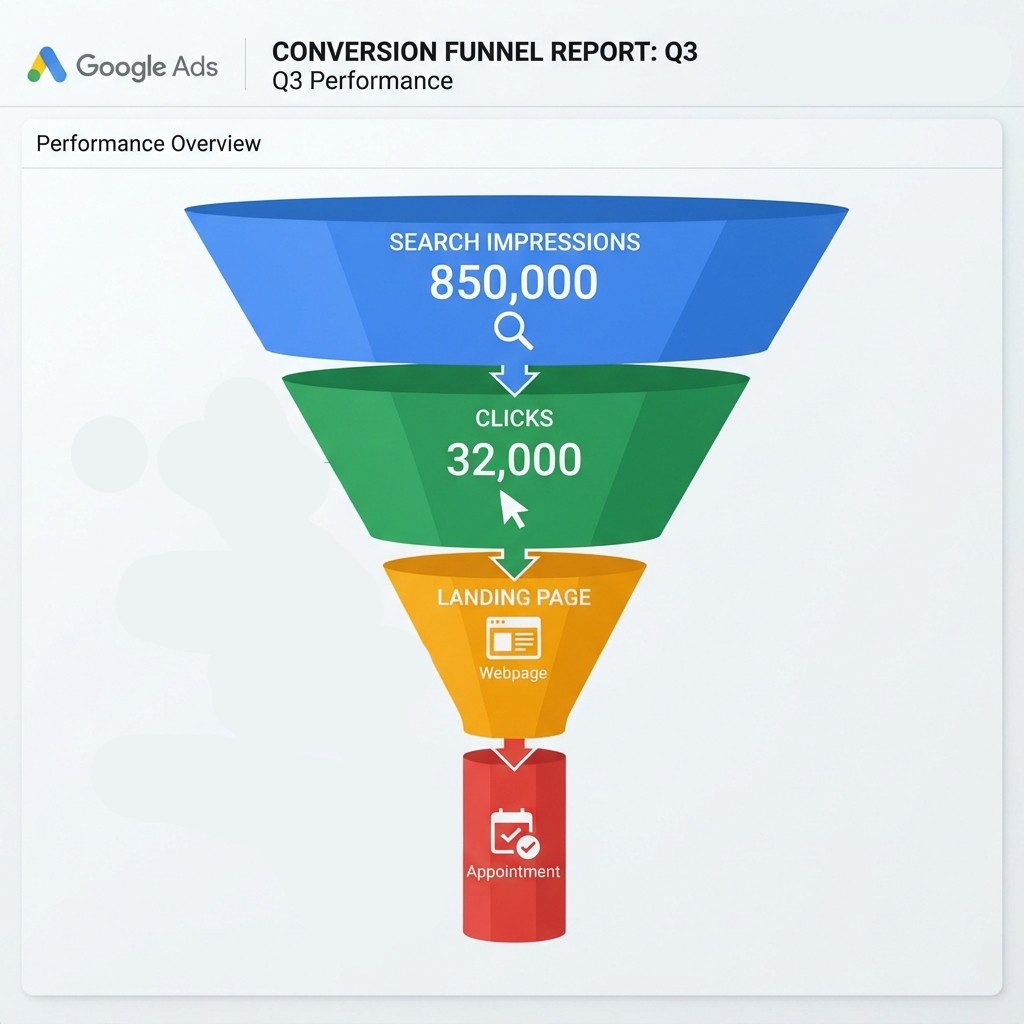
Search Intent
A patient types “LASIK surgeon near me” or “cataract surgery cost” into Google. Your ad appears at the top of the results page because your campaign is built around exactly that search.
Ad Click
A relevant, well-written ad drives the click. The patient lands on a procedure-specific page that matches exactly what they searched for. No generic homepage drops, no disconnected messaging.
Page Conversion
A fast, credible landing page answers their questions, builds trust, and presents a clear next step. Surgeon credentials, procedure details, and a frictionless consultation request form do the work.
Consultation Booked
The patient submits a request or calls directly from the page. Your campaign tracking records the conversion, and your team receives a qualified lead ready for follow-up.
What Our Ophthalmology Google Ads & PPC Management Includes
Campaign Strategy
Full campaign architecture built around your highest-value procedures. Separate ad groups for LASIK, cataract surgery, glaucoma, dry eye, and other priority services. Every campaign is structured for relevance, quality score, and conversion from day one.
Keyword Research
Deep keyword research across procedure-specific, symptom-based, and comparative search terms. Negative keyword lists are built to eliminate irrelevant clicks and protect your budget from day one of launch.
Local Services Ads (LSA)
Google’s Local Services Ads place your practice above standard search results with a Google-verified badge and a direct call button. We set up and manage your LSA profile alongside your main campaigns so your practice captures maximum visibility at local searches.
Ad Copy Creation and Testing
Compelling, compliance-aware ad copy written specifically for eye care audiences. Ongoing A/B testing of headlines, descriptions, and extensions to improve click-through rates and lower cost-per-click over time.
Landing Page Strategy
High-converting landing pages built around each procedure and campaign. Ad-to-page message match is one of the biggest drivers of conversion rate in ophthalmology PPC, and we treat it as a core deliverable, not an afterthought.
Conversion Tracking
Proper tracking setup for calls, form submissions, and consultation requests without violating patient data regulations. Accurate data is the foundation of every optimization decision we make.
Bid Management and Budget Optimization
Ongoing bid adjustments based on device, location, time of day, and audience performance. Your budget is continuously reallocated toward what is driving the lowest cost-per-consultation.
Remarketing Campaigns
Targeted remarketing to patients who visited your site but did not convert. Eye care decisions take time. Staying visible to warm audiences between their first visit and their booking decision is one of the highest-ROI plays in ophthalmology PPC.
Performance Reporting
Clear monthly reporting on impressions, clicks, cost-per-click, conversion rate, and cost-per-lead. No vanity metrics, no confusing dashboards. Just the numbers that reflect real patient acquisition performance.
MedClicx Ophthalmology PPC vs Generic PPC Agencies
Choosing the wrong PPC partner in a high-cost specialty like ophthalmology does not just waste budget. It hands consultations directly to your competitors. Here is how our ophthalmology marketing approach compares to generic agencies.
Generic PPC Agency Approach
- Limited knowledge of how ophthalmology patients make decisions
- Broad keyword targeting that attracts unqualified clicks and wastes budget
- Often unaware of HIPAA and healthcare advertising requirements
- Reporting centered on vanity metrics with no patient acquisition context
- Generic homepage traffic drops with no procedure-specific message match
- Flat bidding with no understanding of which procedures drive actual revenue
- Paid search managed in isolation from the rest of your digital presence
- Set-and-forget management with no real optimization
V/S
MedClicx Ophthalmology PPC Approach
- Deep understanding of eye care patient search behavior and intent
- Campaigns built around LASIK, cataract, and high-margin keywords
- HIPAA-compliant tracking and conversion setup on every account
- ROI reporting focused on consultation requests and cost-per-acquired patient
- Landing pages built and optimized specifically for eye care conversion
- Bid strategy informed by procedure margin and patient lifetime value
- Campaigns integrated with your medical web design and broader growth
- Ongoing optimization using real consultation data and best practices
Request Your Free Ophthalmology PPC Strategy Session
Scalable PPC Management for Growing Eye Care Groups
Single-location practices and multi-location ophthalmology groups need different paid search structures. A solo LASIK center needs hyper-local targeting and tight budget control. A regional eye care group needs campaign architecture that supports multiple service areas without cannibalizing performance between locations. Our medical website design and PPC teams work together to ensure that landing pages, site speed, and campaign structure are all aligned for maximum conversion across every location you operate.
FAQs About Ophthalmology Google Ads
How much should an ophthalmology practice spend on Google Ads?
Budget varies significantly by market, competition level, and target procedures. LASIK and cataract surgery keywords are among the most expensive in healthcare PPC. Most practices need a minimum monthly ad spend of $2,000 to $5,000 to generate meaningful volume, with competitive metro markets requiring more. We recommend a budget based on your specific market and goals during the strategy session.
How quickly can Google Ads generate new patient leads for my practice?
Paid search can generate consultation requests within days of a campaign launching. Unlike SEO, there is no buildup period. That said, campaigns improve significantly over the first 30 to 60 days as data accumulates and optimization begins. The first month is always the most informative.
Do you build the landing pages or just run the ads?
We handle both. Landing page strategy and development are included in our ophthalmology PPC management service because ad performance is directly tied to page quality. Sending traffic to a generic homepage is one of the most common reasons eye care PPC campaigns underperform.
Is Google Ads HIPAA-compliant for healthcare practices?
It can be, with the right setup. Standard Google Ads conversion tracking is not HIPAA-compliant out of the box. We use compliant tracking configurations and avoid retargeting setups that could expose protected health information. This is a non-negotiable part of how we set up every healthcare PPC account.
Can you manage Google Ads for multiple ophthalmology locations?
Yes. Multi-location campaign management is something we do exceptionally well. Each location gets its own targeting, ad copy, and landing page structure while sharing the broader campaign intelligence we gather across the group. This prevents budget waste and location cannibalization.
Should I run Google Ads if I am already investing in SEO?
Yes. SEO and paid search serve different parts of the patient acquisition funnel and different timelines. SEO builds long-term visibility. Google Ads captures patients who are ready to book right now. Running both together consistently outperforms either channel used alone.
Ready to Turn Your Website Into Your Best Patient Acquisition Tool?
Most ophthalmology practices are leaving patients on the table with underperforming or nonexistent paid search campaigns. A properly managed Google Ads strategy pays for itself in booked consultations.