
Best Orthopedic Websites 2026: Design & SEO Tips
-
 James Walker
Table of Contents:
- Best Orthopedic Websites in 2026: What Top Clinics Are Doing Differently
- Best Orthopedic Website Design Examples & Trends in 2026
- What Makes the Best Orthopedic Websites High-Converting?
- SEO Strategy for Orthopedic Websites: How to Rank Higher on Google
- Orthopedic Website Optimization Checklist
- Conclusion
Best Orthopedic Websites in 2026: What Top Clinics Are Doing Differently
Most orthopedic websites look polished at first glance, but very few are actually built to bring in a steady flow of patients. In 2026, having a website is no longer enough. The real difference between high-performing orthopedic practices and those struggling for visibility comes down to how effectively their website converts visitors into appointments.
That’s why the best orthopedic websites in 2026 are designed with a clear focus on three things:
- User experience
- Search visibility
- Patient conversion.
These sites don’t just inform; they guide, reassure, and actively encourage action.
In this guide, we’ll break down real examples of high-performing orthopedic websites and explain what makes them effective from both a design and SEO perspective. You’ll also see the key patterns top clinics are using to improve patient acquisition, along with practical insights you can apply directly to your own practice when thinking about how to promote your medical practice.
Best Orthopedic Website Design Examples & Trends in 2026
The best orthopedic websites in 2026 are not just visually modern; they are built to convert visitors into patients through smart UX, SEO, and trust-driven design. These examples also highlight how leading clinics are using digital strategy to grow medical practice with marketing in a highly competitive healthcare landscape.
1. OrthoCarolina
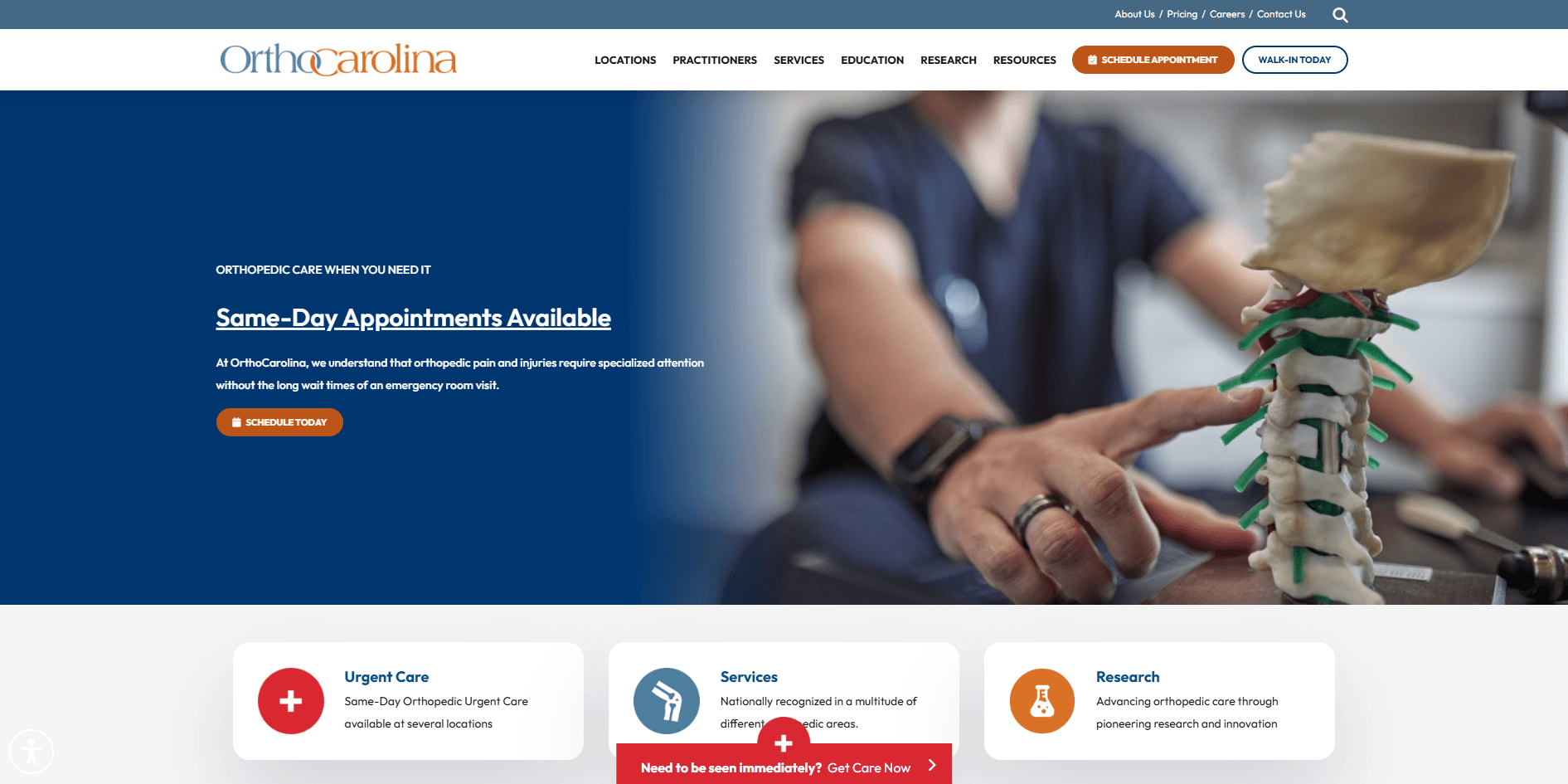
What they do well:
- Strong service-based navigation (spine, knee, shoulder, sports medicine, etc.)
- Clear multi-location structure for easy patient access
- Prominent appointment booking and urgent care pathways
- Clean UX that quickly guides users to the right specialty
Why it works:
OrthoCarolina is designed for speed and clarity in patient decision-making. Instead of overwhelming visitors with medical complexity, the website focuses on helping users quickly find the right orthopedic service and location.
The multi-location structure also strengthens local SEO performance, allowing each clinic and specialty to act as a strong entry point for organic search traffic. Combined with clear appointment pathways, the site effectively reduces friction between search and scheduling.
2. Tennessee Orthopaedic Alliance (TOA)
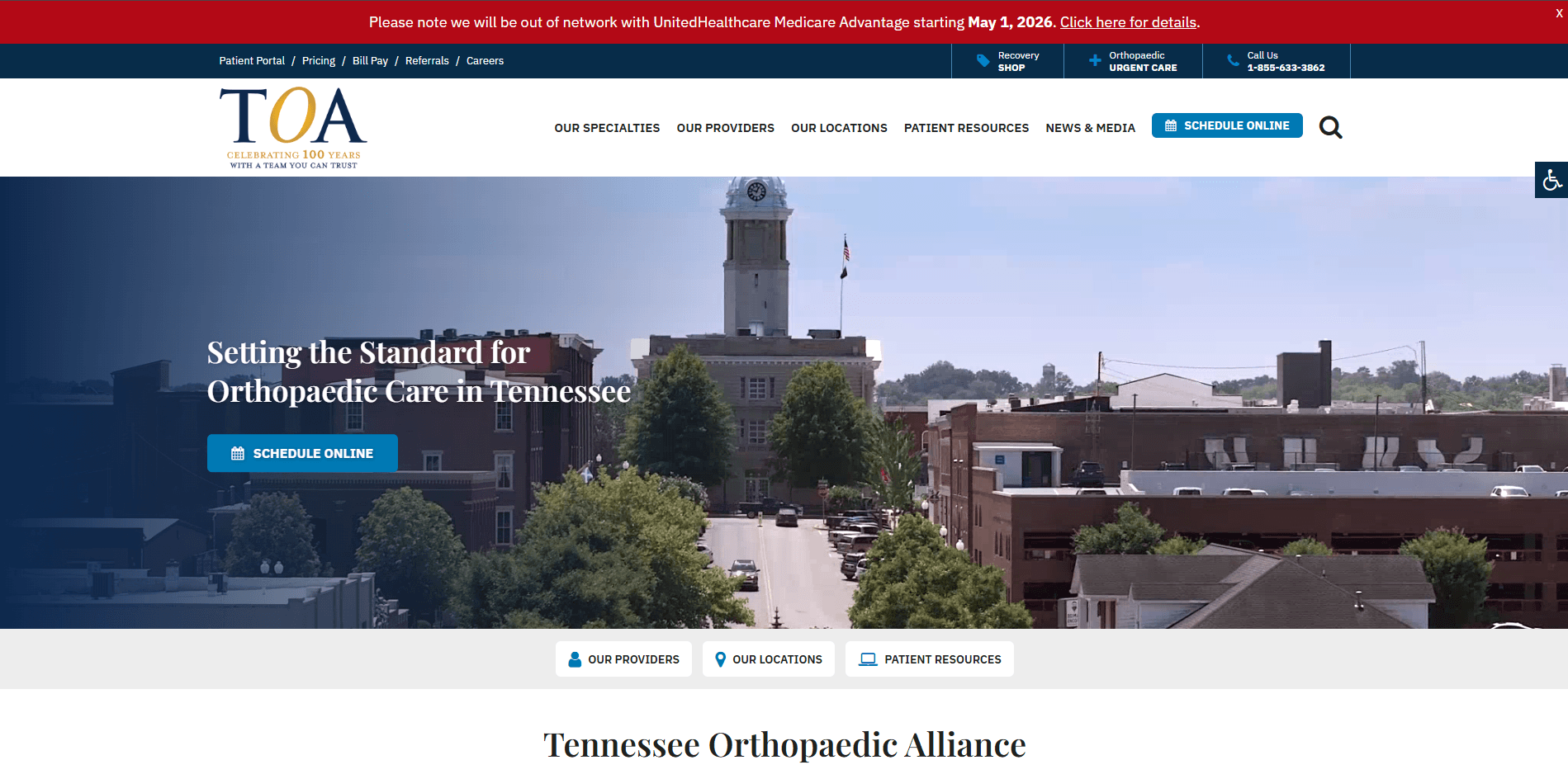
What they do well:
- Strong service + specialty organization (spine, sports medicine, joint replacement, etc.)
- Extensive multi-location structure across Tennessee
- Clear patient resources and education hub
- Easy access to online appointment scheduling and care navigation
- Strong focus on comprehensive musculoskeletal care from diagnosis to recovery
Why it works:
The Tennessee Orthopaedic Alliance is built around a patient education and accessibility model. Instead of overwhelming users with clinical complexity, the website guides patients through every stage of care, from understanding symptoms to finding the right specialist and booking an appointment.
A major strength of TOA is its content-driven structure, where condition-based pages and educational resources help patients make informed decisions before visiting a clinic. This not only builds trust but also improves organic search visibility for condition-related queries.
In addition, TOA’s multi-location SEO strategy ensures patients can quickly find care near them, which is critical for orthopedic practices where urgency and convenience play a major role in conversion.
3. Andrews Sports Medicine
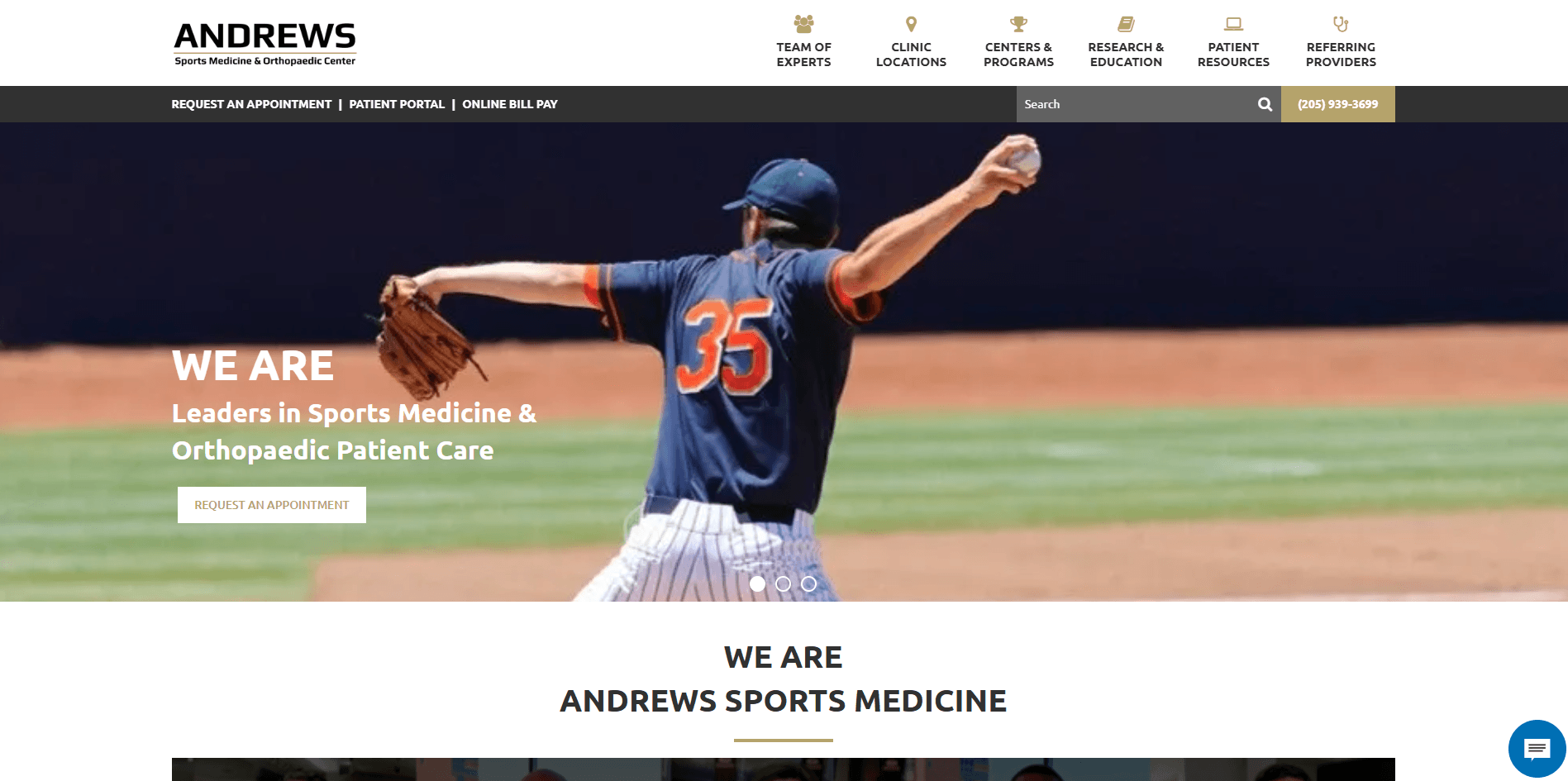
What they do well:
- Strong authority-driven branding in sports medicine and orthopaedic care
- Clear positioning as a leader in elite athletic injury treatment and prevention
- Powerful patient storytelling through real recovery journeys and athlete cases
- Well-structured specialty coverage (knee, shoulder, spine, sports injuries, etc.)
- Strong emphasis on research, education, and advanced treatment innovation
- Clear access points for appointments, locations, and patient services
Why it works:
Andrews Sports Medicine is built on one of the strongest foundations in healthcare marketing: authority and trust at scale. The website does not just present services; it positions the practice as a global leader in sports medicine and orthopedic excellence.
A major strength of the site is its story-driven patient experience strategy. Instead of only listing treatments, it highlights real recovery journeys and athlete outcomes, which helps build emotional credibility and reinforces trust in the physicians.
The platform also performs strongly from a structural standpoint, with clearly defined specialty areas and an emphasis on sports-related injuries, surgical expertise, and rehabilitation pathways.
This makes it easy for high-intent users, especially athletes and active individuals, to quickly identify relevant care.
4. OrthoAtlanta
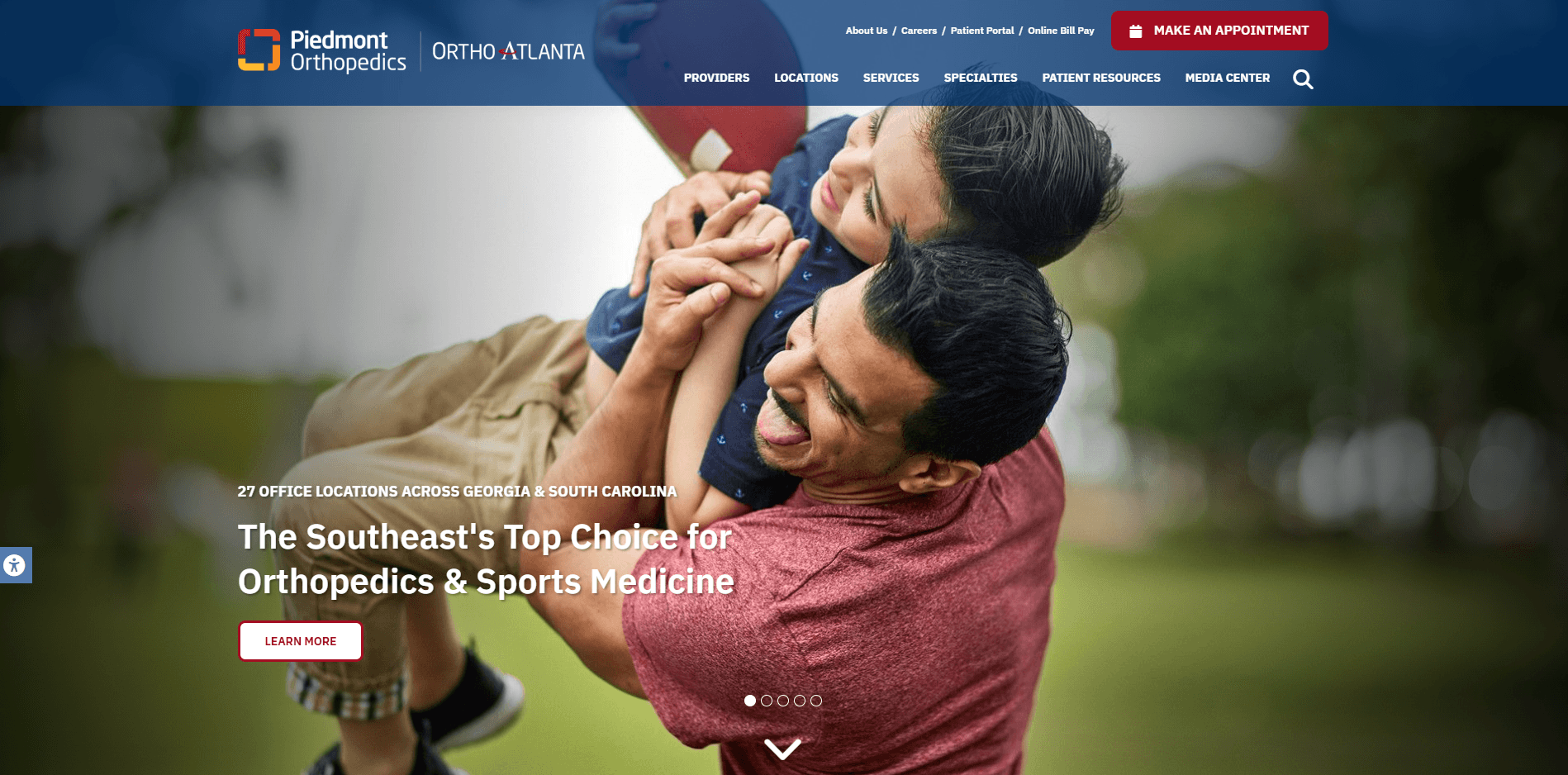
What they do well:
- Strong multi-location structure across Georgia and surrounding regions
- Clear segmentation of orthopedic specialties (knee, spine, sports medicine, etc.)
- Heavy focus on patient accessibility through multiple clinics and care centers
- Integrated services including imaging, physical therapy, and surgical care, under one system
- Strong emphasis on appointment booking and patient navigation tools
- Well-structured service and specialty pages for different conditions
Why it works:
OrthoAtlanta is designed as a high-volume patient acquisition system, not just a medical website. Its biggest strength lies in how it connects multiple locations, specialties, and services into one unified digital ecosystem.
The website makes it easy for patients to quickly find care based on location, injury type, or specialty, which significantly reduces decision friction. This is especially important in orthopedics, where patients often search under urgency and need immediate clarity.
From an SEO perspective, OrthoAtlanta benefits from a highly structured local search strategy, where each location and service category acts as an entry point for organic traffic. Combined with clear calls-to-action and appointment pathways, the site is optimized for conversion rather than just information delivery.
5. Golden State Orthopedics & Spine
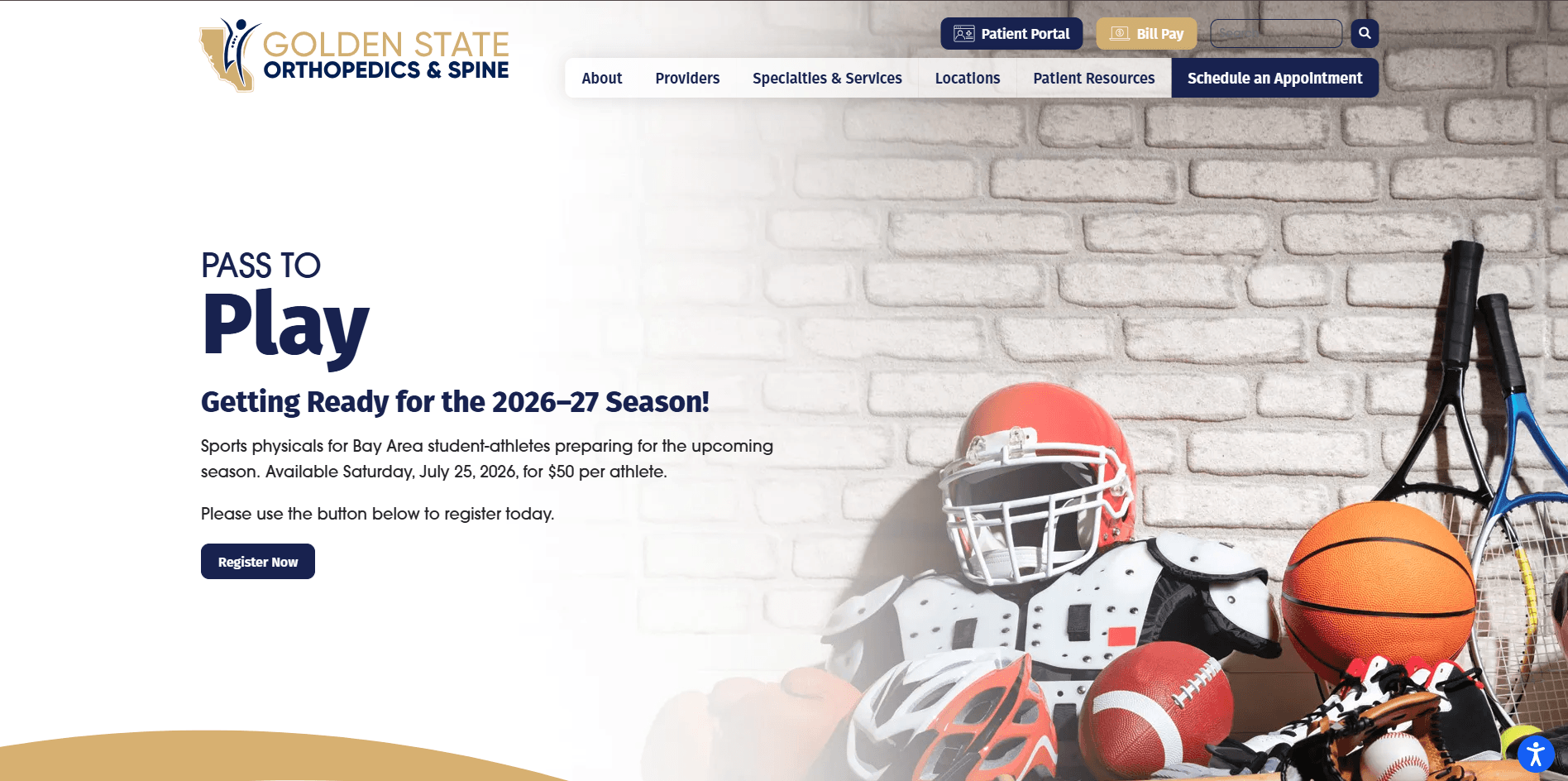
What they do well:
- Strong multi-location healthcare network across California
- Unified access to orthopedics, spine care, imaging, and physical therapy
- Clear patient resources hub (forms, records, insurance, education)
- Dedicated service pages for conditions, treatments, and specialties
- Strong emphasis on patient communication and post-care support
- Educational content including blogs, videos, and recovery resources
- Integrated patient portal for ongoing care management
Why it works:
Golden State Orthopedics & Spine is built as a fully integrated care ecosystem, not just a clinic website. Instead of separating services across different platforms, it centralizes everything, from diagnosis and treatment to rehabilitation and patient education, into one seamless experience.
One of its strongest advantages is the patient-first structure, where users can easily access forms, medical records, appointment information, and educational materials without navigating multiple systems. This significantly improves usability, especially for patients managing ongoing treatment or recovery.
The website also strengthens engagement through its content and education strategy, offering blogs, videos, and condition-based resources that help patients better understand their care journey. This not only builds trust but also improves organic visibility for condition-related searches.
6. Orthopedic Centers of Colorado
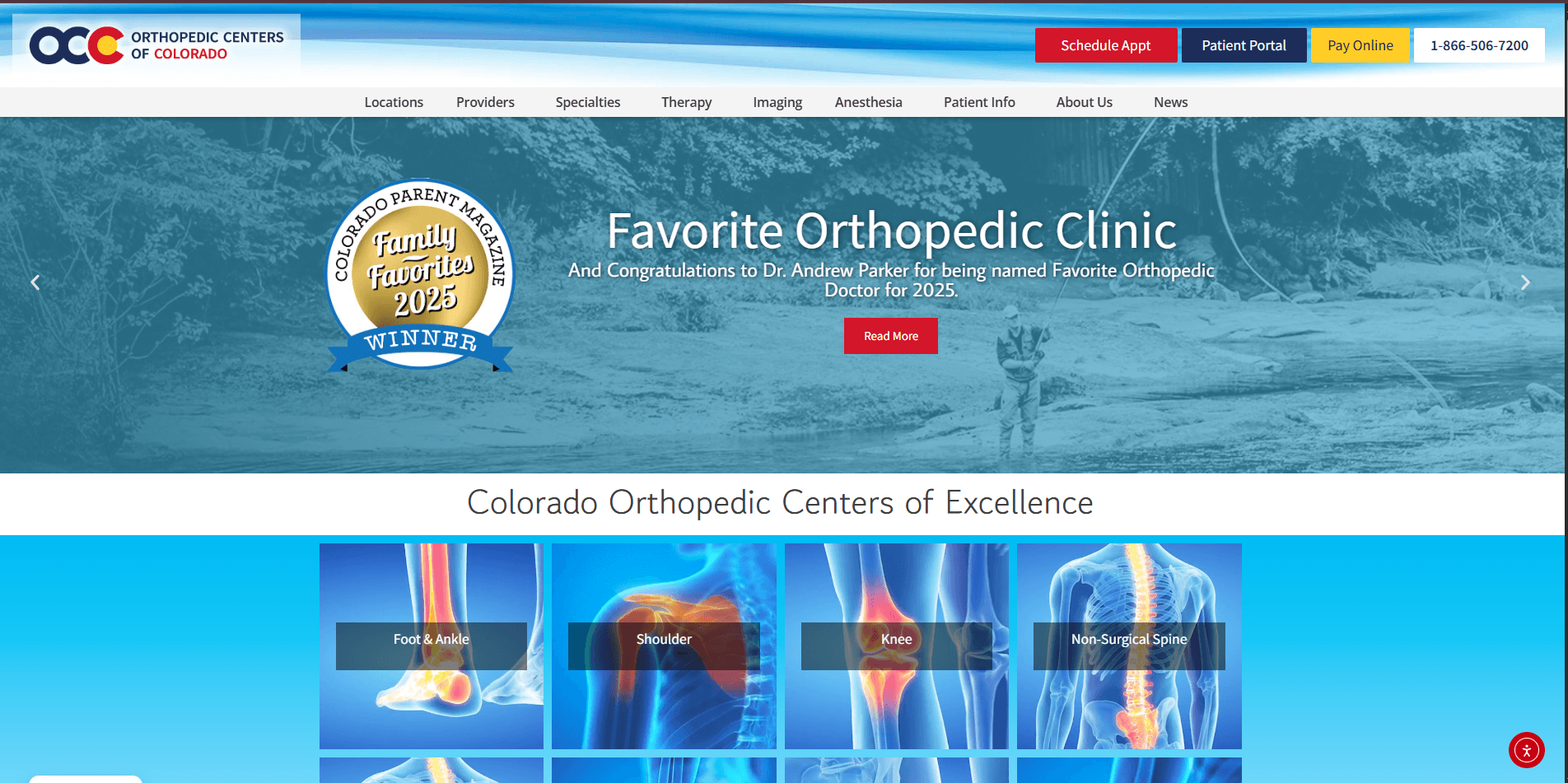
What they do well:
- Strong authority positioning with awards, recognitions, and physician excellence
- Extremely detailed multi-service structure (knee, spine, shoulder, hand, sports medicine, etc.)
- Integrated ecosystem including physical therapy, imaging, occupational therapy, and sports performance
- Heavy emphasis on patient testimonials and real recovery experiences
- Strong focus on patient-centered messaging and accessibility
- Well-organized location-based structure across multiple clinics
- Clear access to patient resources, forms, insurance, and portal systems
- Active educational content and orthopedic health updates
Why it works:
Orthopedic Centers of Colorado is built as a full-spectrum orthopedic care system, not just a clinic website. Its biggest strength lies in how it integrates every stage of the patient journey, from diagnosis and imaging to surgery, rehabilitation, and long-term recovery, within a single connected platform.
The website also builds strong trust and credibility signals through physician recognition, awards, and patient testimonials, which play a major role in healthcare decision-making. This helps reassure patients that they are choosing an established and highly experienced orthopedic provider.
From a usability standpoint, the site is structured to support high patient volume while maintaining clarity, with clearly segmented specialties and easy access to care options across multiple locations. This improves both patient experience and local search visibility.
What Makes the Best Orthopedic Websites High-Converting?
The best orthopedic websites in 2026 don’t just attract traffic; they are built to turn visitors into booked appointments. Across leading practices, a clear pattern emerges: high-performing sites are designed around patient behavior, not just aesthetics.
1. User-Friendly Orthopedic Website Navigation
Patients visiting an orthopedic website are often in pain or urgency. The best sites make it extremely easy to find the right service, specialist, or location within seconds. Clear menus, structured service categories, and minimal clutter help reduce decision fatigue and improve engagement.
2. Mobile-Friendly Orthopedic Website Design
Most patients search for orthopedic care on mobile devices. High-converting websites are fully responsive, ensuring fast loading, easy reading, and simple booking flows on smaller screens. A poor mobile experience directly leads to lost appointments.
3. Fast-Loading Healthcare Websites (Speed Optimization)
Speed plays a major role in both SEO and conversions. Leading orthopedic websites are optimized to load quickly, even with heavy content like doctor profiles, images, and service pages. Faster load times reduce bounce rates and keep patients engaged.
4. SEO-Optimized Orthopedic Service Pages
Top-performing websites structure their services around what patients actually search for, such as knee pain treatment, spine surgery, or sports injuries. These dedicated pages improve visibility on Google and bring in high-intent traffic that is more likely to convert.
5. High-Converting Calls-to-Action (CTAs)
Strong orthopedic websites guide users toward action at every step. Clear CTAs like “Book Appointment,” “Find a Specialist,” or “Schedule Consultation” are placed strategically throughout the site to reduce friction and increase conversions.
6. Online Appointment Scheduling for Orthopedic Clinics
Modern patients expect instant access to care. Websites that allow online appointment booking significantly improve conversion rates by eliminating phone-call dependency and reducing delays in scheduling.
7. Doctor Profile Pages That Build Patient Trust
Physician pages are one of the most visited sections on orthopedic websites. High-converting sites include detailed doctor bios, specialties, experience, and credentials to build trust and help patients feel confident in their choice.
8. Patient Reviews & Testimonials for Orthopedic Websites
Social proof is a key decision driver in healthcare. Real patient testimonials and success stories help reduce anxiety and reinforce credibility, making it easier for new patients to take action.
9. Location Pages for Local Orthopedic SEO
For multi-location practices, dedicated location pages are essential. They improve local search rankings and help patients quickly find nearby clinics, which is critical for conversion in orthopedic care.
10. Orthopedic Blog Content for SEO & Patient Education
Educational content helps attract patients earlier in their journey. Blogs about conditions, treatments, and recovery not only improve SEO but also build authority and trust before the first appointment.
SEO Strategy for Orthopedic Websites: How to Rank Higher on Google
A high-performing orthopedic website in 2026 is built using a structured SEO approach that combines visibility, relevance, and patient conversion. Instead of random tactics, successful clinics follow a step-by-step system that aligns their website with how patients search and choose care.
Step 1: Strengthen Local SEO Presence
The first step is ensuring the clinic is highly visible in local search results, since most orthopedic patients search for care near their location.
This includes:
- Optimizing Google Business Profile with accurate services and updates
- Creating dedicated pages for each clinic location
- Maintaining consistent business information across all online directories
- Actively collecting and managing patient reviews
Step 2: Build Keyword Strategy Around Patient Intent
Instead of focusing only on general terms, successful orthopedic websites structure keywords around real patient concerns.
This means targeting searches like:
- knee pain treatment
- shoulder injury specialist
- back pain doctor
- sports injury care
Step 3: Create Educational Content That Supports Search Visibility
Content is used to attract and educate patients before they book an appointment.
A strong strategy includes:
- Publishing blogs on common orthopedic conditions
- Explaining symptoms, treatments, and recovery processes
- Linking content to relevant service and doctor pages
Step 4: Structure the Website for SEO and Patient Flow
Website structure plays a major role in both rankings and conversions.
Effective orthopedic websites:
- Organize services by specialty (knee, spine, shoulder, etc.)
- Connect condition pages to treatment and doctor pages
- Ensure every page leads toward a clear action, like booking an appointment
Step 5: Optimize Technical SEO Performance
Technical performance ensures the website is easy for search engines to crawl and fast for users to navigate.
Key improvements include:
- Fast page load speed (especially on mobile)
- Mobile-first responsive design
- Proper schema markup for doctors and locations
- Clean URL structure and internal linking system
- Secure HTTPS setup
Step 6: Align SEO Pages with Conversion Goals
The final step ensures that traffic generated through SEO turns into actual patients.
This involves:
- Adding clear appointment booking options on key pages
- Using strong calls-to-action throughout the website
- Highlighting doctor expertise and patient trust signals
- Simplifying appointment request processes
Orthopedic Website Optimization Checklist
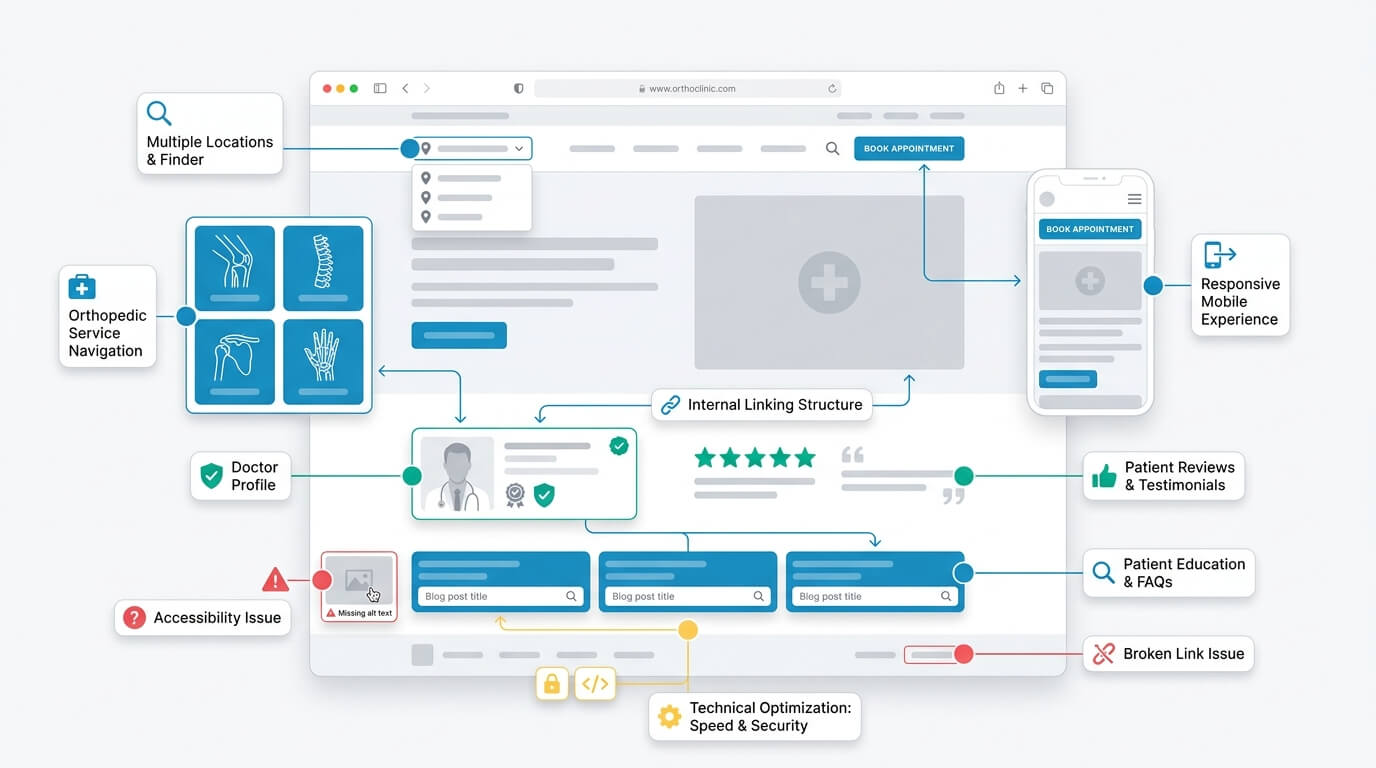
A high-performing orthopedic website in 2026 should be optimized not just for search engines but also for patient experience and conversions. Use this checklist to quickly evaluate performance and identify gaps.
✔ Google Business Profile is fully optimized and actively updated
✔ Each clinic location has a dedicated SEO landing page
✔ Services are organized by specialty (knee, spine, shoulder, etc.)
✔ The website is mobile-friendly and loads quickly on all devices
✔ Clear “Book Appointment” or “Schedule Visit” CTAs are visible across key pages
✔ Doctor profile pages include credentials, specialties, and trust signals
✔ Patient reviews and testimonials are prominently displayed
✔ Condition-based content (blogs/pages) targets real patient search queries
✔ Internal linking connects services, doctors, and educational content
✔ Secure, fast, and technically optimized website (HTTPS, clean URLs, schema)
Conclusion
In 2026, the best orthopedic websites are no longer just digital brochures; they are structured patient acquisition systems built around clarity, trust, and conversion. From multi-location healthcare networks to specialized sports medicine practices, the most successful websites all share a common foundation: they make it easy for patients to find the right care, understand their condition, and take immediate action.
What separates high-performing orthopedic websites from the rest is not just design or content but how effectively they combine SEO strategy, user experience, and patient-focused communication into a seamless journey. Clinics that invest in these areas consistently see stronger visibility, higher engagement, and more appointment bookings.
Ultimately, success in orthopedic digital presence comes down to one principle: building a website that serves patients first while being fully optimized for search.
Let’s increase appointment bookings
At MedClicx, we help medical practices connect with more patients.



Senior Digital Marketing Strategist &
Healthcare SEO Consultant
James Walker is a Senior Digital Marketing Strategist and Healthcare SEO Consultant at MedClicx. He specializes in helping healthcare organizations and service-based businesses grow their online presence through SEO, content marketing, local SEO, AI search optimization, (GEO), technical SEO, website optimization, and digital marketing strategies.
Over the years, James has worked on improving organic visibility, lead generation, and brand authority by combining search engine optimization, website performance, content strategy, conversion optimization, and AI-ready content. His expertise also includes Google Business Profile optimization, schema markup, user experience (UX), analytics, and modern digital marketing best practices.
At MedClicx, James writes educational articles covering SEO, content marketing, digital marketing, AI search optimization, social media marketing, web design, advertising strategies, podcasts, and online business growth. His goal is to simplify complex marketing concepts and help businesses make data-driven decisions that generate sustainable long-term results.
- James Walker

- James Walker
- James Walker

- James Walker