Healthcare Content Marketing: Strategies to Attract More Patients in 2026
-
 James Walker
Table of Contents:
- What Is Healthcare Content Marketing and Why Is It Important?
- Key Benefits of Healthcare Content Marketing
- How to Build a Healthcare Content Marketing Strategy
- 10 Healthcare Content Marketing Strategies to Attract More Patients
- Measuring the Success of Your Healthcare Content Marketing Efforts
- Conclusion
- FAQs
Healthcare organizations are producing more content than ever before, yet many still struggle to attract qualified patients online.
The challenge is not simply creating content, it is creating the right content that aligns with patient needs, search intent, and business goals.
A strategic approach to healthcare content marketing helps providers move beyond random blog posts and disconnected campaigns.
It creates a system that educates patients, strengthens credibility, improves search visibility, and supports every stage of the patient journey.
In this guide, you’ll learn some of the most effective healthcare content marketing strategies that drive organic traffic, build patient trust, and turn valuable content into a sustainable patient acquisition channel.
What Is Healthcare Content Marketing and Why Is It Important?

Healthcare content marketing is the strategic process of creating and distributing valuable, relevant, and educational content to attract, engage, and convert patients.
This content can take many forms, including blogs, treatment pages, videos, FAQs, patient guides, and social media posts designed to answer common patient questions and provide reliable healthcare information.
Healthcare content marketing helps providers attract patients by improving online visibility, increasing organic traffic, and building trust through valuable, accurate information.
A strong healthcare content marketing strategy supports healthcare branding, lead generation, and appointment conversion by guiding patients through their decision-making journey.
When combined with medical SEO, effective content distribution, and a strong healthcare digital marketing strategy, it becomes a powerful driver of patient acquisition and practice growth.
Key Benefits of Healthcare Content Marketing
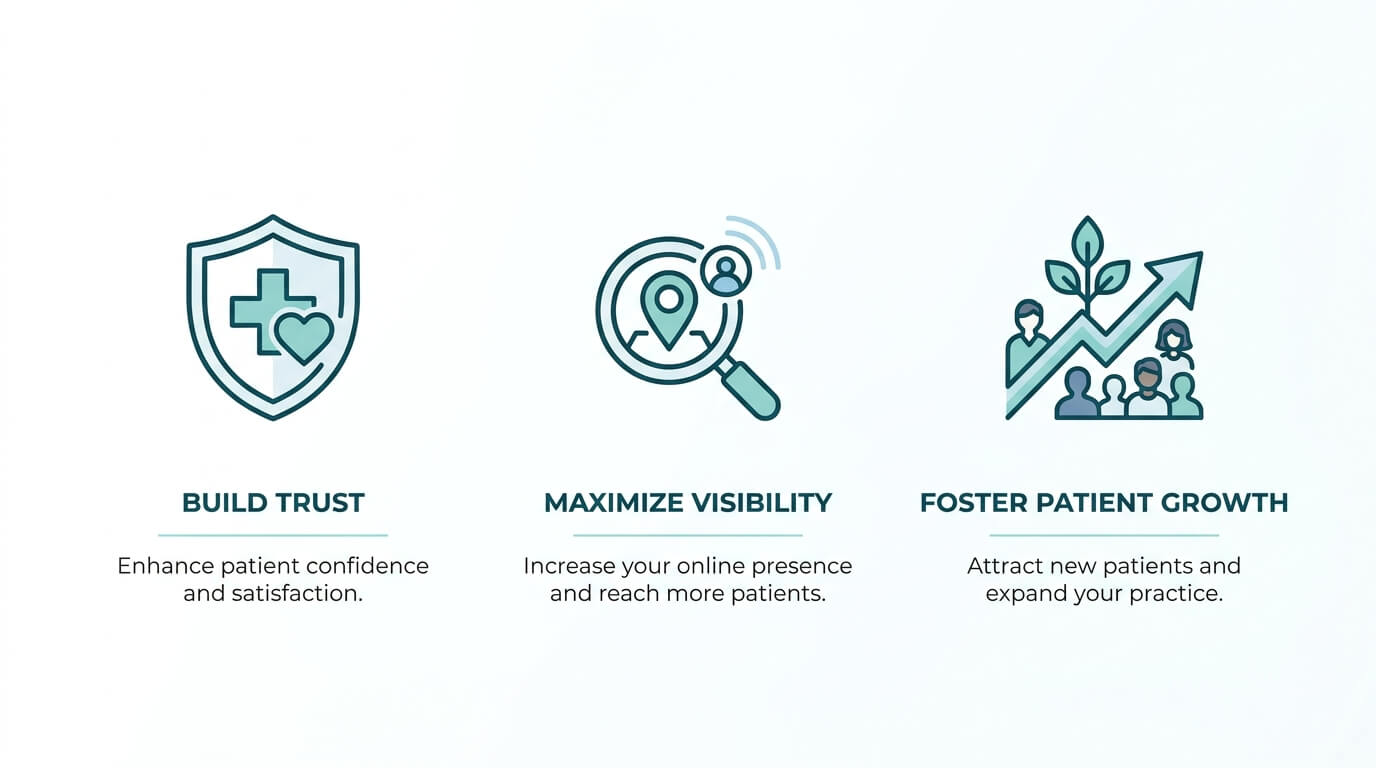
Healthcare organizations that invest in structured content marketing experience significant long-term growth across multiple areas:
- Improved Organic Traffic
High-quality content optimized with medical SEO helps healthcare websites rank higher on search engines, increasing organic traffic without paid ads.
- Increased Online Visibility
Consistent publishing improves visibility across search engines and strengthens the overall healthcare SEO content strategy.
- Stronger Patient Trust
Educational and transparent content increases patient trust, especially when aligned with E-E-A-T principles (Experience, Expertise, Authoritativeness, Trustworthiness).
- Better Healthcare Branding
Content helps position healthcare providers as trusted authorities in their specialties, strengthening overall healthcare branding.
- Higher Lead Generation
Well-optimized content attracts patients actively searching for treatments or providers, improving lead generation.
- Improved Appointment Conversion
When content is aligned with patient needs and search intent, it guides users toward booking appointments more effectively.
How to Build a Healthcare Content Marketing Strategy
A successful healthcare content marketing strategy is built on structured planning, patient understanding, and SEO optimization.
Below is a practical framework used by high-performing healthcare organizations.
| Strategy Step | Purpose | Impact on Healthcare Marketing |
| Define Business Goals | Establish clear objectives such as increasing appointments, improving visibility, or growing specialty-specific patient volume. | Provides direction and ensures content aligns with business outcomes. |
| Identify Your Ideal Patient Personas | Understand patient demographics, conditions, concerns, and online behaviors. | Improves content relevance, engagement, and patient targeting. |
| Conduct Healthcare Keyword Research | Identify high-intent search terms patients use when looking for symptoms, treatments, or providers. | Increases organic traffic and strengthens SEO performance. |
| Analyze Competitor Content | Evaluate competitor content to identify gaps, weaknesses, and opportunities. | Helps create more comprehensive and valuable content that stands out. |
| Create Topic Clusters | Organize content around key specialties, treatments, or healthcare services. | Builds topical authority and improves search engine rankings. |
| Develop a Content Calendar | Plan and schedule content publication consistently. | Supports ongoing content distribution and improves online visibility. |
| Establish Content Governance | Set standards for tone, medical accuracy, compliance, and E-E-A-T principles. | Ensures content quality, trustworthiness, and regulatory compliance. |
10 Healthcare Content Marketing Strategies to Attract More Patients
To outperform competitors, healthcare organizations must implement advanced strategies that align with patient behavior, search intent, and the modern patient journey.
The following strategies can help healthcare providers increase visibility, build trust, and generate more appointment requests.
1. Create Educational Blog Content

Educational blog content is one of the most effective ways to attract patients through organic search. Focus on answering common questions, explaining symptoms, discussing treatment options, and addressing concerns patients may have before seeking care.
Content should be written in clear, patient-friendly language while maintaining medical accuracy.
For example, a dermatology clinic could publish articles such as “What Causes Eczema?” or “When Should You See a Dermatologist for a Skin Rash?” to attract patients searching for answers online.
2. Target High-Intent Healthcare Keywords
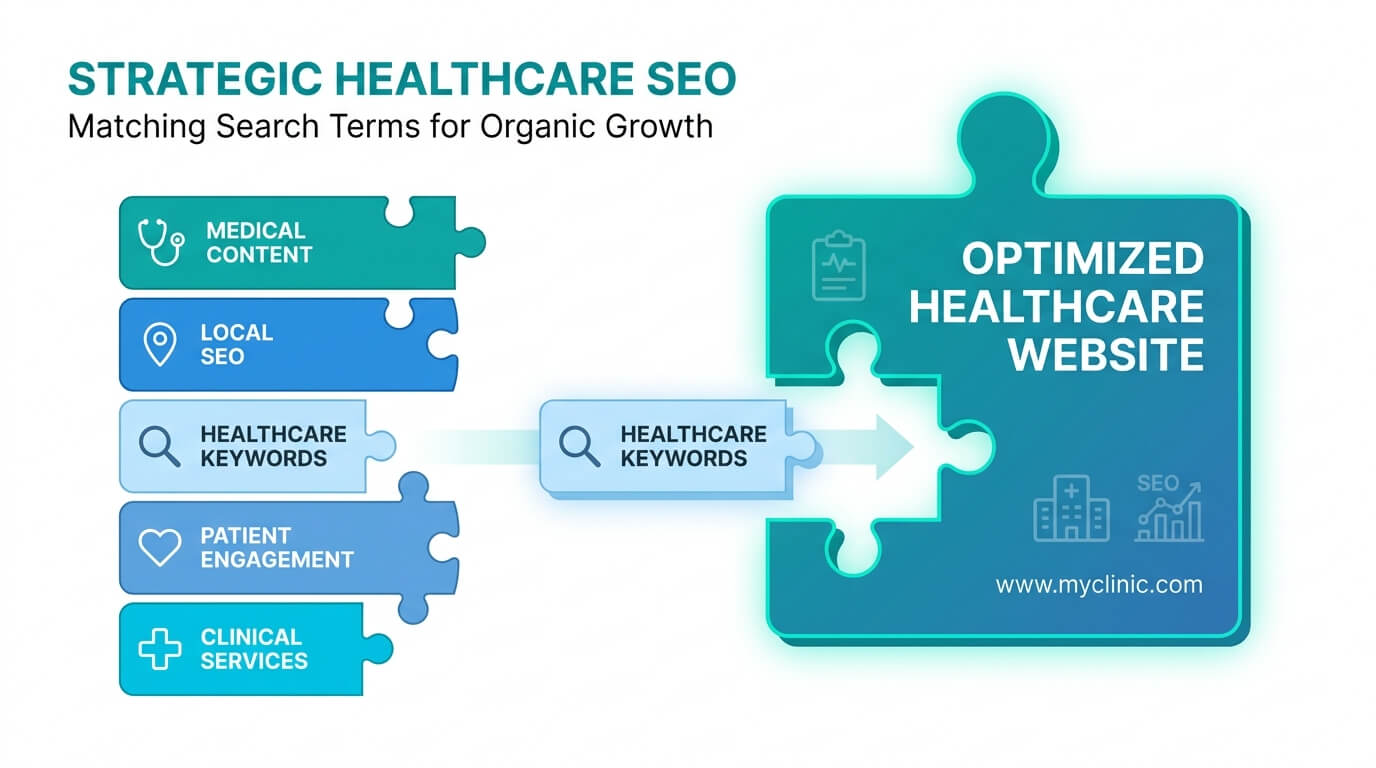
Not all keywords have the same value. High-intent keywords are used by patients who are actively looking for treatment, providers, or appointments. These searches often indicate that the patient is closer to making a healthcare decision.
Examples include phrases such as “orthopedic surgeon near me,” or “best med spa for Botox.” Optimizing content around these terms can significantly improve lead generation and appointment conversion.
3. Develop Specialty-Specific Content
Creating dedicated content for each specialty helps establish topical authority and improves relevance for search engines.
Rather than publishing broad healthcare content, develop content hubs focused on specific services, conditions, and treatments related to each specialty.
For example, an orthopedic practice might create content covering sports injuries, joint replacement procedures, arthritis treatment options, and rehabilitation resources. This approach strengthens both SEO performance and patient trust.
4. Publish Comprehensive Treatment Guides
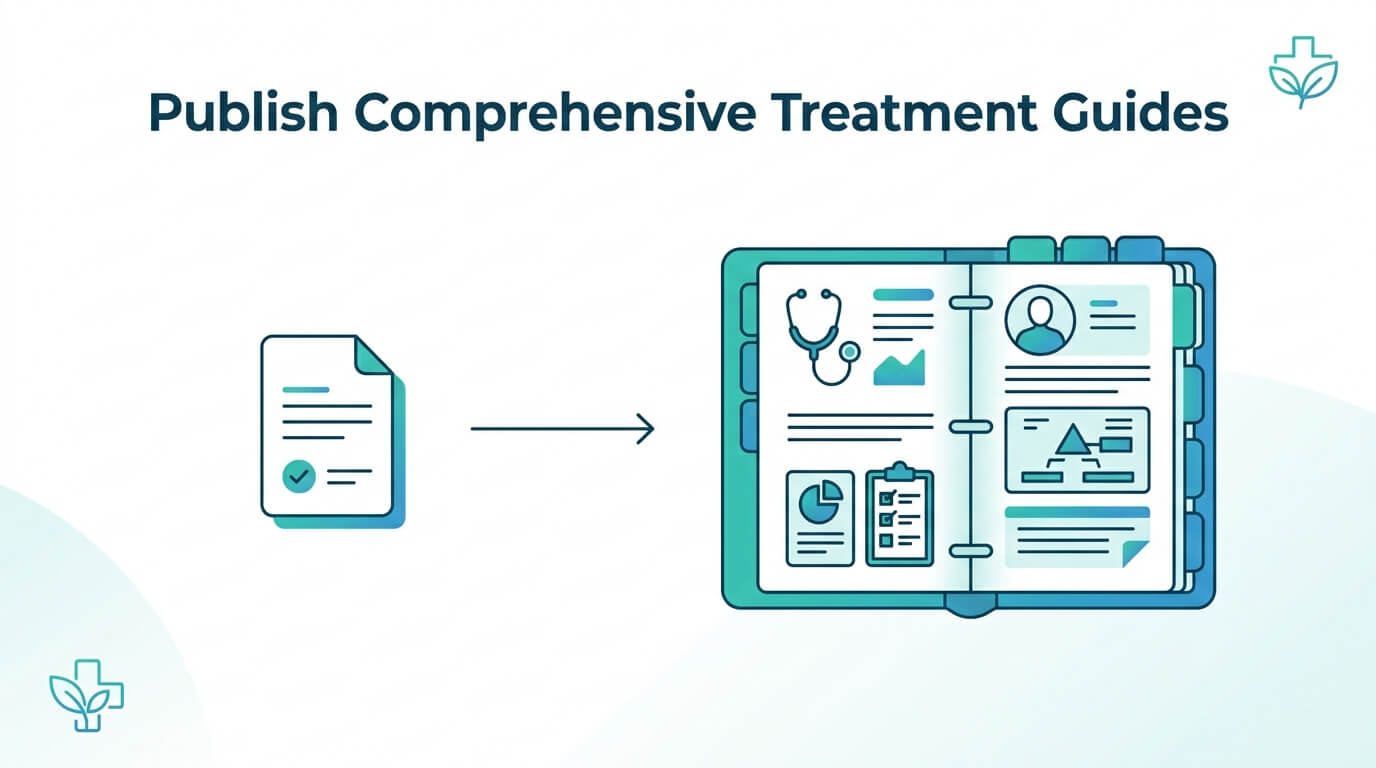
Patients often want detailed information before committing to a procedure or treatment. Comprehensive treatment guides can address common questions about preparation, benefits, risks, recovery timelines, costs, and expected outcomes.
These long-form resources not only improve engagement but also position healthcare providers as trusted sources of information.
They can also support patients throughout the decision-making process, increasing the likelihood of appointment bookings.
5. Leverage Video Marketing

Video content allows healthcare providers to explain complex topics in a more engaging and accessible format. Patients often find videos easier to consume than lengthy articles, especially when learning about procedures or treatment options.
Healthcare organizations can create
- Physician introductions
- Treatment explanations
- Patient education videos
- FAQs
- Virtual office tours.
Video content also performs well across websites, social media platforms, and search results, helping strengthen healthcare branding.
6. Optimize Content for Local Search
Most patients search for healthcare services within their local area, making local SEO a critical component of healthcare content marketing. Content should include location-specific keywords, service area information, and locally relevant topics.
Creating pages for individual locations, optimizing Google Business Profiles, and publishing content related to community health concerns can improve visibility in local search results and increase appointment opportunities.
7. Showcase Physician Expertise
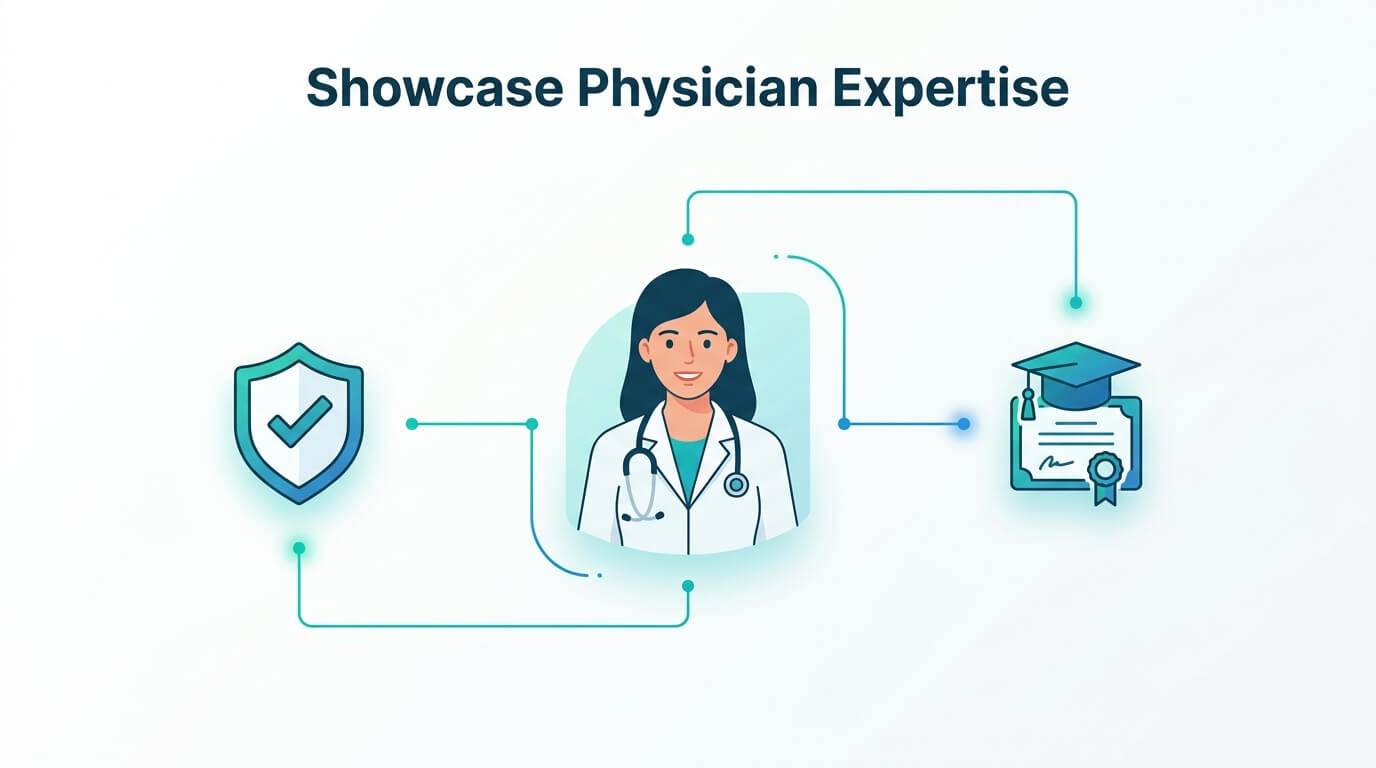
Patients want confidence in the providers they choose. Highlighting physician credentials, certifications, experience, research contributions, and areas of specialization helps strengthen credibility and trust.
Provider biographies, expert commentary, educational articles authored by physicians, and media appearances all contribute to stronger E-E-A-T signals.
This not only benefits SEO but also reassures prospective patients that they are receiving care from qualified professionals.
8. Repurpose Content Across Multiple Channels

Creating content requires significant time and resources, so maximizing its reach is essential. Repurposing allows healthcare organizations to transform a single piece of content into multiple formats for different platforms.
For example, a detailed blog article can be converted into social media posts, email newsletter content, short educational videos, infographics, or downloadable patient resources.
This approach improves content distribution while maintaining consistent messaging across channels.
9. Use Patient Testimonials and Success Stories
Patient testimonials and success stories provide powerful social proof that can influence healthcare decisions. Real experiences help prospective patients understand treatment outcomes and build confidence in a provider’s services.
When used appropriately and in compliance with healthcare regulations, testimonials can strengthen reputation management efforts and reinforce trust throughout the patient journey.
10. Regularly Update Existing Content
Healthcare information changes frequently, making content maintenance essential. Updating older articles ensures medical accuracy, improves user experience, and signals relevance to search engines.
Regular updates may include adding new research findings, refreshing statistics, improving keyword optimization, expanding sections, or updating treatment recommendations.
Consistently maintaining content can help preserve rankings and improve long-term medical SEO performance.
Measuring the Success of Your Healthcare Content Marketing Efforts
To ensure effectiveness, performance must be tracked continuously using key metrics:
- Organic traffic growth
- Keyword rankings improvement
- Patient inquiries and appointment requests
- Conversion rates
- Return on investment (ROI)
These metrics help evaluate the success of your healthcare SEO content strategy and identify areas for optimization.
Conclusion
A well-executed healthcare content marketing strategy is essential for modern healthcare providers looking to attract more patients, improve online visibility, and build long-term trust.
By combining medical SEO, healthcare digital marketing, content distribution, and E-E-A-T-driven content creation, healthcare organizations can create a scalable system for patient acquisition.
Medclicx specializes in helping healthcare providers implement powerful systems to drive sustainable growth and appointment conversion.
FAQs
What is healthcare content marketing?
Why is healthcare content marketing important for patient acquisition?
How does healthcare content marketing improve SEO?
What types of content work best for healthcare marketing?
How often should healthcare providers publish content?
How can healthcare providers build patient trust through content?
Let’s increase appointment bookings
At MedClicx, we help medical practices connect with more patients.

Senior Digital Marketing Strategist &
Healthcare SEO Consultant
James Walker is a Senior Digital Marketing Strategist and Healthcare SEO Consultant at MedClicx. He specializes in helping healthcare organizations and service-based businesses grow their online presence through SEO, content marketing, local SEO, AI search optimization, (GEO), technical SEO, website optimization, and digital marketing strategies.
Over the years, James has worked on improving organic visibility, lead generation, and brand authority by combining search engine optimization, website performance, content strategy, conversion optimization, and AI-ready content. His expertise also includes Google Business Profile optimization, schema markup, user experience (UX), analytics, and modern digital marketing best practices.
At MedClicx, James writes educational articles covering SEO, content marketing, digital marketing, AI search optimization, social media marketing, web design, advertising strategies, podcasts, and online business growth. His goal is to simplify complex marketing concepts and help businesses make data-driven decisions that generate sustainable long-term results.
- James Walker
- James Walker

- James Walker
- James Walker