12 Medical Website Design Tips for Better UX, SEO, and Patient Conversions
-
 James Walker
Table of Contents:
A healthcare website should do more than provide information, it should help patients feel confident enough to take the next step.
In a competitive market, visitors often judge a practice within seconds based on how the site looks, loads, and functions.
That is why medical website design matters. A well-designed site makes it easy for patients to find answers, trust your practice, and book an appointment without friction.
In this guide, we’ll cover 12 essential medical website design tips to improve patient experience, strengthen search visibility, and increase appointment requests in 2026.
Why Medical Website Design Matters
Healthcare consumers have higher expectations than ever before. Patients expect websites that are fast, easy to navigate, mobile-friendly, and informative.
If a website creates friction during the patient journey, visitors are likely to leave before contacting the practice.
Strong healthcare web design helps practices:
- Improve patient experience
- Increase appointment requests
- Build trust and credibility
- Support SEO performance
- Improve conversion rates
- Differentiate from competitors
Many of the best healthcare websites share one common characteristic: they are designed around patient needs rather than organizational preferences.
The easier it is for patients to find answers and take action, the more effective the website becomes.
12 Best Medical Website Design Tips
1. Prioritize User Experience (UX) Design
User experience should be the foundation of every healthcare website. Patients visit your website to accomplish specific tasks, such as finding a provider, learning about treatments, checking locations, or scheduling appointments. A poor user experience can create frustration and increase bounce rates.
To improve UX:
- Keep page layouts clean and organized
- Make information easy to find
- Use clear headings and content sections
- Reduce unnecessary distractions
- Focus on patient needs throughout the website
Every aspect of your medical web page design should support a smooth and intuitive patient journey.
2. Design Your Website for Mobile Users
Most healthcare-related searches now occur on smartphones and tablets. If your website is not optimized for mobile devices, you risk losing a significant number of potential patients.
Mobile-friendly websites should:
- Automatically adapt to different screen sizes
- Use readable text without zooming
- Include tap-friendly buttons
- Make appointment scheduling simple
- Load quickly on mobile networks
Modern web design for medical practices must prioritize mobile usability to meet patient expectations and improve search engine rankings.
3. Improve Website Speed and Performance
Website speed directly impacts both patient experience and SEO performance. Slow-loading websites often experience higher bounce rates and lower conversion rates.
To improve speed:
- Compress images
- Reduce unnecessary plugins
- Optimize code and scripts
- Use reliable website hosting
- Regularly monitor performance
Many great medical websites invest heavily in speed optimization because even a few seconds of delay can negatively affect patient engagement.
4. Create Simple and Intuitive Navigation
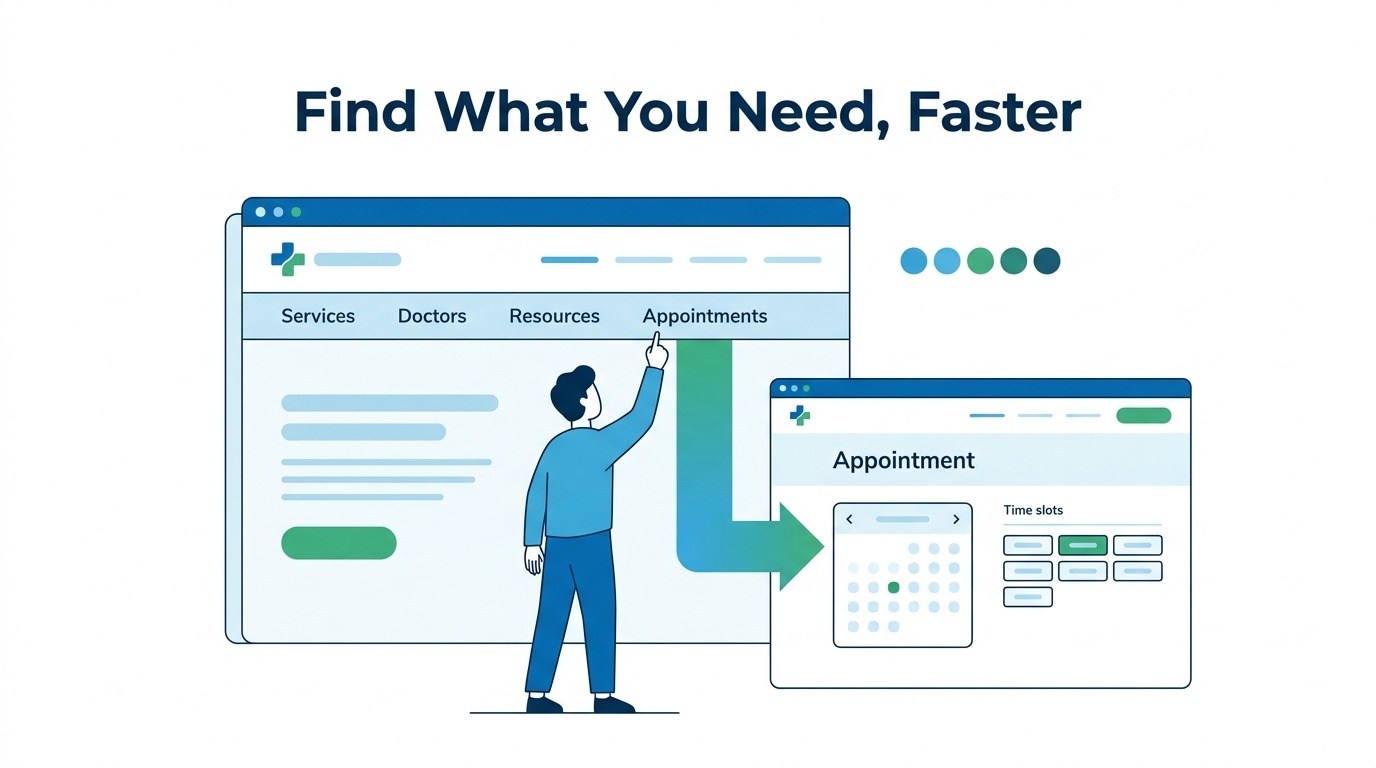
Patients should never struggle to find important information on your website. Clear navigation helps visitors quickly locate services, providers, office locations, insurance information, and contact details.
Best practices include:
- Keeping navigation menus simple
- Limiting unnecessary menu items
- Organizing services logically
- Including prominent contact information
- Making important pages accessible within a few clicks
Many of the top healthcare websites succeed because they eliminate confusion and guide users naturally through the patient journey.
5. Use Clear Calls-to-Action (CTAs)
Your website should guide visitors toward a specific action. Without clear calls-to-action, patients may leave your website without scheduling an appointment or contacting your office.
Effective CTAs should:
- Be visible throughout the website
- Use action-oriented language
- Stand out visually
- Appear on service and provider pages
- Be easy to complete on mobile devices
Whether your goal is appointment requests, phone calls, or form submissions, strong CTAs play a critical role in creating the best website design for doctors and healthcare organizations.
6. Offer Online Appointment Scheduling
Patients increasingly expect the convenience of online scheduling. If booking an appointment requires multiple steps or phone calls, some visitors may abandon the process altogether.
Benefits of online scheduling include:
- Improved patient convenience
- Increased appointment requests
- Reduced administrative workload
- Better patient experience
- Higher conversion rates
When planning your medical office website design, online scheduling should be a core feature rather than an afterthought.
7. Build Trust with Reviews, Credentials, and Social Proof
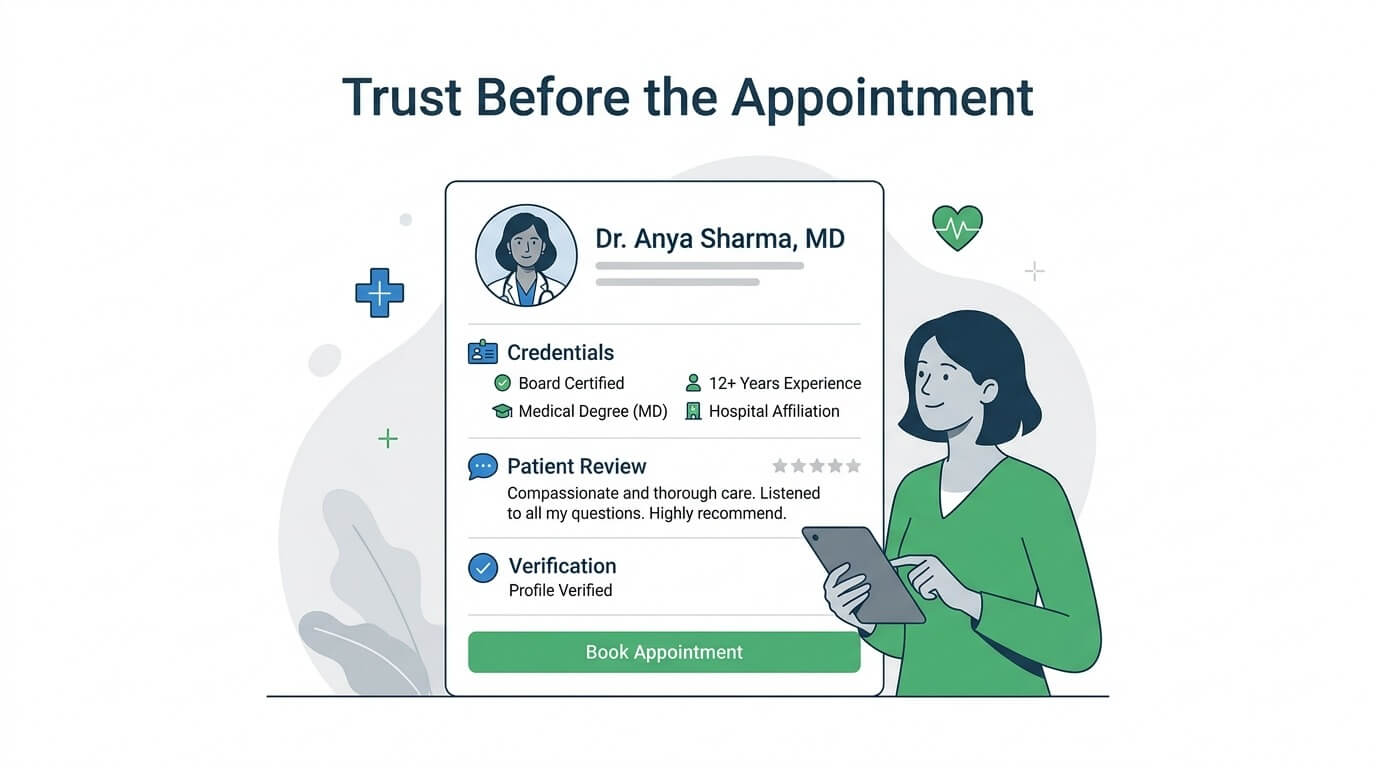
Healthcare decisions are often based on trust. Before scheduling an appointment, patients want reassurance that they are choosing a qualified provider.
You can build credibility by displaying:
- Patient testimonials
- Online reviews
- Board certifications
- Awards and recognitions
- Professional memberships
- Provider credentials
Trust signals help reduce uncertainty and encourage patients to take the next step.
8. Optimize Service Pages for SEO
Each service offered by your practice should have a dedicated, optimized page. This helps search engines understand your services and improves visibility for relevant searches.
Effective service pages should:
- Target specific patient needs
- Include clear service descriptions
- Answer common questions
- Incorporate local keywords where appropriate
- Include strong calls-to-action
SEO-friendly service pages are a foundational element of successful healthcare marketing.
9. Create High-Quality, Patient-Focused Content
Patients often visit healthcare websites seeking answers before they schedule an appointment. Educational content helps build trust while improving organic visibility.
Examples include:
- Treatment pages
- Condition guides
- Blog articles
- FAQs
- Patient resources
Whether you’re focused on healthcare services or website design for health and wellness brands, helpful content can position your organization as a trusted resource while supporting long-term SEO growth.
10. Implement HIPAA-Compliant Security Features
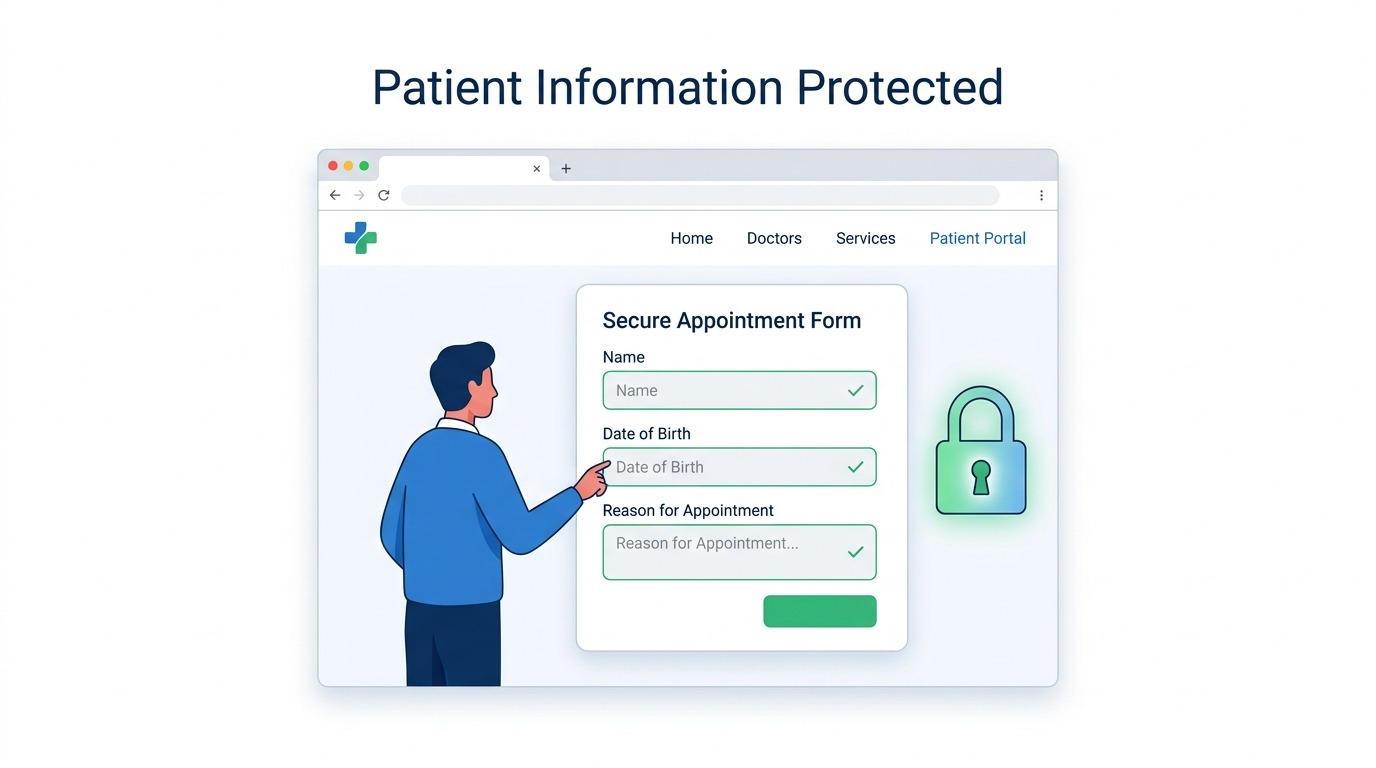
Healthcare websites routinely collect sensitive patient information. Protecting that information is essential for maintaining trust and regulatory compliance.
Important security features include:
- Secure contact forms
- SSL certificates
- Encrypted data transmission
- HIPAA-compliant communication tools
- Secure patient portals
Many practices investing in custom healthcare websites prioritize security from the beginning to protect both patients and the organization.
11. Strengthen Local SEO Signals Across Your Website
Most healthcare searches have local intent. Patients are typically looking for providers, specialists, or clinics near their location. If your website is not optimized for local search, you may miss valuable opportunities to attract nearby patients.
To improve local SEO:
- Create location-specific pages
- Display consistent NAP (Name, Address, Phone Number) information
- Embed Google Maps on location pages
- Optimize title tags and headings with local keywords
- Include location-specific content where appropriate
Strong local SEO helps practices appear in local search results, Google Maps, and “near me” searches, making it easier for patients to find and contact your practice.
12. Optimize for AI Search and Google AI Overviews

Search behavior is changing rapidly as AI-powered search experiences become more common. Google AI Overviews and other AI search tools prioritize content that is accurate, trustworthy, and easy to understand.
To improve visibility in AI search:
- Answer common patient questions directly
- Use clear headings and structured content
- Publish authoritative healthcare information
- Keep content updated and accurate
- Demonstrate expertise and credibility throughout the website
Practices that adapt their websites for AI search will be better positioned to maintain visibility as search engines continue to evolve.
Conclusion
A healthcare website should do more than look professional, it should help patients find information, build trust, and schedule appointments with ease.
The most effective websites combine strong user experience, mobile-friendly design, fast performance, SEO best practices, and patient-focused content to create a seamless journey from search to appointment.
By implementing these 12 medical website design tips, healthcare organizations can improve patient experience, strengthen online visibility, and generate more qualified leads.
FAQs
What makes a good medical website design?
How much does medical website design cost?
Why is mobile-friendly design important for healthcare websites?
Does medical website design affect SEO?
What features should every healthcare website include?
How often should a medical website be redesigned?
How can healthcare websites appear in Google AI Overviews?
What is the difference between a standard website and a healthcare website?
Let’s increase appointment bookings
At MedClicx, we help medical practices connect with more patients.




Senior Digital Marketing Strategist &
Healthcare SEO Consultant
James Walker is a Senior Digital Marketing Strategist and Healthcare SEO Consultant at MedClicx. He specializes in helping healthcare organizations and service-based businesses grow their online presence through SEO, content marketing, local SEO, AI search optimization, (GEO), technical SEO, website optimization, and digital marketing strategies.
Over the years, James has worked on improving organic visibility, lead generation, and brand authority by combining search engine optimization, website performance, content strategy, conversion optimization, and AI-ready content. His expertise also includes Google Business Profile optimization, schema markup, user experience (UX), analytics, and modern digital marketing best practices.
At MedClicx, James writes educational articles covering SEO, content marketing, digital marketing, AI search optimization, social media marketing, web design, advertising strategies, podcasts, and online business growth. His goal is to simplify complex marketing concepts and help businesses make data-driven decisions that generate sustainable long-term results.
- James Walker

- James Walker

- James Walker

- James Walker