Multi-Location Healthcare Marketing: A Complete Guide for Hospitals and Medical Practices
-
 James Walker
Table of Contents:
- What Is Multi-Location Healthcare Marketing?
- Common Challenges of Multi-Location Healthcare Practices
- 13 Proven Multi-Location Healthcare Marketing Strategies
- Conclusion
- FAQs
Managing marketing for multiple healthcare locations requires more than simply attracting patients.
Hospitals, multi-specialty groups, and healthcare networks must maintain a consistent brand while driving patient acquisition in each local market.
Patients today compare providers online, read reviews, and evaluate multiple locations before scheduling an appointment.
As a result, healthcare organizations need a scalable marketing strategy that combines local visibility, reputation management, and patient acquisition efforts across all locations.
In this blog, we’ll explore the key challenges of multi-location healthcare marketing and share proven strategies to help hospitals and medical practices improve visibility, attract more patients, and drive growth across every location.
What Is Multi-Location Healthcare Marketing?
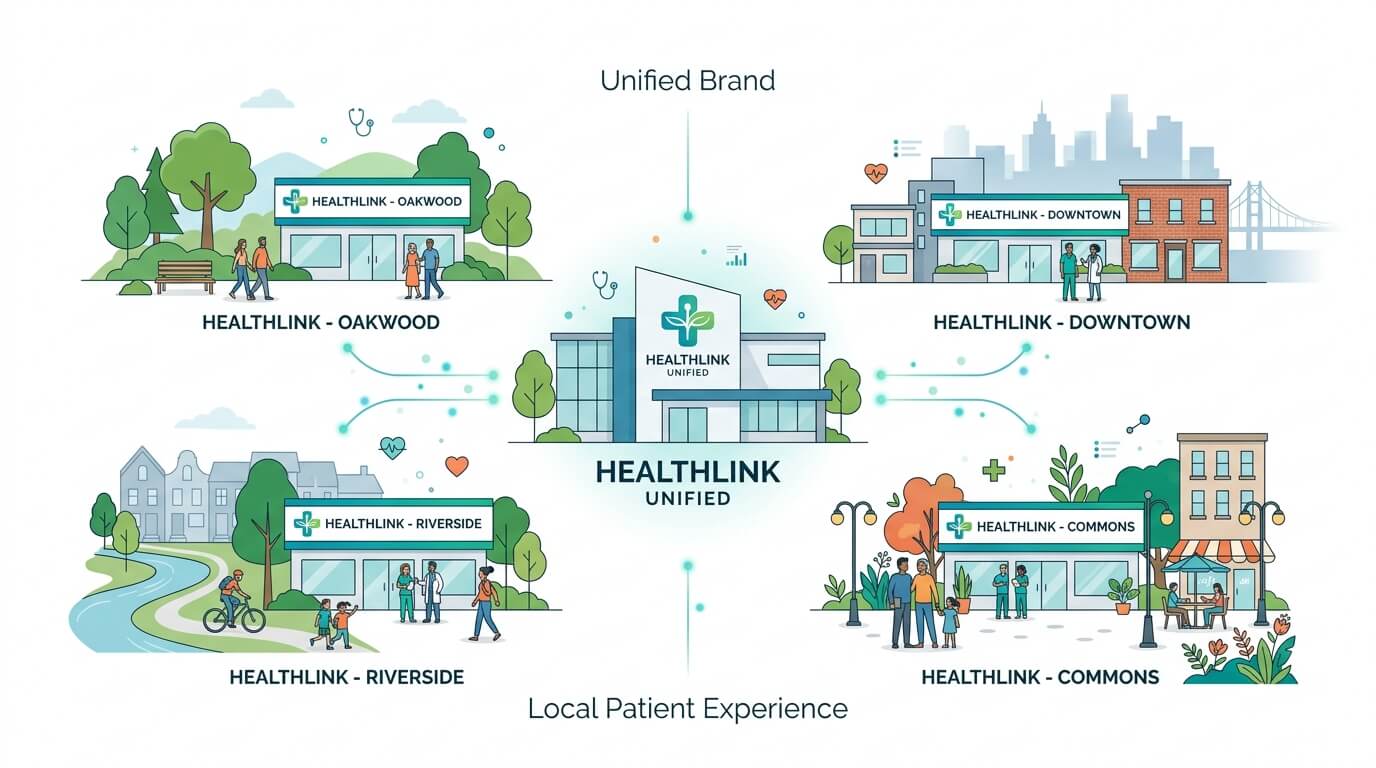
Multi-location healthcare marketing is the process of promoting a healthcare organization with multiple locations while helping each location attract patients in its specific geographic area.
The goal is to balance two priorities:
- Maintaining a consistent healthcare brand
- Increasing local visibility for each location
This typically involves optimizing location pages, Google Business Profiles, local SEO, online reviews, and paid advertising campaigns.
When done correctly, it helps healthcare organizations improve visibility, attract more patients, and support growth across multiple markets.
Common Challenges of Multi-Location Healthcare Practices
Marketing multiple healthcare locations comes with unique challenges that can impact visibility, patient acquisition, and overall growth.
1. Maintaining Brand Consistency Across Locations
Keeping messaging, branding, and patient experience consistent across every location can be difficult as organizations expand.
2. Local Market Competition Differences
Each location faces different competitors, patient demographics, and search trends, requiring localized marketing strategies.
3. Managing Local SEO at Scale
Optimizing multiple locations for local search requires a structured approach to ensure consistent visibility across markets.
4. Website Structure and User Experience Issues
Without dedicated location pages and clear navigation, patients may struggle to find the right provider or office location.
5. Reputation Management Complexity
Monitoring and responding to reviews across multiple locations can become challenging without a centralized process.
6. Tracking Performance by Location
Healthcare organizations need accurate reporting to understand which locations and marketing efforts are generating patient appointments.
7. Scaling Marketing Without Losing Efficiency
As organizations grow, maintaining consistent marketing performance across all locations becomes increasingly complex.
13 Proven Multi-Location Healthcare Marketing Strategies
1. Build a Consistent Healthcare Brand Across All Locations
One of the biggest challenges for multi-location healthcare organizations is maintaining a consistent brand experience across every office, clinic, or facility.
Patients should immediately recognize your organization regardless of which location they visit online or in person.
When branding varies from one location to another, it can create confusion and weaken patient trust. Healthcare organizations should establish clear brand guidelines that define:
- Visual identity standards
- Messaging and tone of voice
- Patient communication protocols
- Marketing materials and promotional content
- Online and offline branding requirements
A unified brand helps strengthen credibility, improve patient recognition, and create a seamless experience across all locations.
2. Create a Scalable Multi-Location Website Structure
Your website serves as the foundation of your multi-location healthcare marketing strategy. As new locations are added, the website should be able to grow without creating navigation issues, duplicate content problems, or SEO challenges.
Many healthcare organizations make the mistake of creating separate websites for each location. While this may seem logical initially, it often leads to fragmented authority, inconsistent branding, and increased maintenance costs.
A more effective approach is to build a centralized website structure that includes:
- Individual location pages
- Specialty service pages
- Provider profiles
- Location-specific resources
- Appointment scheduling functionality
A scalable structure also improves user experience by helping patients quickly find the nearest location, relevant services, and available providers.
From an SEO perspective, it allows authority to flow throughout the website, supporting stronger rankings across all locations.
Healthcare organizations investing in professional Medical Website Design often see improved navigation, higher conversion rates, and better search visibility across multiple markets.
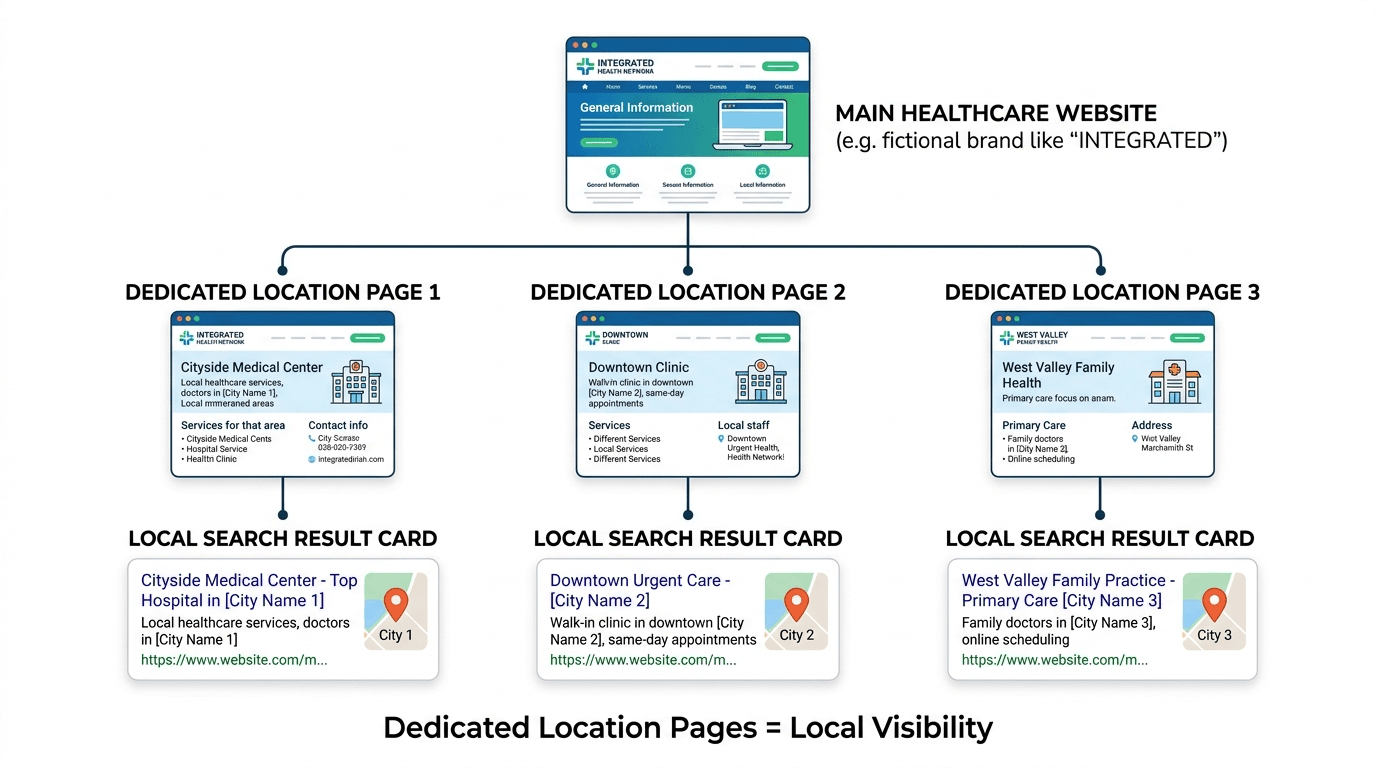
3. Develop Optimized Location Pages for Every Practice
Location pages should have a dedicated page designed to rank for local searches and provide patients with the information they need to schedule care.
A high-performing location page should include:
- Location name and address
- Phone number
- Office hours
- Services available at that location
- Embedded map and directions
- Provider information
- Appointment scheduling options
- Patient reviews or testimonials
- Frequently asked questions
Avoid using identical content across multiple location pages. Search engines prefer unique, location-specific information that accurately reflects each office.
For example, an orthopedic practice with locations in different cities should highlight the providers, services, and patient needs specific to each market rather than duplicating the same content across every page.
4. Optimize Google Business Profiles for Each Location
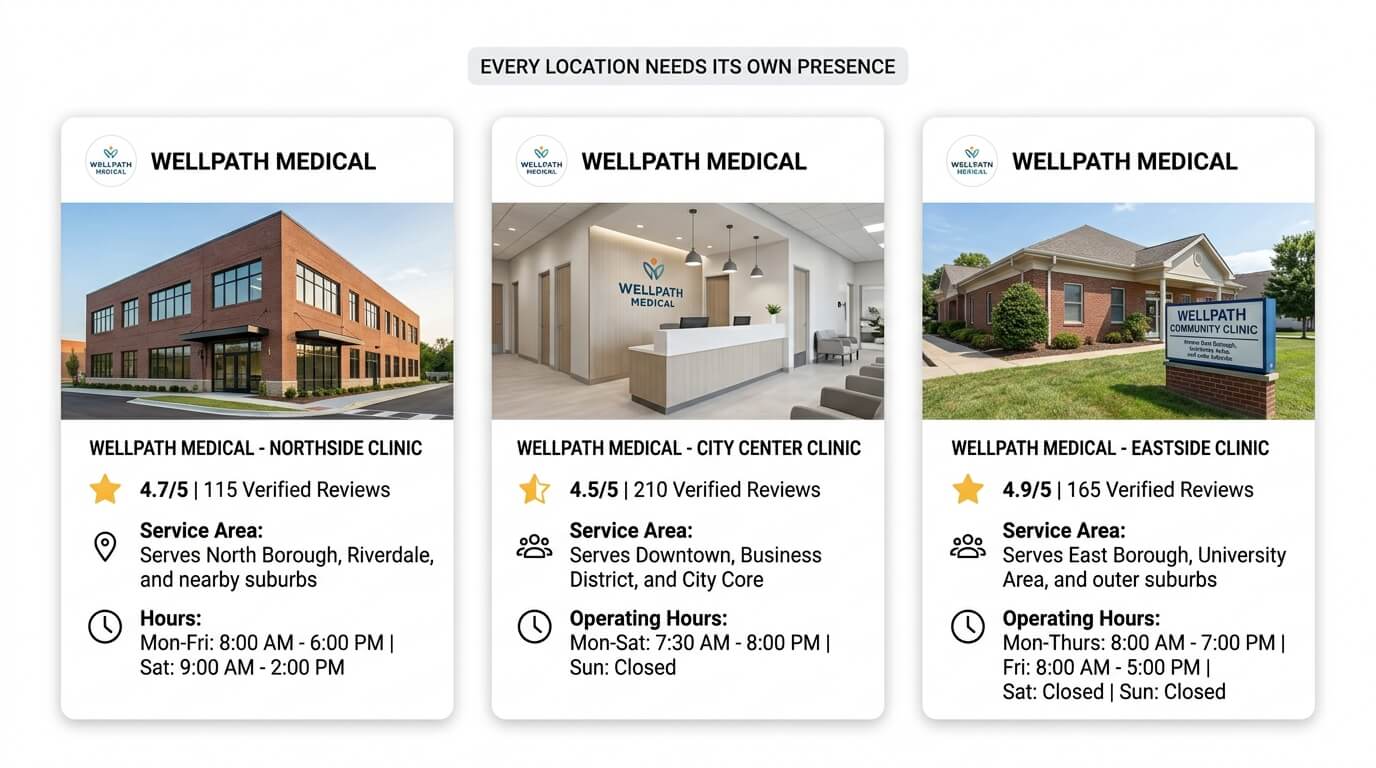
A properly optimized Google Business Profile is one of the most powerful tools for attracting local patients.
Since many healthcare searches have local intent, appearing prominently in Google’s local results can significantly increase appointment requests.
Every location should have its own verified and optimized profile with accurate information, including:
- Business name
- Address
- Phone number
- Website URL
- Business categories
- Office hours
- Services offered
Healthcare organizations should also regularly upload photos, publish updates, and monitor patient reviews to keep profiles active and engaging.
The information listed on your Google Business Profile should match the details displayed on your website and other online directories.
5. Create Provider-Specific Profiles
Many patients search for physicians directly rather than searching for a healthcare organization. Creating dedicated provider profiles helps capture this search demand while building trust and credibility.
A comprehensive provider profile should include:
- Professional biography
- Medical specialties
- Education and certifications
- Areas of expertise
- Associated locations
- Patient reviews
- Accepted insurance plans
- Appointment scheduling options
Provider pages also support search visibility by targeting physician-specific and specialty-related searches.
This strategy is particularly valuable for specialties where provider reputation heavily influences patient decisions, including dermatology, med spa, fertility, ophthalmology, plastic surgery, ENT, orthopedics, and urology.
6. Implement a Multi-Location Healthcare SEO Strategy
Search engine optimization becomes significantly more complex when managing multiple healthcare locations.
Each office needs visibility in its local market while contributing to the overall authority of the healthcare brand.
A successful multi-location healthcare SEO strategy typically includes:
- Location-specific keyword targeting
- Local SEO optimization
- Technical SEO improvements
- Internal linking between related pages
- Unique content creation
- Schema markup implementation
- Reputation management integration
Each location should target relevant geographic search terms while maintaining clear differentiation between pages.
Healthcare organizations that invest in comprehensive Medical SEO strategies often achieve stronger local rankings, increased organic traffic, and more consistent patient acquisition across all locations.
7. Prevent Keyword Cannibalization
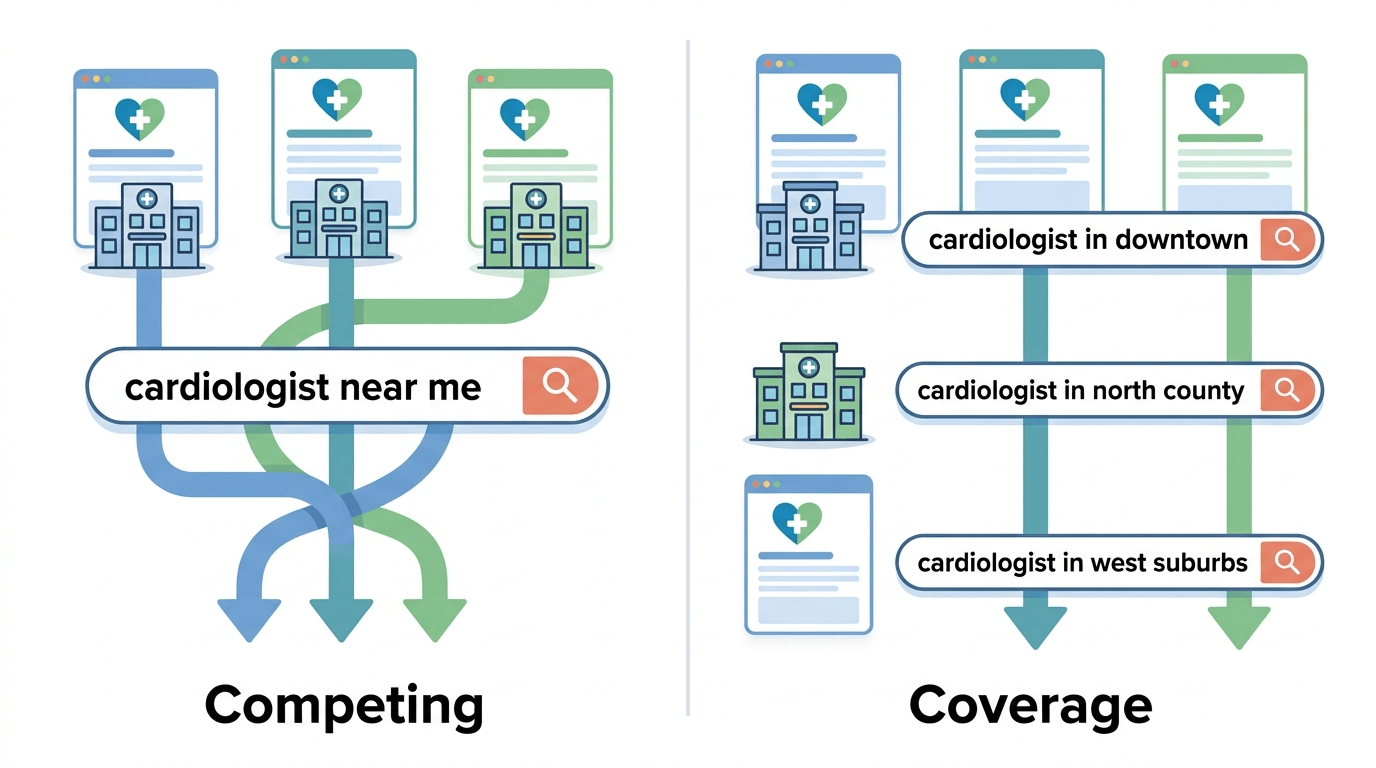
One of the most overlooked challenges in multi-location healthcare SEO is keyword cannibalization, when multiple pages on your website compete for the same search terms.
This often happens when healthcare organizations create similar content across multiple location pages without clear differentiation.
As a result, search engines struggle to determine which page should rank, leading to weaker visibility across all locations.
To avoid this, each location page should be optimized for:
- Unique geographic keywords (city, neighborhood, region)
- Location-specific services or provider strengths
- Distinct supporting content and FAQs
For example, instead of targeting a generic term like “orthopedic clinic,” each page should focus on variations such as “orthopedic clinic in Dallas” or “sports medicine specialist in Austin.”
8. Create Location-Specific Content
Creating content tailored to each location helps healthcare organizations connect more effectively with local audiences while strengthening organic search visibility.
Location-specific content can include:
- Local health trends and seasonal concerns
- Community involvement and outreach programs
- Location-based service updates
- Patient education content relevant to that area
- Local success stories or case highlights
This approach not only improves SEO performance but also builds stronger relationships with the community each location serves.
For example, a dermatology group with multiple clinics might publish content about seasonal skin care concerns specific to different climates or regions.
9. Manage Online Reviews Across Every Location
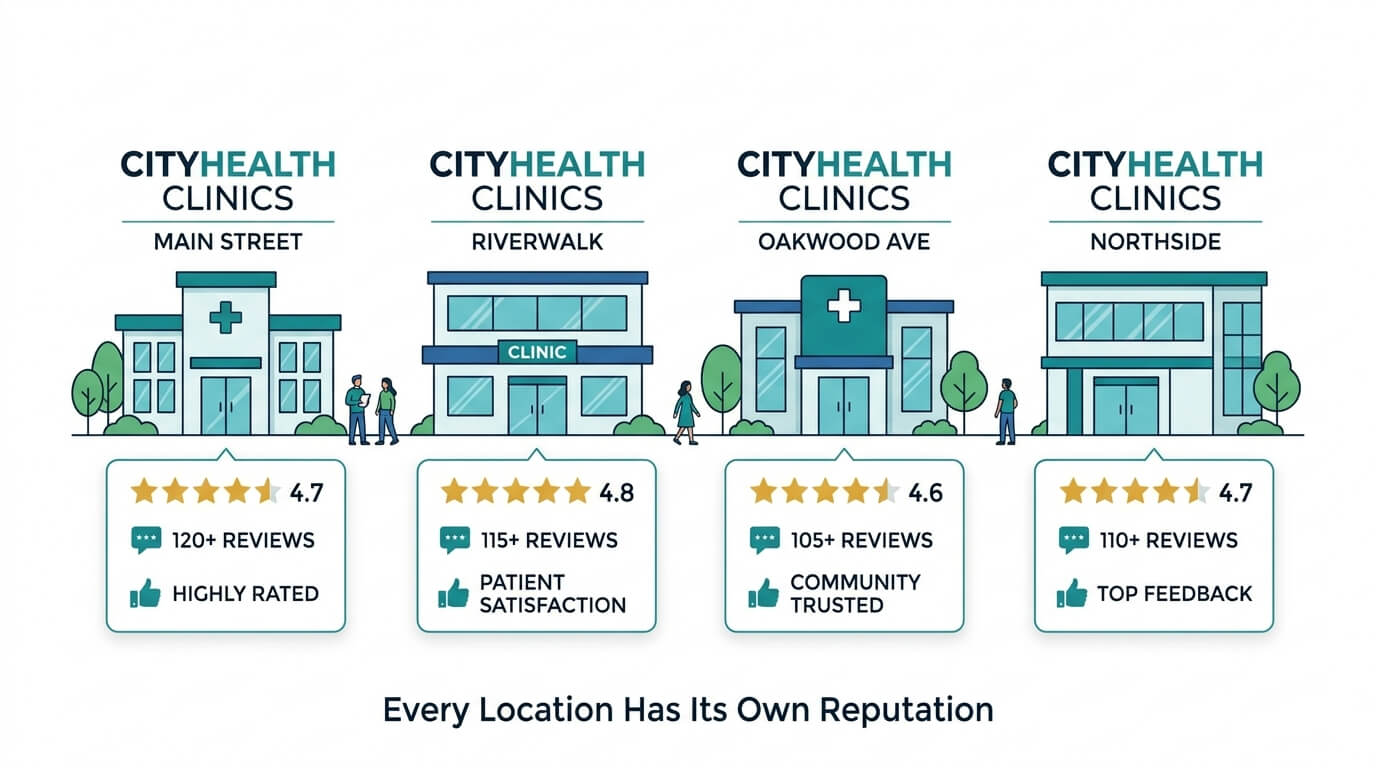
Online reviews are one of the most influential factors in healthcare decision-making. Patients often evaluate providers based on ratings and feedback before scheduling an appointment.
For multi-location healthcare organizations, managing reviews at scale is essential. Each location should have a structured system for:
- Requesting patient reviews after visits
- Monitoring feedback across platforms
- Responding to reviews professionally and consistently
- Addressing negative feedback quickly and appropriately
Reviews should also be location-specific, reflecting the patient experience at each office rather than the organization as a whole.
Strong review management not only improves patient trust but also contributes to better local search rankings.
Search engines often use review quantity, quality, and recency as ranking signals for local results.
10. Invest in Geo-Targeted Healthcare PPC Campaigns
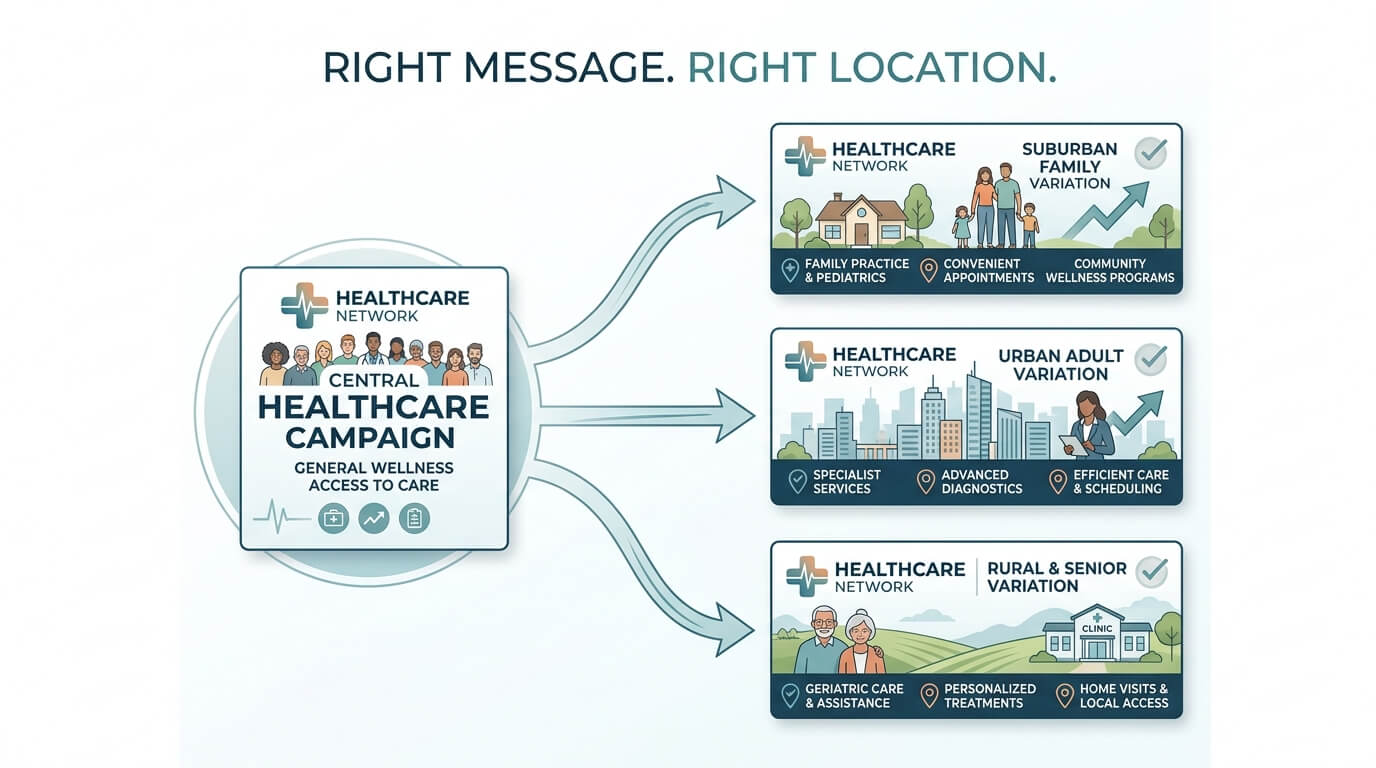
While organic search is essential, paid advertising plays a crucial role in scaling patient acquisition across multiple locations.
Geo-targeted PPC campaigns allow healthcare organizations to reach patients in specific cities or service areas with high precision.
Effective campaigns typically include:
- Location-based keyword targeting
- Separate ad groups for each city or region
- Customized landing pages for each location
- Conversion tracking for calls and appointments
- Retargeting campaigns for website visitors
For example, a multi-location fertility clinic can run separate campaigns targeting patients in different metropolitan areas, each directing users to a dedicated location page.
11. Improve the Patient Experience Across Devices
Modern healthcare patients interact with providers across multiple devices before booking an appointment. A seamless digital experience is therefore critical for conversion.
Healthcare websites should be optimized for:
- Mobile responsiveness
- Fast page load speeds
- Easy appointment scheduling
- Clear navigation across locations
- Accessible provider and service information
A poor user experience can significantly reduce conversion rates, even if traffic levels are strong.
12. Use Marketing Automation to Scale Growth
As healthcare organizations expand, manually managing marketing tasks across multiple locations becomes inefficient. Marketing automation helps streamline repetitive processes and improve consistency.
Automation can be used for:
- Patient appointment reminders
- Review request workflows
- Email follow-ups and nurturing campaigns
- Lead tracking and segmentation
- Performance reporting across locations
By automating key workflows, healthcare organizations can maintain consistent communication while reducing operational workload.
13. Track Performance and ROI by Location
Tracking performance at a location level is essential for understanding what drives patient acquisition and revenue growth.
Without proper tracking, it becomes difficult to optimize marketing spend or identify underperforming locations.
Key metrics to track include:
- Website traffic per location page
- Phone calls and appointment requests
- Google Business Profile engagement
- Cost per acquisition by location
- Conversion rates from paid campaigns
- Patient lifetime value by location
Advanced tracking systems allow healthcare organizations to make data-driven decisions about marketing budgets, campaign optimization, and expansion strategies.
Conclusion
Multi-location healthcare marketing requires a structured approach that balances brand consistency with strong local visibility for each location.
Success depends on how well healthcare organizations align their website structure, local SEO, Google Business Profiles, reputation management, and overall patient experience across every market they serve.
When each location is properly optimized and supported by a unified strategy, healthcare providers can improve visibility, attract more qualified patients, and ensure steady growth across all sites.
FAQs
How do you market a healthcare practice with multiple locations?
Key steps include:
- Creating a unified healthcare brand across all locations
- Building a scalable website with dedicated location pages
- Optimizing each location for local SEO and Google search visibility
- Managing reviews through Healthcare Reputation Management systems
- Running geo-targeted Medical PPC campaigns for each market
This ensures every location performs independently while contributing to overall brand growth.
Why is local SEO important for multi-location healthcare practices?
Should healthcare organizations use one website or multiple websites for different locations?
A centralized website allows:
- Stronger overall domain authority
- Better SEO performance across all locations
- Easier management of updates and content
- Consistent branding and patient experience
Separate websites are only recommended in rare cases where legal, franchise, or ownership structures require full separation.
How do Google Business Profiles help multi-location healthcare marketing?
Optimized profiles help:
- Increase visibility in “near me” searches
- Improve trust through patient reviews
- Drive phone calls and appointment bookings
- Strengthen local SEO performance
Consistent updates, accurate information, and active review management are essential for maximizing results.
What are the biggest challenges in multi-location healthcare marketing?
- Maintaining consistent branding across all locations
- Competing in different local markets with unique patient behavior
- Managing local SEO for multiple cities or regions
- Tracking performance and ROI by location
- Scaling marketing efforts without losing efficiency
How can multi-location healthcare practices improve patient acquisition?
This includes:
- Strong local SEO for each location page
- Optimized Google Business Profiles
- Fast, mobile-friendly healthcare websites
- Clear appointment booking systems
- Active review generation and management
What role does website structure play in multi-location healthcare SEO?
A well-structured website:
- Helps search engines understand each location
- Prevents keyword cannibalization
- Improves internal linking between services and locations
- Enhances patient navigation and user experience
A scalable structure built through professional Medical Website Design ensures long-term SEO growth and better conversion rates.
Let’s increase appointment bookings
At MedClicx, we help medical practices connect with more patients.


Senior Digital Marketing Strategist &
Healthcare SEO Consultant
James Walker is a Senior Digital Marketing Strategist and Healthcare SEO Consultant at MedClicx. He specializes in helping healthcare organizations and service-based businesses grow their online presence through SEO, content marketing, local SEO, AI search optimization, (GEO), technical SEO, website optimization, and digital marketing strategies.
Over the years, James has worked on improving organic visibility, lead generation, and brand authority by combining search engine optimization, website performance, content strategy, conversion optimization, and AI-ready content. His expertise also includes Google Business Profile optimization, schema markup, user experience (UX), analytics, and modern digital marketing best practices.
At MedClicx, James writes educational articles covering SEO, content marketing, digital marketing, AI search optimization, social media marketing, web design, advertising strategies, podcasts, and online business growth. His goal is to simplify complex marketing concepts and help businesses make data-driven decisions that generate sustainable long-term results.
- James Walker
- James Walker
- James Walker
- James Walker