15 Innovative Healthcare Marketing Strategies for 2026
-
 James Walker
Table of Contents:
Healthcare marketing is no longer just about being visible online; it’s about being chosen in a crowded digital space where patients compare, research, and decide faster than ever.
From AI-driven search results to on-demand healthcare content, the way patients discover providers has completely changed.
To stay competitive in 2026, healthcare organizations need more than traditional digital marketing.
They need smarter, more innovative strategies that build trust early, influence decision-making, and convert attention into booked appointments.
In this guide, we’ll explore 15 innovative healthcare marketing strategies designed to help modern practices stand out and grow in an increasingly competitive landscape.
15 Innovative Healthcare Marketing Ideas for Healthcare Organizations
The strategies listed below represent a set of forward-thinking healthcare marketing approaches designed to help modern medical practices adapt to changing patient behavior and emerging digital trends.
Each idea focuses on practical ways to improve visibility, strengthen patient trust, and drive more qualified appointments.
1. Optimize for AI Answer Engines
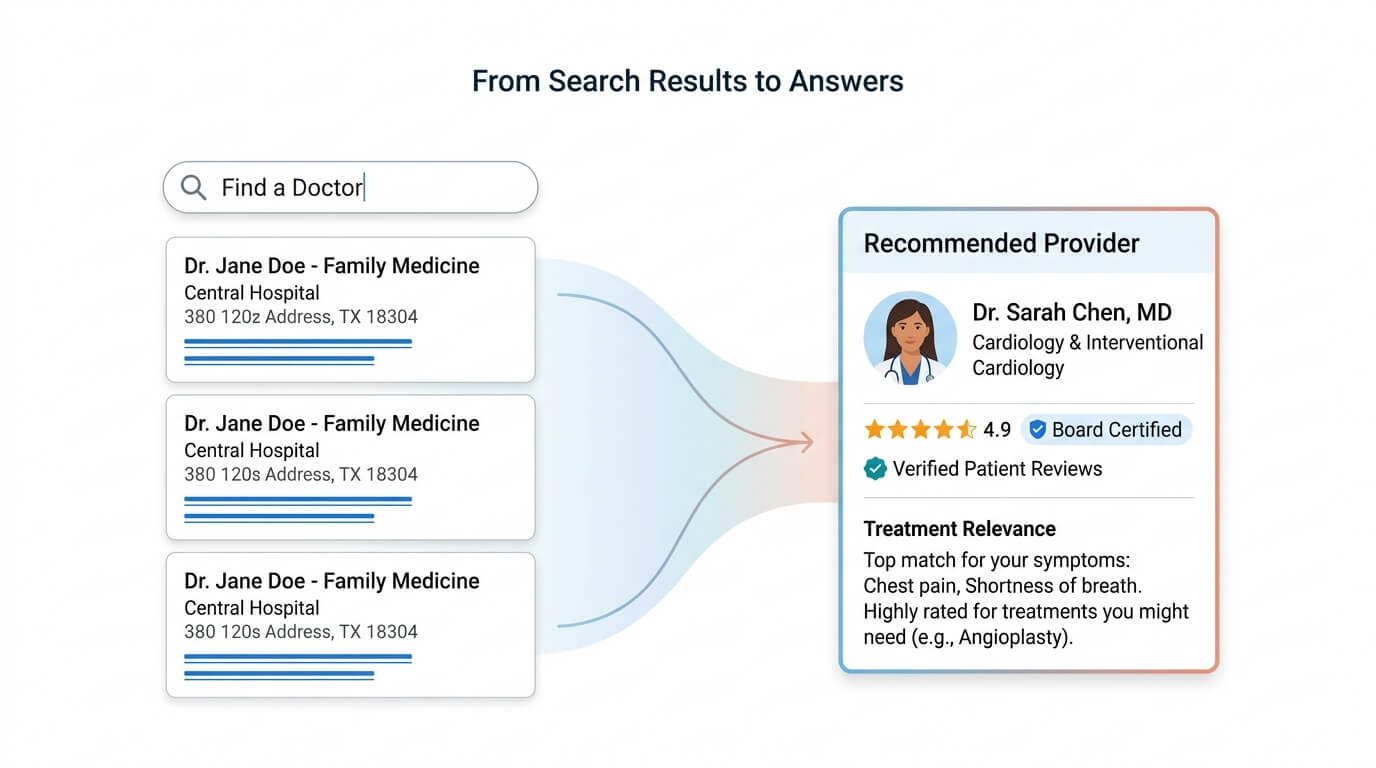
AI-driven search is reshaping how patients discover healthcare providers. Instead of focusing only on traditional rankings, practices must ensure their content is structured so AI tools like ChatGPT, Perplexity, and Gemini can easily interpret and recommend it.
This is one of the most important healthcare marketing ideas for 2026.
Healthcare organizations should
- Create clear question-based content
- Use structured headings
- Build authority around specific treatments and conditions.
The goal is to become a trusted source that AI systems consistently reference when patients search for care options.
2. Create Interactive Symptom Assessment Tools
Interactive assessment tools help turn passive website visitors into qualified leads. By allowing patients to check symptoms or explore potential conditions, clinics can guide users toward the right treatment while capturing valuable intent data.
These tools improve engagement, shorten the decision-making process, and generate higher-quality inquiries because patients self-identify before booking.
For many practices, this is one of the most effective medical marketing ideas for improving conversions.
3. Build Physician Personal Brands
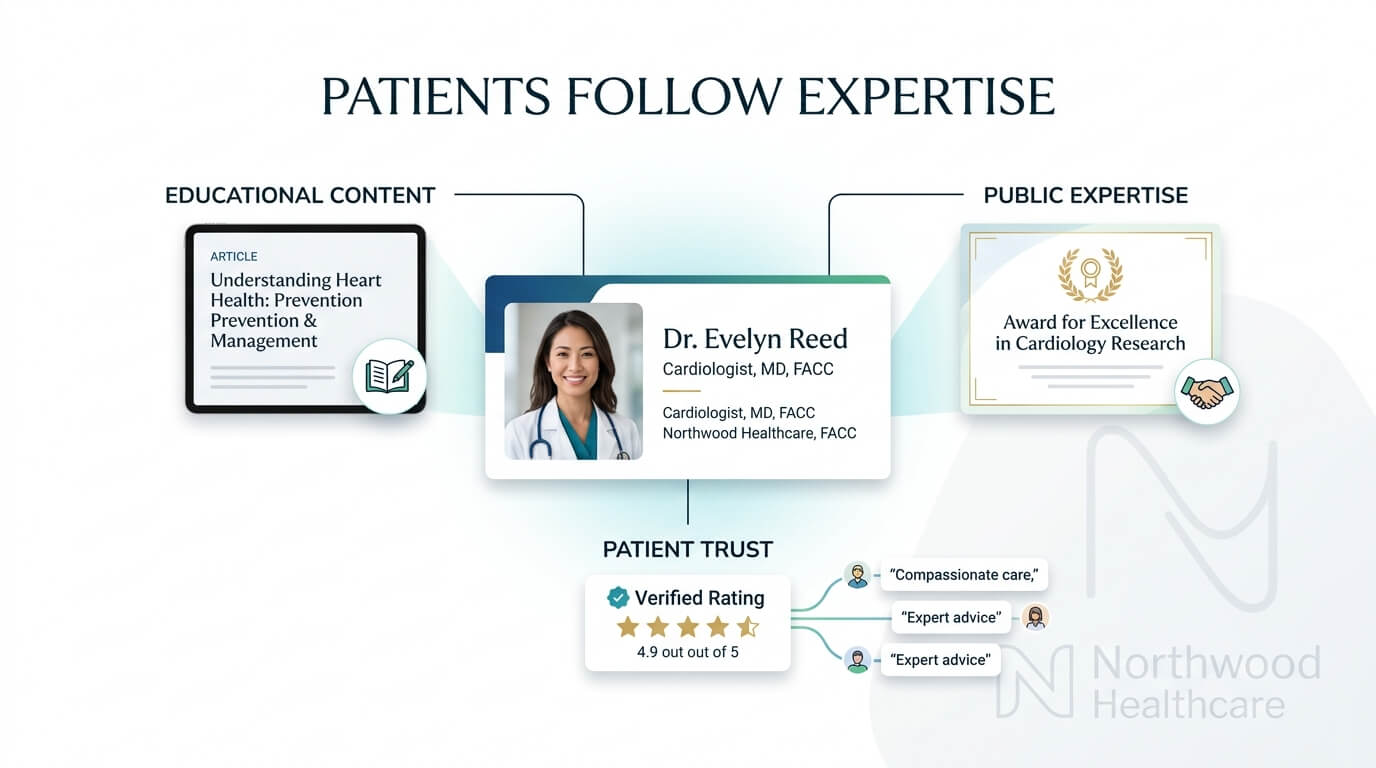
Patients trust doctors more than brands, which makes physician visibility a major growth factor. Building a strong personal brand helps humanize the practice and increases credibility in a crowded market.
Doctors can share educational insights, appear in short videos, or publish thought leadership content on platforms like LinkedIn.
This strengthens authority, builds trust faster, and directly influences patient choice, especially in competitive specialties.
4. Launch a Healthcare Podcast
A healthcare podcast helps practices like dermatologists and ophthalmologists build authority while educating patients in a more personal and engaging format.
Instead of short-form posts, podcasts allow deeper discussions around treatments, patient concerns, and industry insights, helping build long-term trust.
For clinics, this also creates reusable content that can be repurposed into blogs, videos, and social media clips, making it a cost-efficient way to strengthen visibility and brand credibility.
5. Use Geofencing Advertising to Reach High-Intent Patients
Geofencing allows healthcare providers to target potential patients based on physical location, such as competing clinics, hospitals, or related health facilities.
This makes it one of the most precise targeting methods in modern digital advertising.
Set up geofenced advertising campaigns through platforms like Google Ads or specialized location-based advertising tools, creating virtual boundaries around competitor locations, hospitals, or relevant healthcare facilities.
Then serve targeted ads, special offers, or educational content to users who enter those defined areas, encouraging them to consider your practice when making healthcare decisions.
6. Invest in Connected TV (CTV) Advertising
Connected TV advertising delivers healthcare messages through streaming platforms like smart TVs, where audiences are highly engaged and less exposed to ad fatigue.
It combines the storytelling power of traditional TV with digital-level targeting, allowing clinics and hospitals to reach specific demographics at scale while building strong brand awareness.
7. Build Digital Physician Referral Networks
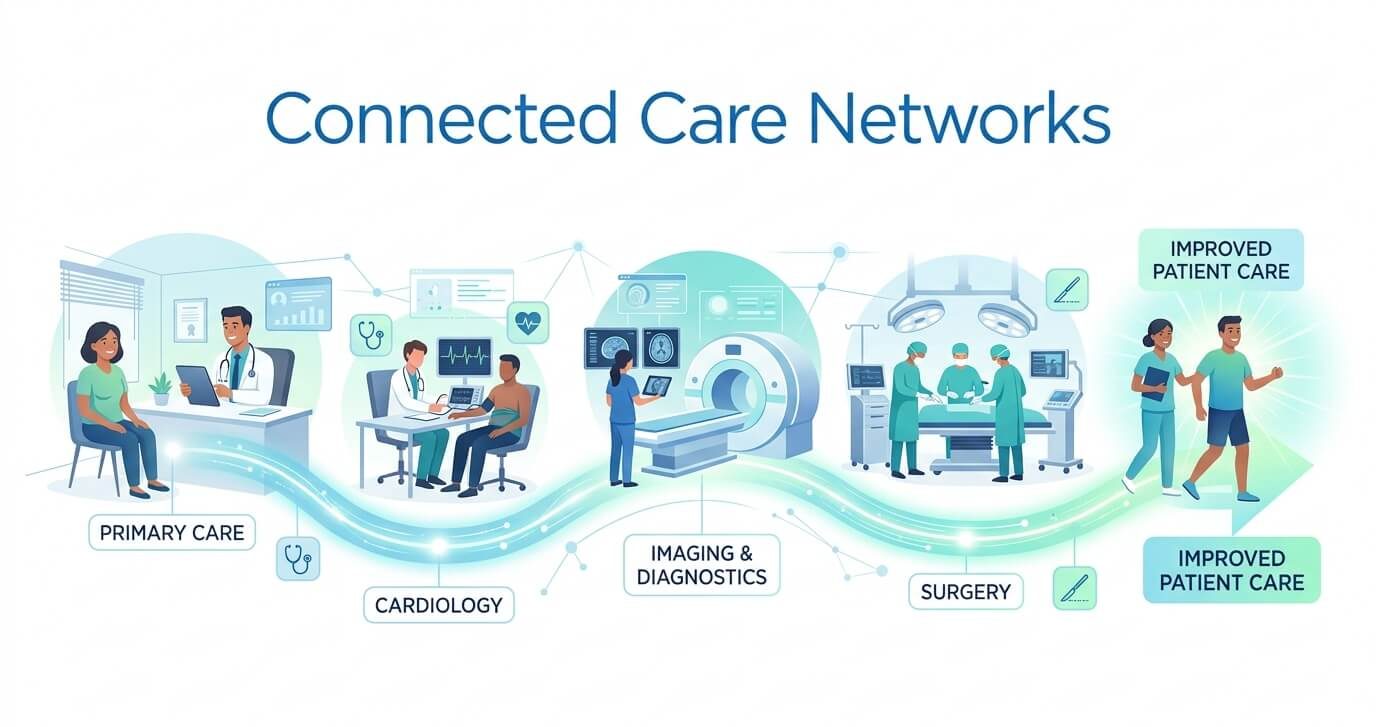
Modern referral systems go beyond word-of-mouth by using digital platforms to connect physicians, specialists, and healthcare providers more efficiently.
By creating structured referral networks, practices can improve collaboration, increase patient flow, and ensure faster access to specialized care.
This strengthens both patient experience and long-term practice growth.
8. Develop Comprehensive Patient Education Resource Centers
Instead of relying on scattered blog posts, healthcare providers should build structured education hubs that answer patient questions in one place.
These resource centers improve trust by making it easier for patients to understand conditions, treatments, and care options.
Well-organized educational content also increases time on site and improves conversion rates by guiding patients through their decision-making journey in a clear, supportive way.
9. Use Predictive Seasonal Marketing Campaigns
Patient demand in healthcare often follows seasonal patterns, from flu season and allergy spikes to elective procedure trends.
Predictive marketing uses this data to plan campaigns ahead of time, ensuring maximum visibility when demand is highest.
This approach helps clinics allocate budgets more efficiently and capture patients at the exact moment they are most likely to seek treatment.
10. Implement CRM-Based Patient Reactivation Campaigns
Existing patients are one of the most underutilized growth opportunities in healthcare. CRM-based reactivation campaigns help bring back inactive or overdue patients through automated reminders, follow-ups, and personalized messaging.
This strategy improves retention, increases lifetime patient value, and reduces dependency on new patient acquisition alone.
11. Create Treatment Comparison Content
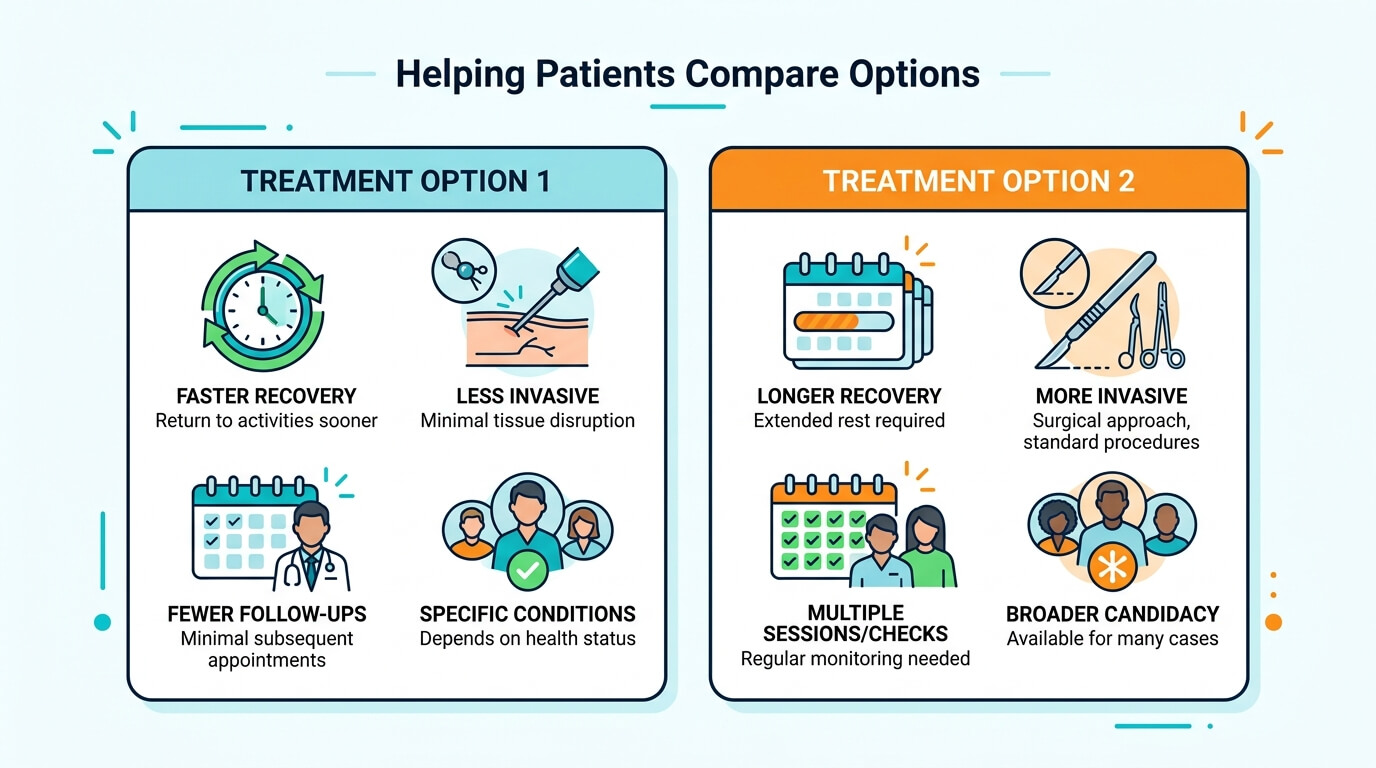
Patients often compare multiple treatment options before making a decision. Providing clear, unbiased comparison content helps them make informed choices while positioning the provider as a trusted authority.
This type of content improves engagement, supports decision-stage patients, and increases the likelihood of booking by reducing confusion during the decision-making process.
12. Build a First-Party Data Marketing Strategy
With increasing privacy regulations and reduced third-party tracking, healthcare organizations must rely on first-party data to understand and engage patients effectively.
This includes data collected directly from website interactions, appointment forms, email subscriptions, and patient engagement tools.
A strong first-party data strategy allows clinics to personalize communication, improve targeting accuracy, and make more informed marketing decisions based on real patient behavior.
13. Create Online Patient Communities
Online patient communities help healthcare providers build long-term engagement beyond appointments.
These communities allow patients to share experiences, ask questions, and receive guidance in a supportive environment.
This approach strengthens trust, improves patient loyalty, and positions the provider as a continuous source of care rather than a one-time service provider.
14. Offer Interactive Cost Estimators
Cost transparency is a major factor in patient decision-making. Interactive cost estimators help reduce uncertainty by giving patients a clearer idea of expected treatment expenses before they book an appointment.
This improves conversion rates by reducing friction and building confidence, especially for elective procedures and specialized treatments.
15. Design an Omnichannel Patient Acquisition Journey
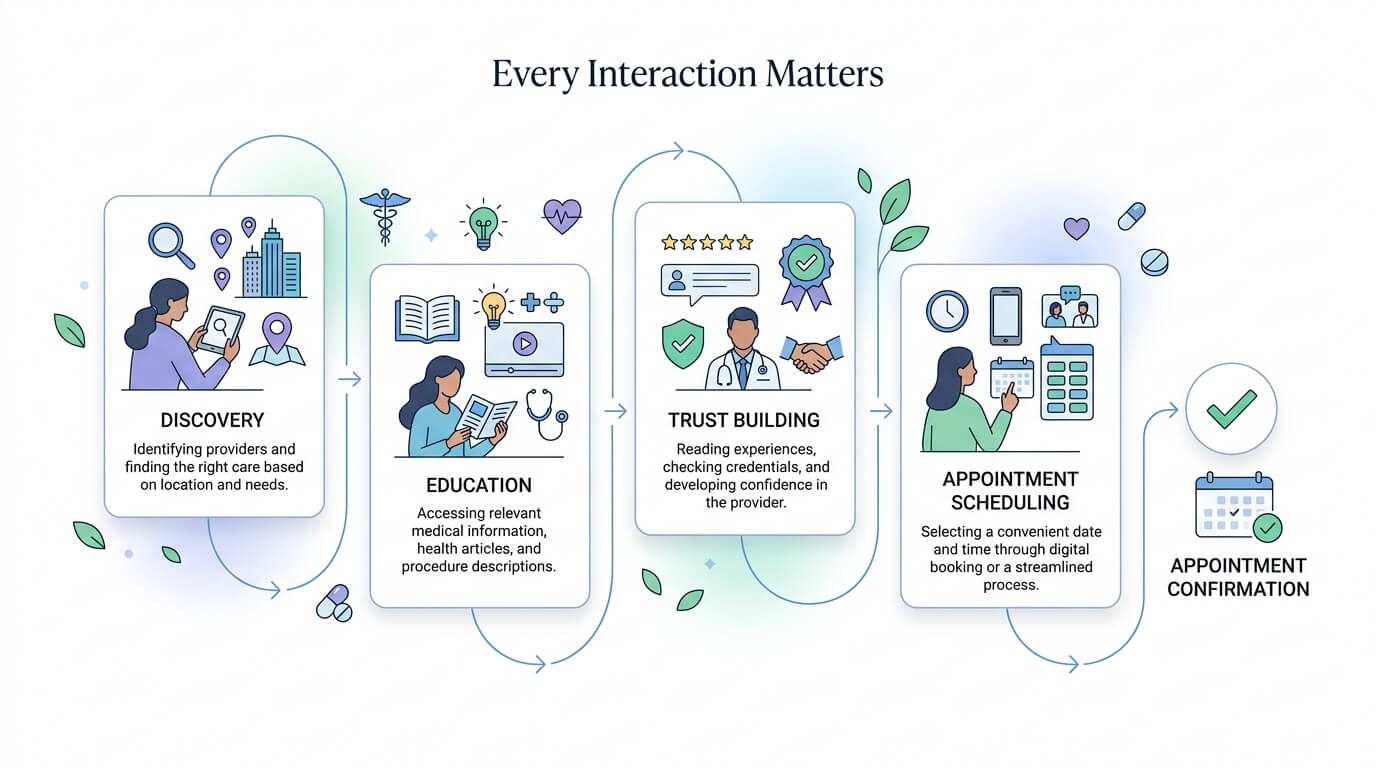
Patients rarely interact with just one marketing channel before booking an appointment. An omnichannel approach ensures consistent messaging across search, social media, email, paid ads, and website touchpoints.
By aligning all channels into a single patient journey, healthcare providers can improve engagement, strengthen brand recall, and significantly increase appointment conversions.
Conclusion
Healthcare marketing in 2026 is no longer defined by isolated tactics but by integrated, patient-focused strategies that reflect how people actually search, evaluate, and choose care today.
Practices that embrace innovation, from AI-driven visibility to omnichannel engagement, will be better positioned to attract and convert high-intent patients in an increasingly competitive landscape.
The key is not adopting every strategy at once, but building a focused system that aligns with your specialty, patient needs, and long-term growth goals.
FAQs
How do clinics attract more patients online?
What are marketing ideas for clinic growth?
What are top healthcare technology marketing strategies?
How does AI impact healthcare marketing today?
What role does content play in healthcare patient acquisition?
Are paid ads still effective for healthcare practices?
Let’s increase appointment bookings
At MedClicx, we help medical practices connect with more patients.

Senior Digital Marketing Strategist &
Healthcare SEO Consultant
James Walker is a Senior Digital Marketing Strategist and Healthcare SEO Consultant at MedClicx. He specializes in helping healthcare organizations and service-based businesses grow their online presence through SEO, content marketing, local SEO, AI search optimization, (GEO), technical SEO, website optimization, and digital marketing strategies.
Over the years, James has worked on improving organic visibility, lead generation, and brand authority by combining search engine optimization, website performance, content strategy, conversion optimization, and AI-ready content. His expertise also includes Google Business Profile optimization, schema markup, user experience (UX), analytics, and modern digital marketing best practices.
At MedClicx, James writes educational articles covering SEO, content marketing, digital marketing, AI search optimization, social media marketing, web design, advertising strategies, podcasts, and online business growth. His goal is to simplify complex marketing concepts and help businesses make data-driven decisions that generate sustainable long-term results.
- James Walker
- James Walker
- James Walker
- James Walker