Healthcare Advertising: Why It Matters for Practices
-
 James Walker
Table of Contents:
- What Is Healthcare Advertising?
- Why Healthcare Advertising Is Essential Today
- Key Benefits of Healthcare Advertising
- Elements of a High-Performing Healthcare Advertising Strategy
- Characteristics of a High-Impact Healthcare Marketing Strategy
- Conclusion
The healthcare industry has evolved rapidly in recent years, driven by changing patient expectations and increased adoption of digital technologies.
As demand for services returns to pre-pandemic levels, competition among providers continues to grow, making visibility and differentiation essential.
Today’s patients actively research providers online, compare options, and make decisions based on digital presence and reputation.
This shift has made medical advertising essential. Without a strategic approach, medical practices risk losing both new and existing patients.
This blog explores why healthcare advertising matters, how it drives patient growth, and the key strategies that help healthcare providers stay competitive in a digitally driven healthcare landscape
What Is Healthcare Advertising?
Healthcare advertising refers to the strategic promotion of medical services, providers, and healthcare solutions across digital and traditional channels to attract, engage, and retain patients.
While healthcare marketing includes activities such as patient education, brand development, and long-term engagement, healthcare digital advertising plays a more targeted role.
It involves delivering precise, data-driven messages to specific audiences through channels such as search engines, social media, and online platforms, ensuring that the right information reaches the right patients at the right time.
It focuses on informing patients about services, treatment options, and preventive care while addressing their concerns and preferences.
However, healthcare advertising operates within strict ethical and regulatory frameworks. Patient privacy, data security, and honest communication are essential, making trust a central element of every campaign.
Effective healthcare advertising not only promotes services but also supports informed decision-making and strengthens the connection between providers and patients.
Why Healthcare Advertising Is Essential Today
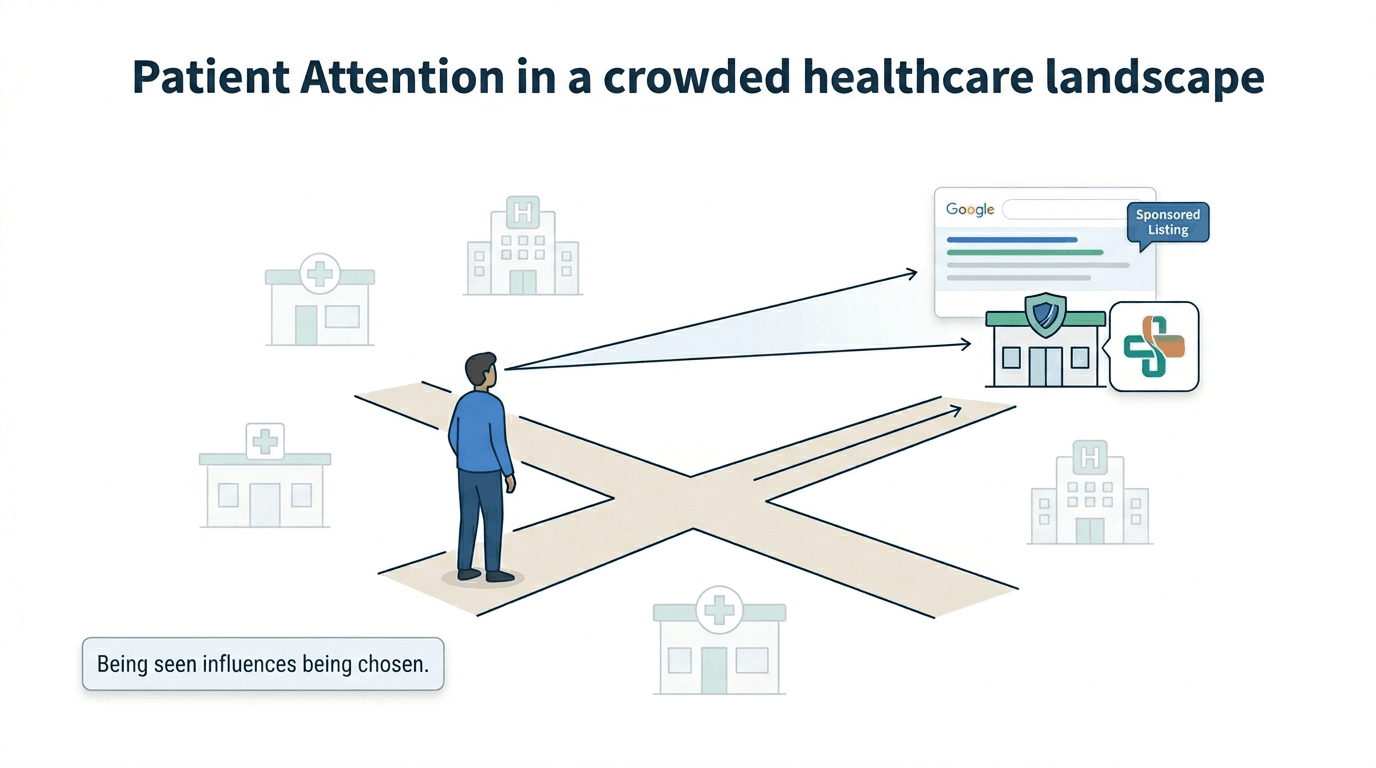
Healthcare organizations today operate in a highly competitive environment where patients actively research, compare, and choose providers based on trust, visibility, and online presence.
This makes strategic healthcare advertising a necessity rather than an option. Modern consumers are increasingly taking control of their healthcare journey, with around 69% of millennial patients turning to online sources for medical advice before consulting a physician.
Here is why digital healthcare advertising is essential.
Attract New Patients
Modern patients rely heavily on online platforms to find healthcare providers, compare services, and read reviews before making decisions. Effective healthcare advertising ensures that medical practices appear at the right time in these search journeys, increasing visibility and driving consistent patient acquisition.
Retain Existing Patients
Consistent communication, educational content, and personalized engagement help build trust and encourage patients to return for future care. Strong engagement also improves patient satisfaction and strengthens continuity of care.
Build a Strong Brand Reputation
Strategic advertising helps healthcare providers establish authority, differentiate their services, and shape positive patient perceptions. A strong and credible brand presence increases referrals, improves trust, and positions the practice as a preferred choice in the market.
Key Benefits of Healthcare Advertising
Healthcare advertising plays a vital role in improving patient engagement, strengthening brand visibility, and supporting long-term growth for medical practices.
Here are the key benefits of implementing a well-planned healthcare advertising campaign:
Increased Patient Acquisition and Revenue Growth
Healthcare advertising enables practices to reach patients who are actively searching for medical services.
Through targeted digital channels such as search engines, social media platforms, and paid campaigns, healthcare organizations can attract high-intent audiences and generate qualified leads.
A well-structured healthcare advertising campaign not only increases patient volume but can also improve revenue per patient, making it a direct driver of sustainable practice growth.
Expanded Reach and Competitive Advantage
In a highly competitive healthcare environment, visibility plays a critical role in patient decision-making. Healthcare advertising helps providers stand out by clearly communicating their expertise, services, and patient-focused care approach.
By strengthening online presence across digital platforms, practices can increase brand awareness, improve credibility, and capture a larger share of their target market.
Better Patient Education and Health Awareness
Healthcare advertising is not limited to promotion; it also plays a key role in education. Many patients struggle to understand medical conditions, treatment options, and preventive care measures.
Through structured healthcare marketing and advertising strategies, providers can deliver clear, reliable information that reduces confusion, addresses misconceptions, and encourages informed health decisions.
This is especially important for specialties such as dermatology, orthopedics, and plastic surgery practices, where patients conduct extensive online research before selecting a provider.
Reduced Misinformation and Improved Public Understanding
A significant advantage of healthcare advertising is its ability to correct misinformation and promote accurate health knowledge. By delivering trustworthy and consistent messaging, healthcare organizations can help patients better understand symptoms, risks, and treatment options. This not only builds trust but also supports better health behaviors and improves overall community well-being.
Data-Driven Optimization and Measurable Results
Modern healthcare advertising campaigns are highly measurable, allowing organizations to track performance across key metrics such as patient acquisition cost, conversion rates, engagement levels, and retention data.
This data-driven approach enables continuous optimization of strategies, better audience targeting, and improved return on investment (ROI). Over time, healthcare marketing becomes a performance-based system that supports both clinical impact and business growth.
Elements of a High-Performing Healthcare Advertising Strategy
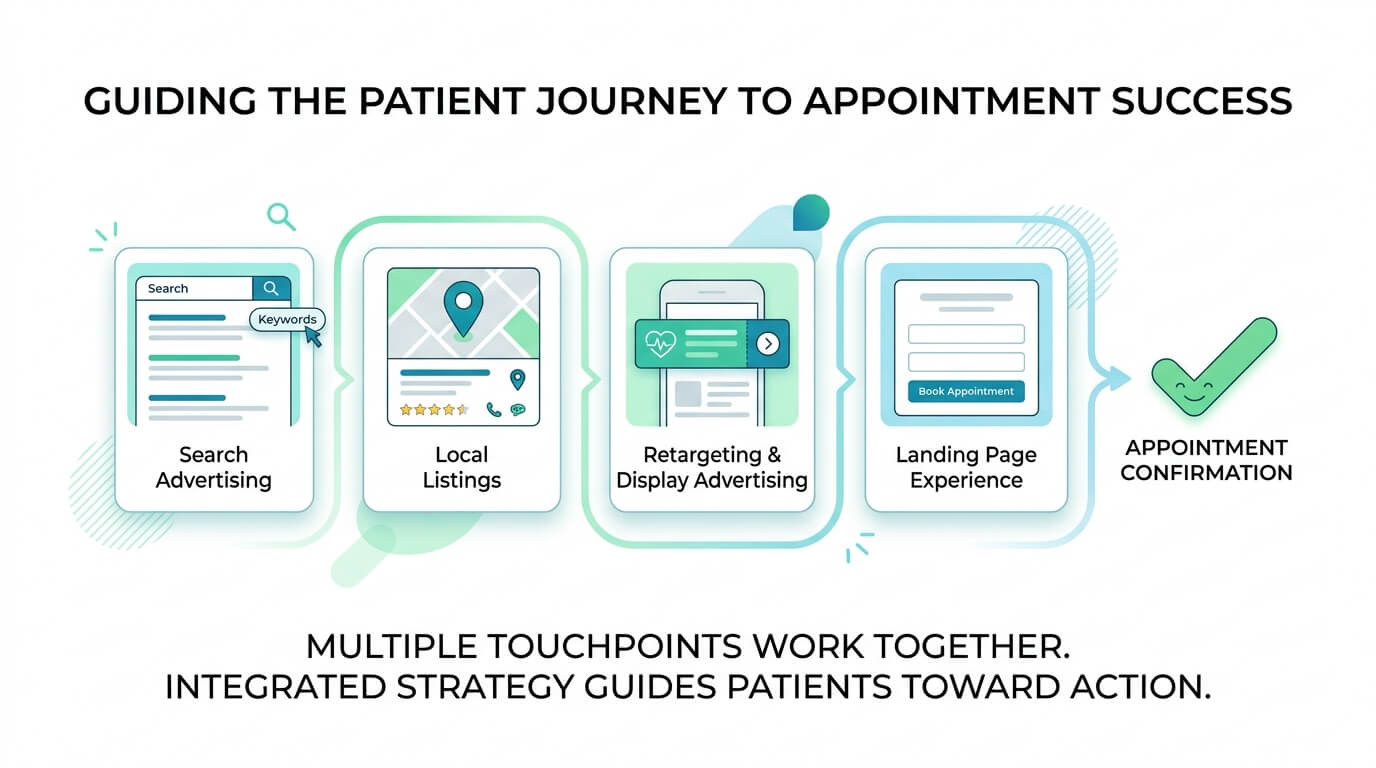
A successful healthcare advertising strategy requires more than visibility; it depends on a well-integrated, patient-focused approach that combines digital tools, data insights, and clear communication.
When executed effectively, these elements work together to improve patient experience, increase conversions, and maximize the impact of every campaign.
1. User-Friendly and Conversion- Optimized Website
An easy-to-navigate website is the foundation of any healthcare advertising strategy. Patients are more likely to take action when they can quickly find information, book appointments, or contact a provider without unnecessary steps.
A well-structured website with clear navigation, fast loading speed, and mobile responsiveness significantly improves user experience and conversion rates.
2. Search Engine Optimization (SEO)
Search engine optimization ensures that a healthcare practice is discoverable when patients search for symptoms, treatments, or local providers.
By targeting relevant keywords, optimizing content, and focusing on local SEO, healthcare organizations can improve their visibility in search results. Without proper SEO, even the most well-designed website may fail to attract traffic.
3. Content Marketing and Informational Blogs
High-quality content plays a critical role in answering patient questions and guiding them through their healthcare journey. Informational blogs, in particular, help address common concerns related to symptoms, conditions, and treatments.
Since a large percentage of health-related searches begin online, consistent content creation not only drives traffic but also positions the provider as a trusted source of information and can potentially generate leads.
4. Social Media and Patient Engagement
Social media platforms provide an opportunity to connect with patients in a more interactive and accessible way. By sharing educational content, videos, and updates, healthcare providers can showcase their expertise while addressing patient queries.
A strong social media presence also helps build trust and maintain ongoing engagement with both new and existing patients.
5. Email Marketing and Patient Communication
Email marketing remains an effective tool for nurturing patient relationships. Resourceful and well-designed emails that include relevant information, helpful resources, and clear calls to action can keep patients informed and engaged. This ongoing communication helps maintain loyalty and encourages repeat visits.
6. Performance Tracking and Data Optimization
Tracking and analyzing campaign performance is essential for continuous improvement. Metrics such as website traffic, conversion rates, patient acquisition cost, and engagement levels provide valuable insights into what is working and what needs adjustment.
Techniques like A/B testing further refine messaging and user experience, ensuring that advertising efforts are data-driven and results-oriented.
By combining these elements, healthcare organizations can create a comprehensive advertising strategy that not only attracts patients but also enhances their overall experience.
Characteristics of a High-Impact Healthcare Marketing Strategy
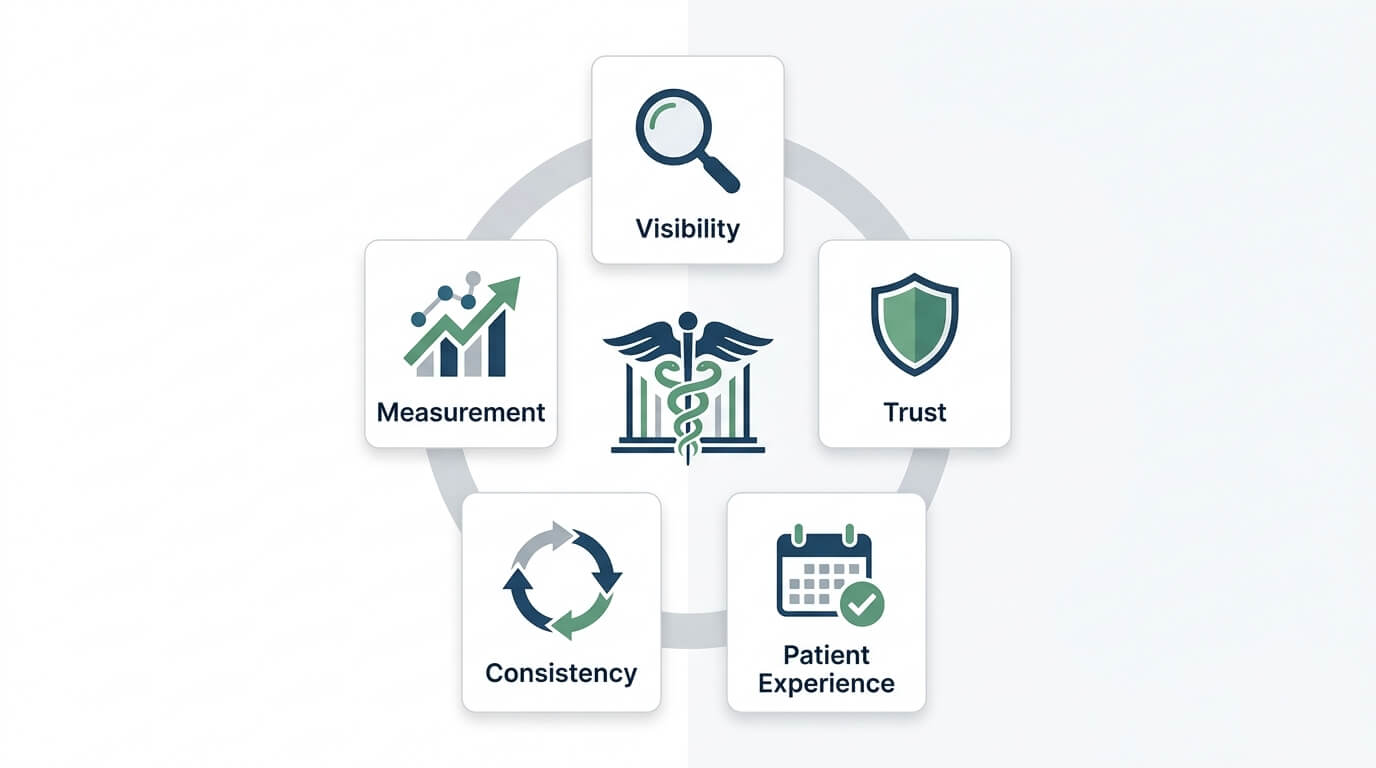
An effective healthcare marketing strategy is built on a combination of personalization, data intelligence, and advanced digital capabilities.
In a rapidly evolving and patient-driven landscape, healthcare organizations must adopt structured, technology-enabled approaches to remain competitive and deliver meaningful patient experiences.
- Personalized and Relationship-Focused
Modern healthcare marketing is increasingly centered on personalization and long-term relationship building. Patients expect communication that is relevant to their specific needs, preferences, and stage in the healthcare journey.
By leveraging data from systems such as electronic health records (EHRs) and customer relationship management (CRM) platforms, healthcare providers can deliver tailored messaging that resonates with individual patients.
- Data-Driven and Highly Targeted
Broad, generalized campaigns are no longer effective in today’s competitive environment. Instead, data-driven marketing enables organizations to identify high-value patient segments, understand behavior patterns, and deliver highly targeted campaigns.
By utilizing analytics, propensity modeling, and CRM insights, healthcare marketers can determine which audiences are most likely to respond, which channels perform best, and how messaging can be optimized. This results in more efficient campaigns, improved conversion rates, and a higher return on investment.
- Powered by Advanced Digital Technologies
Technologies such as marketing automation platforms, content management systems, and CRM tools allow organizations to scale their efforts while maintaining consistency and efficiency.
Compared to traditional methods, digital marketing provides greater flexibility, better targeting, and measurable outcomes.
- Patient-Centric Approach
A patient-centric approach ensures that communication is accessible, relevant, and aligned with how individuals seek healthcare information. This includes offering multiple communication channels, flexible engagement options, and content that addresses real patient concerns.
- Measurable and Continuously Optimized
With access to performance data and analytics, organizations can monitor key metrics such as engagement rates, patient acquisition costs, and campaign effectiveness.
This ongoing evaluation allows marketers to refine their strategies, eliminate underperforming tactics, and focus on high-impact initiatives.
Conclusion
In an increasingly competitive and digitally driven healthcare landscape, advertising has become a fundamental component of practice growth and patient engagement.
From improving visibility and attracting high-intent patients to building trust and supporting patient education, healthcare advertising plays a critical role at every stage of the patient journey.
When combined with a well-structured strategy, advanced digital tools, and data-driven insights, it enables healthcare organizations to move beyond traditional approaches and achieve measurable, sustainable results.
Ultimately, practices that invest in strategic healthcare advertising are better positioned to strengthen their reputation, enhance patient relationships, and remain competitive in a rapidly evolving, patient-centric environment.
Let’s increase appointment bookings
At MedClicx, we help medical practices connect with more patients.

Senior Digital Marketing Strategist &
Healthcare SEO Consultant
James Walker is a Senior Digital Marketing Strategist and Healthcare SEO Consultant at MedClicx. He specializes in helping healthcare organizations and service-based businesses grow their online presence through SEO, content marketing, local SEO, AI search optimization, (GEO), technical SEO, website optimization, and digital marketing strategies.
Over the years, James has worked on improving organic visibility, lead generation, and brand authority by combining search engine optimization, website performance, content strategy, conversion optimization, and AI-ready content. His expertise also includes Google Business Profile optimization, schema markup, user experience (UX), analytics, and modern digital marketing best practices.
At MedClicx, James writes educational articles covering SEO, content marketing, digital marketing, AI search optimization, social media marketing, web design, advertising strategies, podcasts, and online business growth. His goal is to simplify complex marketing concepts and help businesses make data-driven decisions that generate sustainable long-term results.
- James Walker
- James Walker
- James Walker
- James Walker