Top 12 Ophthalmology Marketing Strategies to Grow in 2026
-
 James Walker
Table of Contents:
- What is Ophthalmology Marketing?
- Why is Strategic Ophthalmology Marketing Important?
- Quick-Win Ophthalmology Marketing Ideas for 2026
- 12 Ophthalmology Marketing Strategies to Implement in 2026
- Common Ophthalmology Marketing Mistakes to Avoid
- How to Choose the Right Strategy for Your Practice
- Conclusion
In today’s digital-first healthcare landscape, patients no longer rely solely on referrals to choose an eye specialist.
Whether they are considering cataract surgery, LASIK, or a routine eye exam, most patients begin their journey online, researching providers, reading reviews, comparing credentials, and increasingly turning to AI-driven platforms for recommendations.
This shift has fundamentally changed how practices approach marketing strategies for ophthalmology. What once worked, a basic website, a few ads, and occasional referrals, is no longer enough to drive consistent patient growth in 2026.
Marketing now shapes the patient experience long before the first consultation even takes place.
Ophthalmology marketing now sits at the intersection of technology, trust, and patient education.
In this guide, we’ll break down the most effective marketing strategies for ophthalmology in 2026, helping you attract high-intent patients, improve conversions, and build a sustainable growth engine for your practice.
What is Ophthalmology Marketing?
Ophthalmology marketing is the strategic approach used by eye care practices to attract new patients, convert inquiries into appointments, and maintain long-term patient relationships through targeted digital efforts.
In 2026, effective marketing strategies for ophthalmology rely on a combination of optimized websites, search visibility (including local and AI-driven SEO), paid campaigns, reputation building, and performance tracking to drive consistent and measurable patient growth.
Why is Strategic Ophthalmology Marketing Important?
Strategic ophthalmology marketing is essential because it ensures the right patients can find your practice and confidently choose your clinic.
In today’s digital world, most patients begin their journey online, searching for providers, reading reviews, and watching educational content before making a decision.
Without a focused strategy, clinics may appear visible but fail to connect with patients in a meaningful way. A well-planned marketing approach offers several key advantages:
- Digital-first visibility: Reach patients where they search, from Google and reviews to short-form videos.
- Lower patient acquisition costs: Educated patients are more likely to convert, reducing wasted ad spend.
- Attract high-value patients: Showcase expertise and outcomes to draw patients ready for advanced care.
- Guide the patient journey: Shift interactions from cost-focused questions to committed appointment bookings.
By embracing strategic ophthalmology marketing, your practice increases visibility, builds trust, attracts the right patients, and sets the stage for long-term growth.
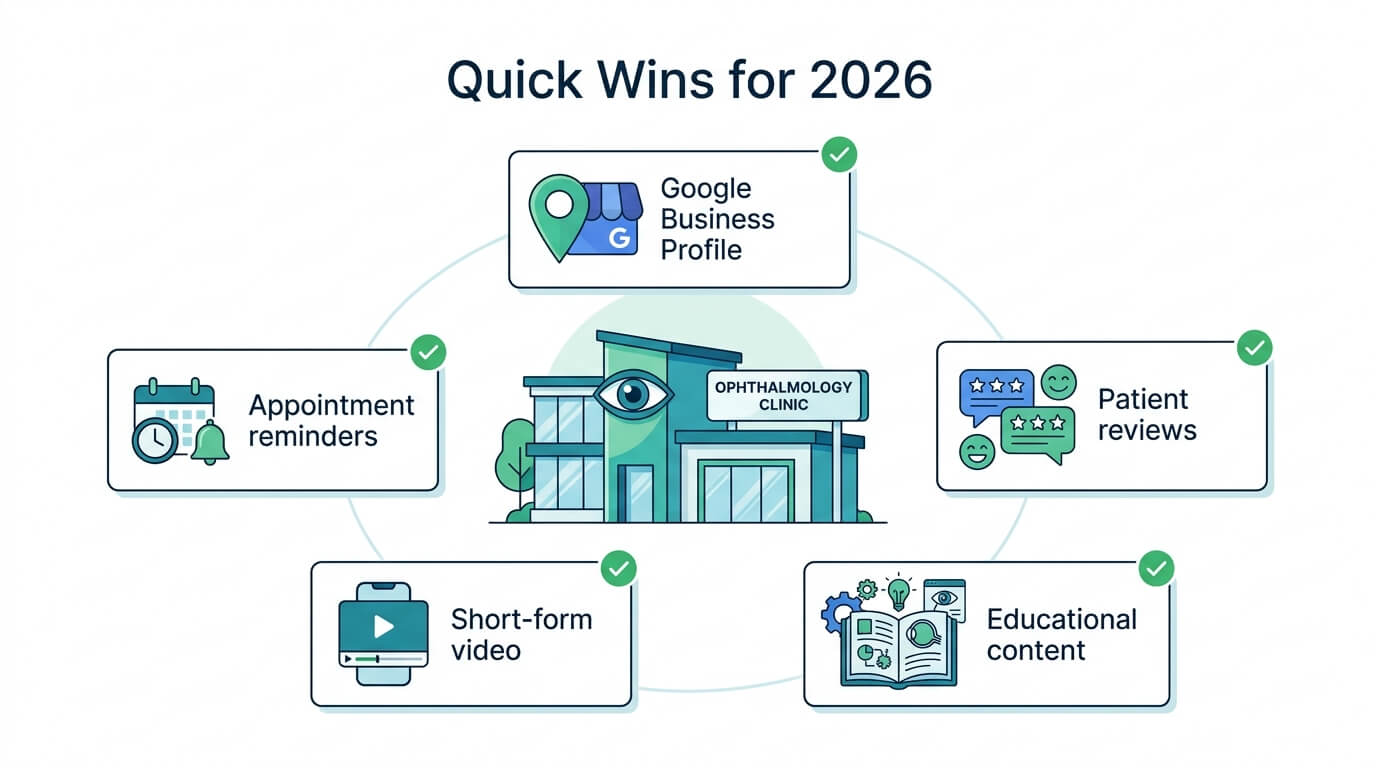
Quick-Win Ophthalmology Marketing Ideas for 2026
|
Strategy |
Impact |
Ease of Implementation |
|
Conversion-Focused Website Design |
Very High |
Medium |
|
Local SEO Optimization |
High |
Medium |
|
Paid Advertising (Google Ads) |
High |
Medium |
|
Review Management |
High |
Easy |
|
Educational Video Content |
Medium |
Medium |
|
Referral Network Support |
High |
Medium |
|
Analytics & Performance Tracking |
Very High |
Medium |
|
Social Media Engagement |
Medium |
Easy |
|
Email & SMS Patient Retention |
Medium |
Easy |
12 Ophthalmology Marketing Strategies to Implement in 2026
1. Design a Fast and User-Friendly Ophthalmology Website
Your website is your digital clinic and the first impression most patients have of your practice. If it’s slow, confusing, or outdated, potential patients will leave within seconds.
A well-designed website not only attracts visitors but also converts them into booked appointments, making it a cornerstone of effective eye care marketing.
How to Implement
To create an ophthalmology website that supports growth and patient engagement, focus on these key elements:
- Fast Loading Pages: Optimize page speed to reduce bounce rates and improve search rankings.
- Mobile-First Design: Most patients browse on their phones, so your site must look and function flawlessly on all devices.
- Clear Calls-to-Action (CTAs): Include prominent buttons like “Book an Exam,” “Request a Consultation,” or “Call Now.”
- Simple Online Scheduling: Allow patients to book appointments or request consultations directly on the site.
- Dedicated Service Pages: Highlight high-demand treatments such as LASIK, cataract surgery, and glaucoma care.
- Trust Signals: Showcase doctor credentials, patient reviews, certifications, and awards to build confidence.
- Educational Content: Use visuals, videos, and blogs to explain procedures and answer common patient questions.
- Accessibility Compliance: Ensure your site meets WCAG standards so all patients can navigate it comfortably.
Pro Tips
- Integrate AI tools like AI Chat to answer patient questions 24/7 and capture leads automatically.
- Use analytics to track patient behavior on your website and identify areas where users drop off.
- Regularly update your website design and content to keep it modern and relevant.
When patients can easily find information, book appointments, and feel confident in your expertise, your practice not only attracts more leads but also converts them into long-term patients.
2. Boost Local SEO & Google Business Optimization
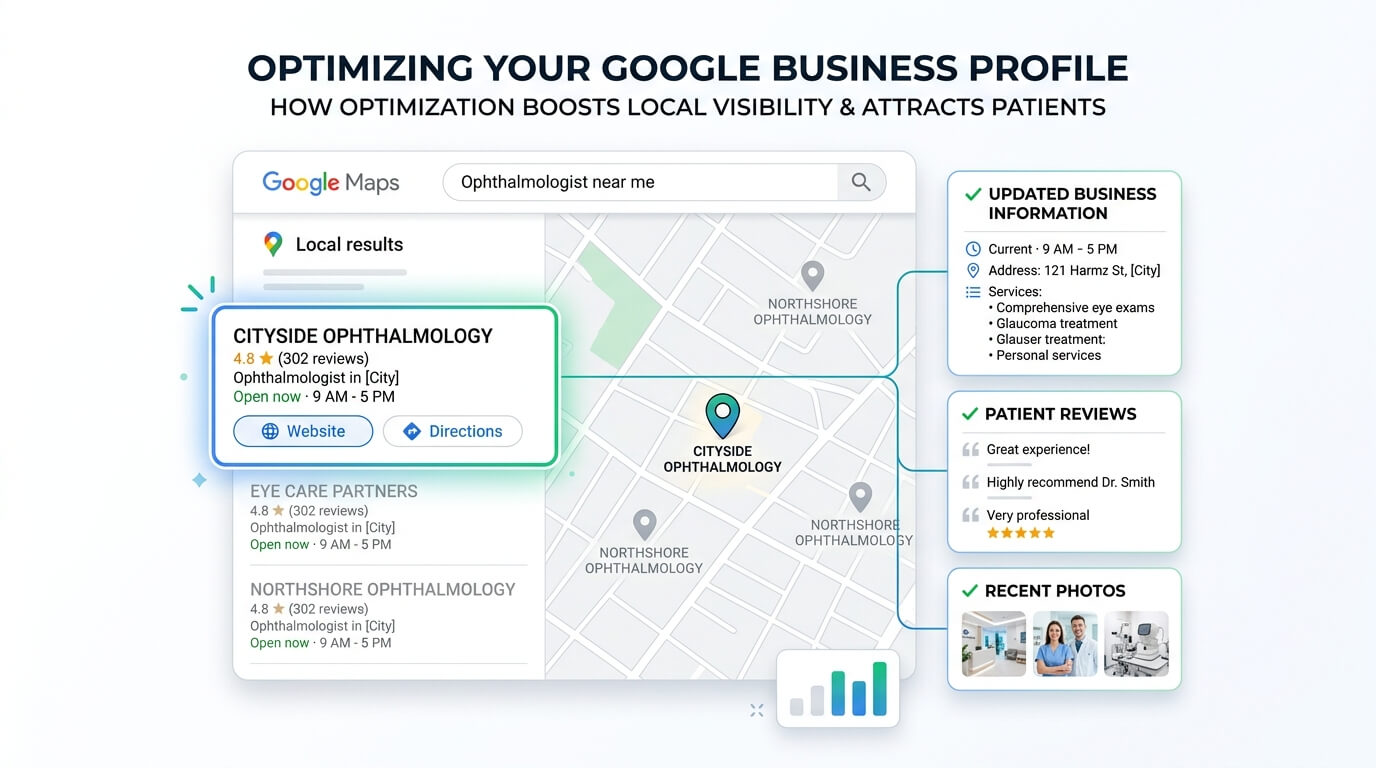
Most patients start their search for an eye specialist online, typing queries like “eye doctor near me” or “best cataract surgeon in the city.”
Clinics that appear at the top of local search results and map packs get the majority of patient inquiries, making local SEO and Google Business optimization essential components.
How to Implement
To maximize your local search visibility, focus on these steps:
- Optimize Your Google Business Profile: Ensure your profile includes accurate practice information, high-quality photos, and service descriptions.
- Maintain NAP Consistency: Keep your name, address, and phone number identical across all online directories and listings.
- Collect Genuine Patient Reviews: Encourage satisfied patients to leave reviews and respond to them to build trust.
- Create Location-Specific Pages: Develop dedicated service pages for each clinic location with unique, helpful copy targeting local search terms.
- Use Local Keywords Naturally: Include city and neighborhood names in headings, metadata, and content without overstuffing.
- Internal Linking: Link location pages and service pages internally so search engines understand your practice’s structure.
Pro Tips
- Regularly update your Google Business Profile with new photos, offers, and posts to maintain engagement.
- Combine local SEO with educational content on your site to attract patients earlier in their decision-making process.
- Monitor local rankings and patient leads to measure the effectiveness of your ophthalmology SEO efforts.
Strong local SEO and Google Business optimization ensure that your practice is visible to nearby patients at the exact moment they’re ready to book an appointment.
When executed consistently, this strategy builds authority, trust, and a steady stream of qualified leads for your practice.
3. Enhance On-Page SEO and AI Search Presence
Modern patients don’t just search on Google; they also rely on AI-powered platforms such as ChatGPT, Meta, and Gemini for answers.
For ophthalmology practices, having a website structured for both search engines and AI models is now a critical part of an effective marketing strategy.
How to Implement
To improve your on-page SEO and AI visibility, focus on these key elements:
- Clear Service and Condition Pages: Create dedicated pages for treatments like LASIK, cataract surgery, glaucoma management, and dry eye care.
- Optimized Metadata and Headings: Use descriptive titles, meta descriptions, and header tags that include relevant keywords naturally.
- Fast-Loading, Mobile-Friendly Design: Ensure pages load quickly and display properly on all devices to improve rankings and user experience.
- Structured FAQs and Schema Markup: Add FAQs and schema to help search engines and AI platforms understand your content and provide rich results.
- Logical Site Structure: Organize pages and internal links so search engines and AI systems can easily navigate your website.
Pro Tips
- Regularly update content to reflect new procedures, treatments, and patient FAQs.
- Monitor AI visibility using search tools that track how often your content is cited in AI-generated overviews.
- Pair on-page SEO with strong local SEO and content marketing to maximize patient reach.
By enhancing on-page SEO and preparing your site for AI-driven search, your practice becomes easier to find, more trustworthy, and authoritative.
4. Paid Advertising with Google Ads
While SEO builds long-term visibility, paid advertising can deliver faster, high-intent leads for your ophthalmology practice.
Google Ads remains one of the most effective tools for targeting patients actively searching for procedures like LASIK, cataract surgery, and premium IOLs.
How to Implement
To run a high-performing ophthalmology ad campaign, follow these steps:
- Target the Right Keywords: Focus on procedure-specific searches such as “LASIK treatment near me” or “cataract surgery (city).”
- Create Dedicated Landing Pages: Each campaign should link to a page tailored to the specific procedure, with clear educational content and visuals.
- Use Clear Calls-to-Action (CTAs): Include buttons like “Book Consultation,” “Request Appointment,” or “Learn More” to guide patients.
- Segment Campaigns by Service: Separate campaigns for OPD visits, LASIK, cataract surgery, retina care, and pediatric ophthalmology improve ad relevance and ROI.
- Monitor and Optimize: Track conversions, adjust bidding, and use negative keywords to reduce irrelevant clicks and wasted spend.
Pro Tips
- High-performing ads speak directly to patient intent rather than general services.
- Align paid campaigns with ophthalmology SEO and a high-converting website for maximum efficiency.
- Regularly review analytics to ensure each campaign meets its specific goal and delivers qualified leads.
When executed properly, Google Ads campaigns put your practice in front of patients exactly when they’re ready to book, turning clicks into appointments and giving your ophthalmology marketing efforts an immediate boost.
5. Use Educational Videos to Engage Ophthalmology Patients
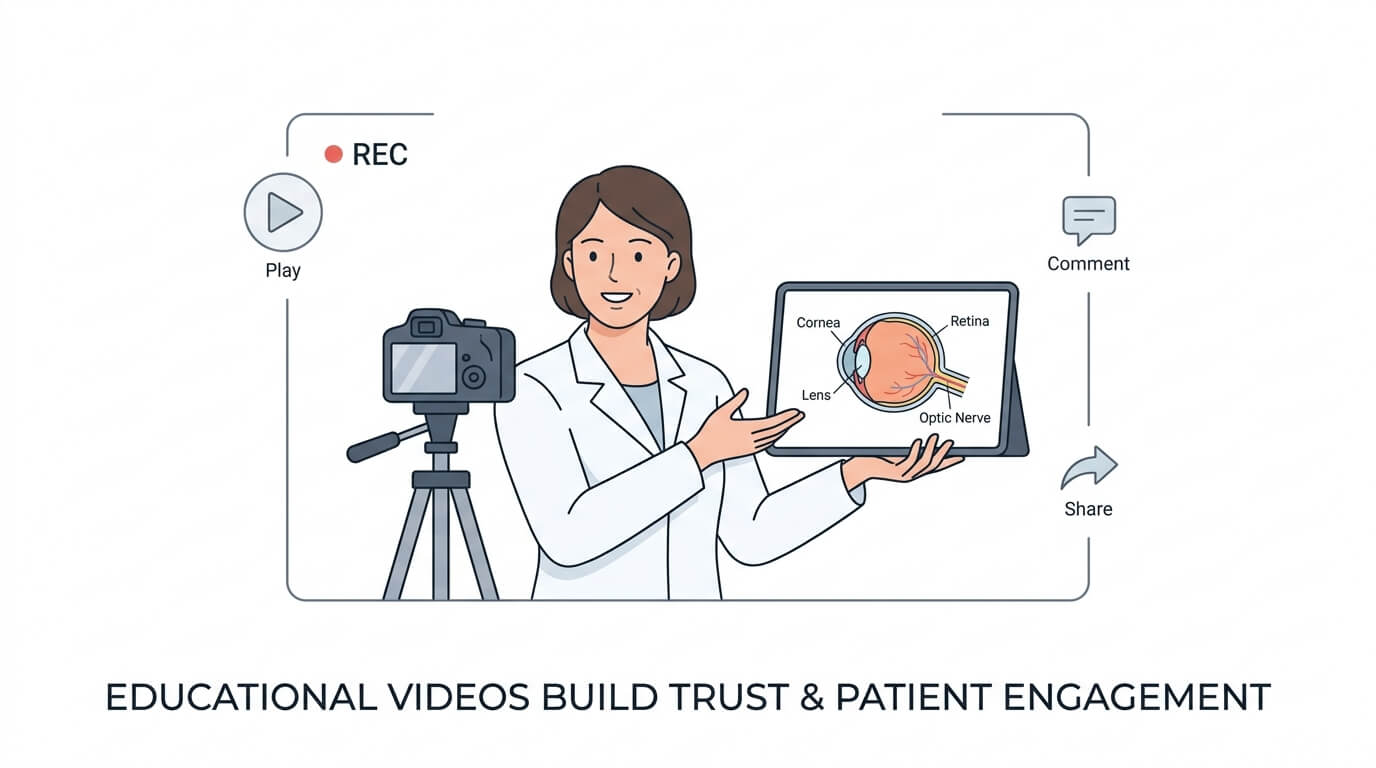
Videos have become one of the most effective ways for ophthalmology clinics to educate and connect with patients.
Seeing procedures explained visually or meeting the provider on-screen helps potential patients feel confident in their choice.
Educational videos also reduce hesitation and improve patient understanding before the first consultation.
How to Implement
To create video content that engages and converts:
- Procedure Explainers: Produce videos covering treatments such as LASIK, cataract surgery, glaucoma management, or dry eye care.
- Provider Introductions: Short videos highlighting surgeons and optometrists help humanize your clinic and build trust.
- 3D Animations: Use animations to clearly show complex procedures step-by-step, making them easy to understand and less intimidating.
- Multi-Platform Sharing: Publish videos on your website, landing pages, YouTube, social media, and patient emails to maximize reach.
- Pre-Consultation Education: Send videos to patients before appointments to answer common questions and speed up their decision-making.
Pro Tips
- Keep videos concise, visually clear, and easy for patients to follow.
- Add captions for accessibility and mobile-friendly playback.
- Optimize titles, descriptions, and thumbnails for search and AI visibility.
- Track engagement to identify which videos drive more appointment bookings.
Educational videos can help ophthalmology clinics build credibility, educate patients, and increase conversion rates.
6. Build Trust Through Online Reviews and Reputation Management
Online reviews have become a critical factor in how patients choose an ophthalmologist. Before booking an appointment, most patients read multiple reviews to gauge quality, trustworthiness, and outcomes.
Clinics that consistently maintain high ratings, typically 4 stars and above, tend to dominate local search results and attract more inquiries.
How to Implement
To leverage online reviews effectively:
- Request Reviews Strategically: Encourage satisfied patients to leave reviews shortly after visits or procedures. Keep the request polite and simple.
- Respond to Feedback: Reply professionally to all reviews, including neutral or negative ones, showing that your clinic values patient input.
- Maintain High Ratings: Focus on delivering excellent care consistently to naturally improve ratings over time.
- Monitor Multiple Platforms: Track Google, Facebook, Healthgrades, and other relevant directories to quickly address issues or questions.
Pro Tips
Showcase authentic patient experiences, including before-and-after stories where allowed.
- Share short educational posts or videos that answer common patient questions, reinforcing your clinic’s expertise.
- Highlight the human side of your practice, staff introductions, behind-the-scenes updates, or community involvement to strengthen connection and trust.
A strong reputation built through online reviews and consistent engagement not only boosts local visibility but also enhances patient trust and encourages hesitant prospects to book appointments.
7. Reduce No-Shows with Automated Appointment Reminders
Missed appointments are one of the most costly challenges for ophthalmology practices. Automated appointment reminders help ensure patients show up on time, keeping schedules full and improving overall clinic efficiency.
How to Implement
Use automated reminders through multiple channels:
- SMS Notifications: Send timely text reminders to patients about upcoming appointments.
- Email Alerts: Provide confirmation emails with easy rescheduling options.
- Patient Portal Updates: Integrate reminders with your practice management software for real-time updates and follow-ups.
Pro Tips
- Send reminders at multiple intervals, 24 hours and 1–2 days before the appointment.
- Include clear instructions for cancellations or rescheduling to reduce last-minute gaps.
- Track patient responses to identify recurring no-shows and follow up proactively.
By implementing automated reminders, your clinic not only reduces revenue loss but also enhances patient satisfaction and engagement, creating a smoother experience for both staff and patients.
8. Establish Authority with Content Marketing
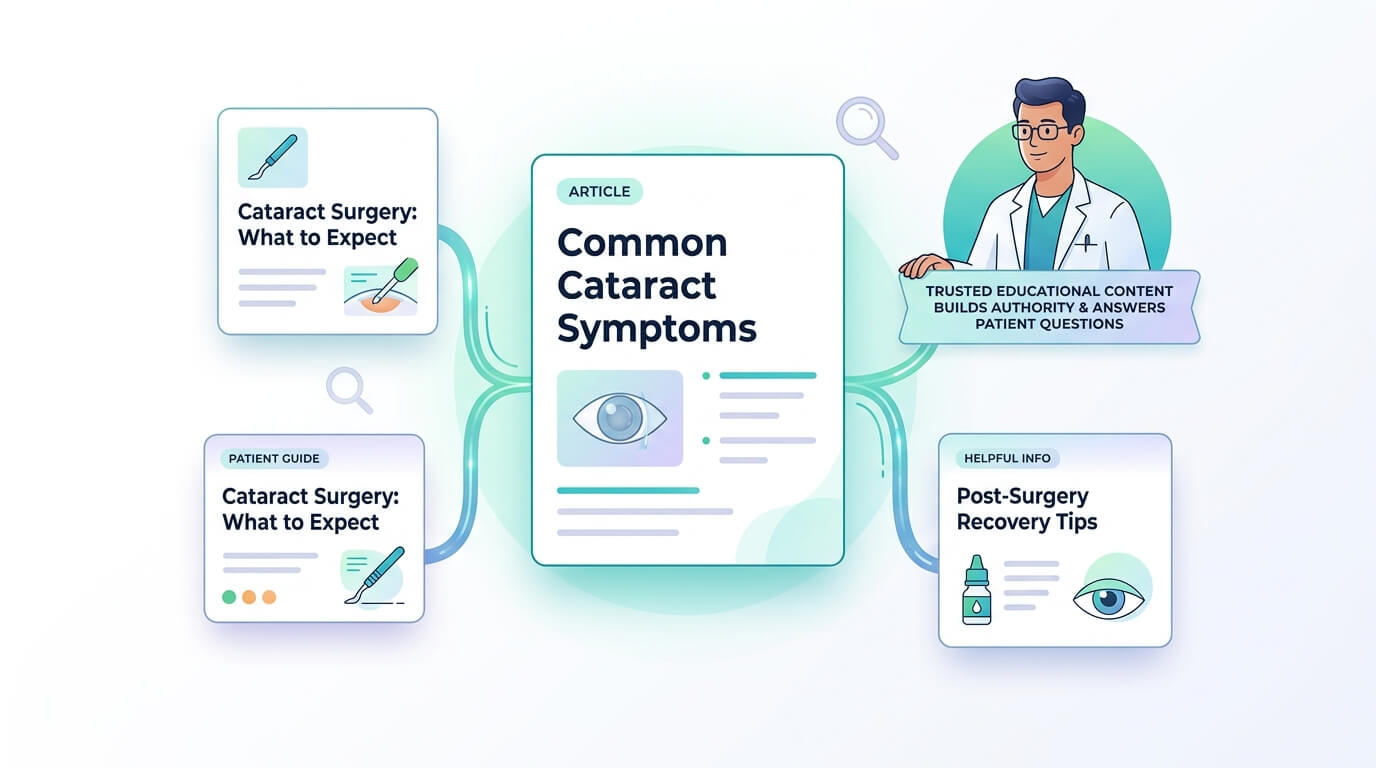
Creating high-quality educational content is one of the most effective ways for ophthalmology clinics to build credibility and attract patients.
Informative blogs, treatment guides, condition-specific pages, and FAQs help patients understand their options while reinforcing your expertise.
How to Implement
To position your clinic as a trusted authority:
- Answer Patient Questions: Create content that addresses common concerns like “Is LASIK safe?” or “How to manage dry eyes effectively.”
- Use Multiple Content Formats: Blogs, FAQs, treatment guides, and videos can all educate patients at different stages of their journey.
- Optimize for Search and AI Visibility: Well-structured, informative content can improve SEO rankings and be referenced in AI-generated summaries.
- Provide Reassurance and Clarity: Focus on clear, simple explanations of procedures, timelines, and recovery processes to reduce patient anxiety.
Pro Tips
- Update content regularly to reflect the latest treatments, guidelines, and patient concerns.
- Avoid overly technical or promotional language; aim for approachable, informative content.
By consistently producing valuable educational content, your ophthalmology clinic not only builds authority but also increases patient trust, improves conversion rates, and supports long-term practice growth.
9. Maintaining Practice and Provider Listings
Accurate online listings are crucial for ophthalmology clinics looking to attract local patients. Inconsistent or outdated information across Google, Healthgrades, Vitals, and other directories can confuse potential patients and reduce search visibility.
How to Implement
To ensure your practice and provider listings are optimized:
- Audit Your Listings Regularly: Check all platforms for duplicates, outdated addresses, phone numbers, or office hours.
- Keep Information Consistent: Ensure your clinic name, address, and contact details (NAP) match exactly across Google, directories, and review sites.
- Include Provider Details: Add individual provider profiles with credentials, specialties, and service offerings to build trust.
Pro Tips
- Prioritize high-traffic directories and healthcare-specific platforms for maximum visibility.
- Update your listings whenever changes occur, such as new services, locations, or provider additions.
- Monitor reviews and feedback on these listings to maintain a positive online reputation.
Properly managed listings not only improve local search rankings but also increase patient confidence in your clinic, making it easier for prospective patients to find and book care.
10. Balancing OD Referrals with Digital Marketing
Referrals from optometrists (ODs) remain an important source of patients for ophthalmology clinics, but relying solely on them is no longer enough.
Certain services, such as LASIK or refractive surgery, often benefit more from direct-to-patient marketing efforts.
How to Implement
To balance referrals with digital marketing:
- Identify Referral-Driven Services: Understand which procedures rely heavily on OD referrals and maintain strong relationships with local optometrists.
- Target Direct-to-Patient Services: Invest in digital campaigns for treatments that patients often seek independently, like LASIK, cataract surgery, or advanced retinal procedures.
- Coordinate Efforts: Align referral relationships with your digital marketing strategy to ensure consistent patient flow across all service lines.
Pro Tips
- Communicate regularly with referring ODs to maintain trust and collaboration.
- Use patient education and content marketing to support direct inquiries for elective or high-demand procedures.
- Track patient acquisition channels to measure the impact of referrals versus digital campaigns.
By balancing OD referrals with targeted digital marketing, your clinic can achieve steady growth, improve patient acquisition, and ensure a consistent stream of high-value cases.
11. Data & AI-Driven Marketing Insights for Eye Care Growth
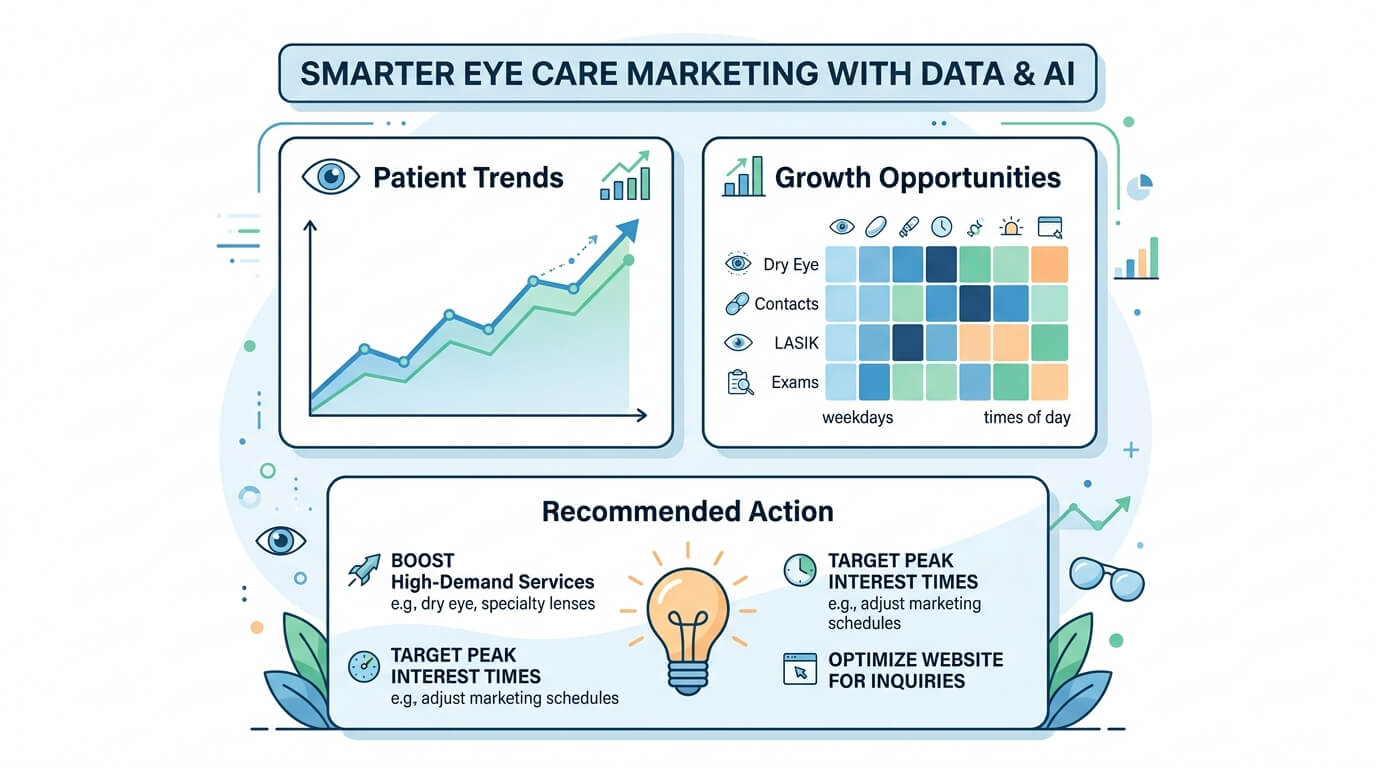
In today’s competitive landscape, ophthalmology marketing is no longer about guesswork. Clinics that leverage data and AI insights can make smarter decisions, invest in the right channels, and maximize patient acquisition.
How to Implement
Use analytics and AI-driven dashboards to track and optimize your marketing efforts:
- Centralize Data: Consolidate website traffic, ad performance, call tracking, and lead sources into a single dashboard.
- Measure Campaign ROI: Understand which marketing channels generate the most appointments and revenue.
- Optimize Budget Allocation: Use data to invest in strategies that consistently deliver high-value patients while reducing wasted spend.
Pro Tips
- Monitor conversion rates from leads to booked appointments to identify gaps in the patient journey.
- Leverage AI insights to anticipate patient behavior and refine targeting across digital channels.
- Regularly review performance metrics to adjust campaigns, content, and paid ads for maximum impact.
12. Strengthen Patient Engagement Through Social Media
Social media is no longer optional for ophthalmology clinics; it’s a vital channel for building patient relationships, sharing educational content, and boosting your online visibility.
Platforms like Facebook, Instagram, and LinkedIn allow you to connect with current patients while attracting new ones.
How to Implement
To effectively engage patients on social media:
- Share Educational Content: Post articles, infographics, and short videos explaining common eye conditions and procedures.
- Highlight Patient Stories: With permission, share before-and-after results or testimonials to build trust and credibility.
- Showcase Your Team: Introduce staff members and doctors to humanize your practice and foster familiarity.
- Promote Events and Updates: Inform your audience about webinars, screenings, or new services.
Pro Tips
- Post consistently to maintain visibility and engagement.
- Encourage interaction through polls, Q&A sessions, and comments.
- Monitor social analytics to understand which content resonates most with your audience.
- Respond promptly to patient questions and messages to reinforce reliability and care.
By maintaining an active and informative social media presence, your clinic can strengthen patient engagement, boost trust, and guide potential patients toward booking consultations.
Common Ophthalmology Marketing Mistakes to Avoid
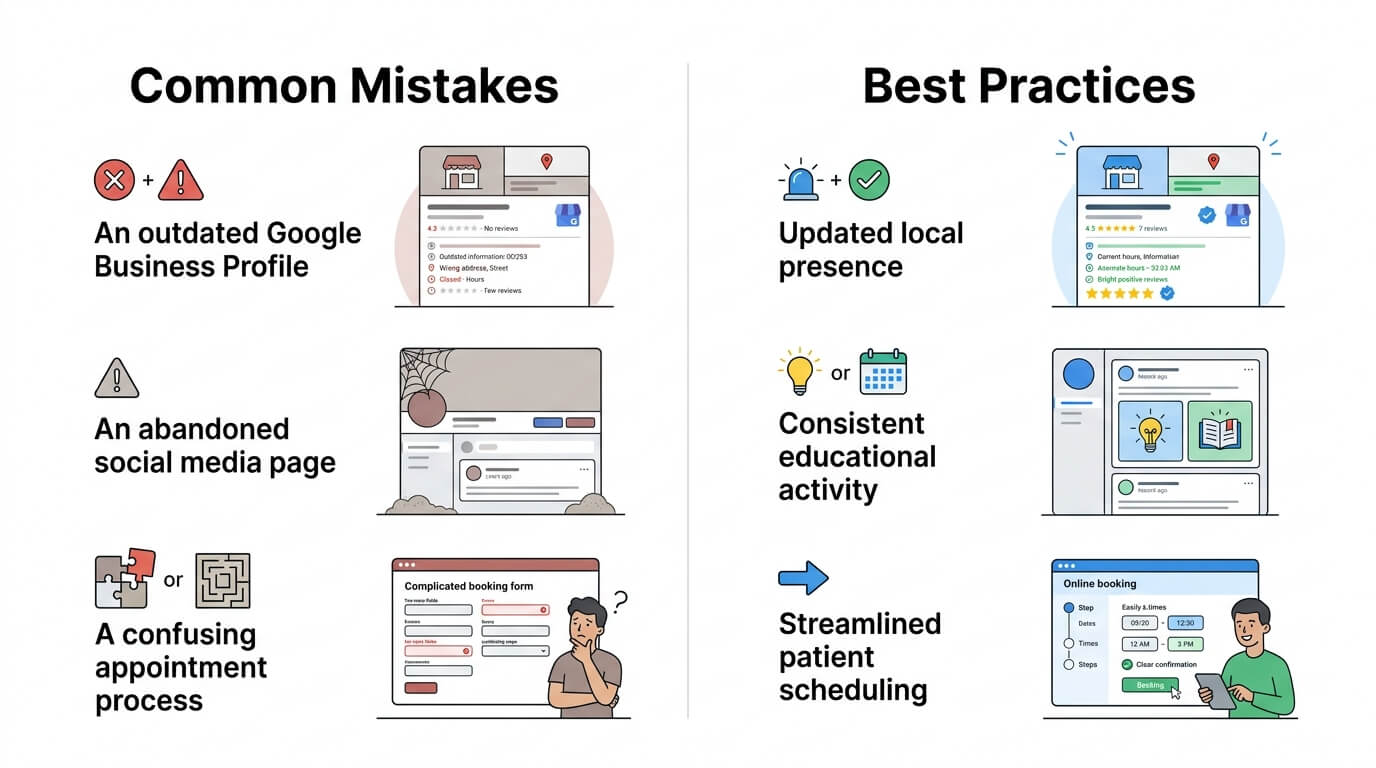
Even with a solid strategy, ophthalmology clinics can stumble if they fall into common marketing traps. Recognizing these pitfalls early can save time, reduce wasted spend, and improve patient acquisition.
1. Focusing Only on Traffic, Not Conversions
Many clinics invest heavily in ads or SEO without optimizing the patient journey. Generating clicks is important, but if your website or landing pages don’t guide visitors toward booking, those leads are lost.
2. Ignoring Local Search Optimization
Not optimizing for local search queries like “LASIK near me” or “cataract surgeon in (city)” can mean missing high-intent patients who are ready to book.
3. Overlooking Online Reputation
Failing to manage reviews or respond to patient feedback can erode trust and reduce visibility on Google and healthcare directories.
4. Neglecting Mobile and User Experience
A slow-loading or confusing website frustrates potential patients. Mobile-friendly design, clear navigation, and simple booking options are essential.
5. Using Generic Marketing Messages
Broad, vague marketing campaigns don’t resonate with patients. Messaging should be tailored to specific services, patient concerns, and local audiences.
6. Not Measuring Performance
Without tracking metrics and understanding ROI, clinics may continue investing in strategies that don’t generate appointments or revenue.
By avoiding these common mistakes, ophthalmology practices can maximize marketing effectiveness, improve patient acquisition, and ensure a smooth path from discovery to consultation.
How to Choose the Right Strategy for Your Practice
Not every marketing tactic works for every ophthalmology clinic. The key is to select strategies that align with your practice’s goals, patient base, and resources.
Steps to Determine the Best Approach
- Assess Your Goals: Decide whether your focus is on increasing new patient bookings, promoting specific procedures, or building long-term brand authority.
- Understand Your Patients: Analyze demographics, common concerns, and how patients search for your services online.
- Evaluate Current Performance: Look at website traffic, lead sources, and conversion rates to identify which channels are already effective.
- Prioritize High-Impact Strategies: Focus on tactics that generate measurable results, such as local SEO, paid search for elective procedures, or educational video content.
- Test and Optimize: Start small, measure outcomes, and adjust campaigns to improve efficiency and patient engagement.
Conclusion
Ophthalmology marketing in 2026 demands a strategic, patient-focused approach that combines digital visibility, educational content, and data-driven insights. By implementing the right mix of website optimization, local SEO, paid advertising, video content, online reviews, and AI-powered tools, clinics can attract the right patients, build trust, and drive sustainable growth.
Avoiding common pitfalls and regularly analyzing performance ensures your marketing efforts deliver measurable results. Ultimately, a thoughtful and consistent ophthalmology marketing strategy positions your practice for long-term success while providing patients with the confidence and clarity they need to choose your care.
Let’s increase appointment bookings
At MedClicx, we help medical practices connect with more patients.


Senior Digital Marketing Strategist &
Healthcare SEO Consultant
James Walker is a Senior Digital Marketing Strategist and Healthcare SEO Consultant at MedClicx. He specializes in helping healthcare organizations and service-based businesses grow their online presence through SEO, content marketing, local SEO, AI search optimization, (GEO), technical SEO, website optimization, and digital marketing strategies.
Over the years, James has worked on improving organic visibility, lead generation, and brand authority by combining search engine optimization, website performance, content strategy, conversion optimization, and AI-ready content. His expertise also includes Google Business Profile optimization, schema markup, user experience (UX), analytics, and modern digital marketing best practices.
At MedClicx, James writes educational articles covering SEO, content marketing, digital marketing, AI search optimization, social media marketing, web design, advertising strategies, podcasts, and online business growth. His goal is to simplify complex marketing concepts and help businesses make data-driven decisions that generate sustainable long-term results.
- James Walker

- James Walker

- James Walker
- James Walker