Healthcare Marketing Trends 2026: What Actually Works
-
 James Walker
Table of Contents:
- Key Healthcare Marketing Trends for 2026
- Biggest Mistakes Healthcare Practices Are Still Making in 2026
- Simple Framework for Healthcare Marketing in 2026
- Conclusion
Remember when the internet first changed everything? Healthcare is going through a similar shift again, but this time, it’s happening faster, smarter, and far more quietly.
In 2026, healthcare marketing is undergoing a fundamental transformation. AI-driven platforms like ChatGPT and features such as Google AI Overviews are no longer just tools, they’re becoming the first touchpoint in the patient journey.
Patients are asking questions, receiving summarized answers, and forming decisions before they ever visit a website.
At the same time, privacy regulations are tightening, automation is accelerating, and patient expectations are higher than ever.
The result? A completely new playbook for how patients discover, evaluate, and choose healthcare providers.
The practices winning in 2026 aren’t simply doing more marketing. They’re focusing on what actually works:
- Showing up clearly in AI-driven search experiences
- Answering real patient questions with clarity
- Aligning marketing efforts with operational capacity
- Making it seamless for patients to book appointments
Industry insights, including research from Deloitte, reinforce this shift. These changes aren’t temporary trends; they represent a long-term shift in how healthcare organizations grow, compete, and build trust.
In this guide, we’ll break down what’s actually working in 2026, not just what’s trending, but what’s driving real patient growth in an AI-shaped healthcare landscape.
Key Healthcare Marketing Trends for 2026
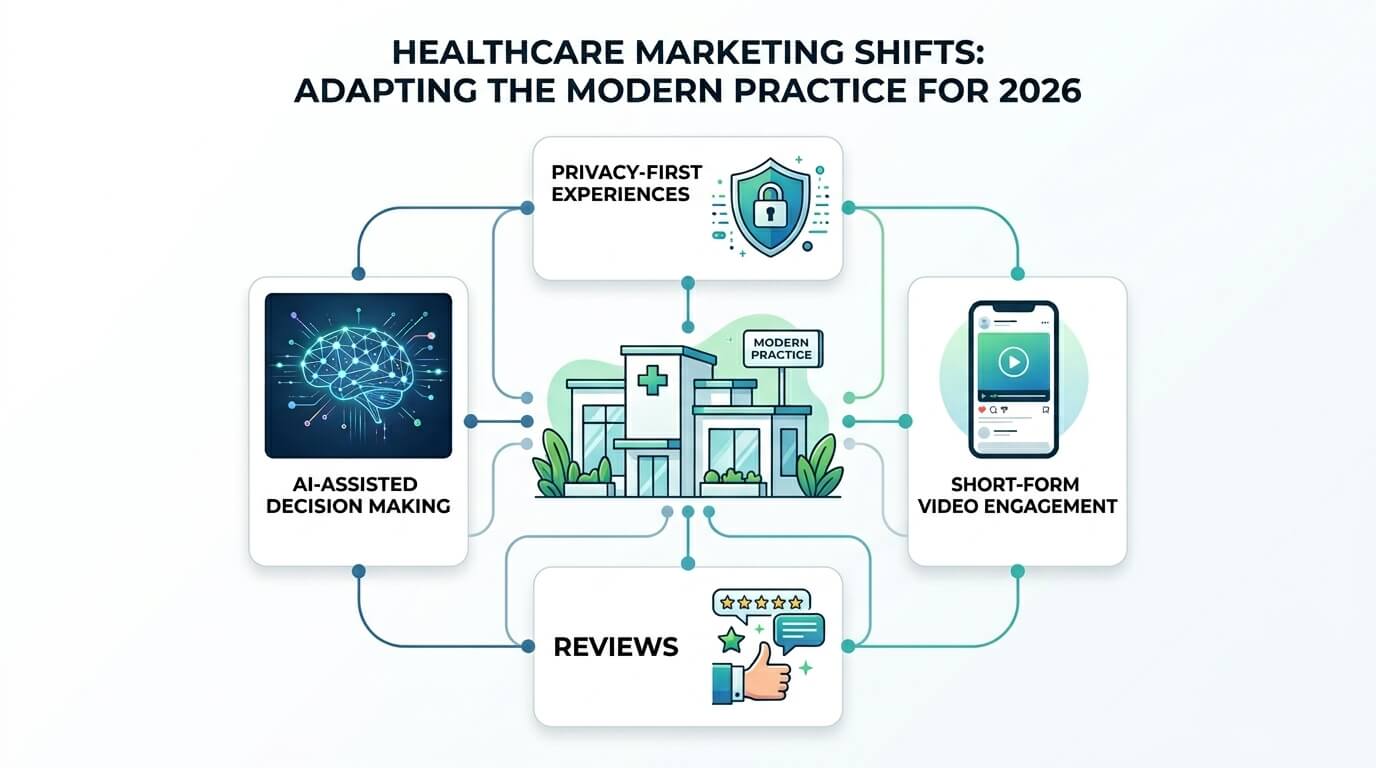
1. AI visibility & Answer Engine Optimization (AEO)
What’s Changing
Search behavior is shifting from browsing to asking. Patients are no longer just clicking through websites, they’re turning to AI-powered tools like ChatGPT and Google AI Overviews to get direct, summarized answers about symptoms, treatments, and providers.
This means your website is no longer the first interaction. AI-generated answers are.
Why It Matters for Healthcare Practices
Among all emerging trends in healthcare marketing, this is one of the most disruptive. If your practice isn’t clearly understood by AI systems, you risk being excluded from the very first stage of the patient journey.
AI-generated summaries are reducing clicks to traditional websites by 20–40%, meaning visibility now matters more than traffic alone.
What to Do
- Implement structured data (schema markup) for services, providers, and locations
- Create FAQ sections that directly answer patient questions
- Use clear, consistent service descriptions across your website
- Focus on accuracy and clarity in all clinical content
- Treat AI platforms as a new referral channel, not just a tool
Answer Engine Optimization (AEO) is about making your practice easy for both humans and machines to understand and recommend.
Example
A multi-location specialty clinic restructured its website by adding schema markup and detailed FAQ sections for each service.
Within months, their content began appearing more frequently in AI-generated summaries, increasing early-stage visibility, even though overall website clicks slightly declined.
2. Patient self-scheduling
What’s Changing
Patient expectations have fundamentally shifted. Booking a healthcare appointment is no longer expected to involve phone calls, wait times, or limited office hours.
Instead, patients want the same convenience they experience in other industries instant, online, and on their own time.
Why It Matters for Healthcare Practices
Among the most impactful marketing trends in healthcare, self-scheduling directly affects whether a patient chooses your practice or moves on to another provider.
The moment a patient decides to book is critical, and if that moment happens outside business hours, practices without online scheduling simply lose the opportunity.
Nearly half of all appointments are now booked after hours, which means your conversion window extends far beyond your front desk availability.
What to Do
- Implement real-time online scheduling integrated with your calendar
- Minimize steps between “interest” and “appointment booking”
- Ensure booking is mobile-friendly and fast
- Track which campaigns and channels lead to booked appointments
- Offer clear appointment types and availability to reduce confusion
The goal is to remove friction and capture high-intent patients the moment they’re ready.
Example
An orthopedic clinic introduced 24/7 online scheduling across its website and landing pages. Within a few months, it saw a significant increase in new patient bookings, especially during evenings and weekends, without increasing ad spend.
3. Privacy-first marketing
What’s Changing
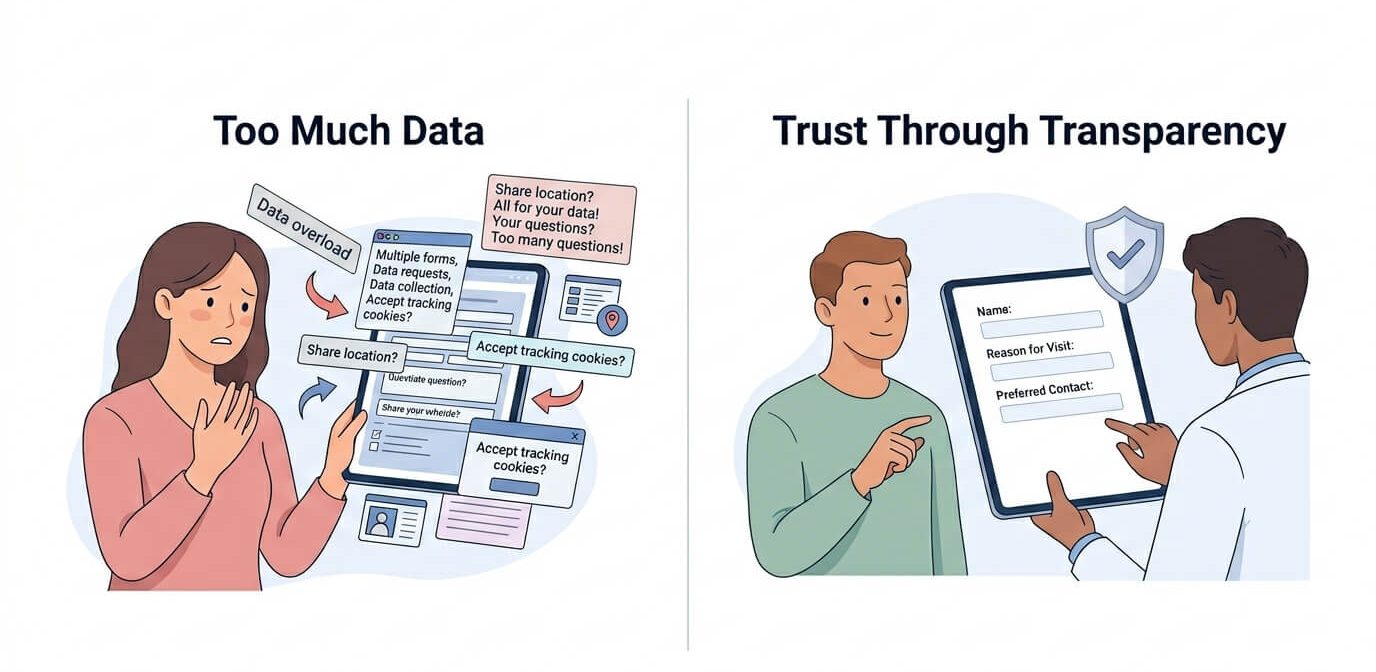
Healthcare marketing is entering a stricter, more regulated era. Data privacy laws, platform restrictions, and industry guidelines are reshaping how practices track users and run campaigns.
In a high-risk category like healthcare, even small missteps in data handling or messaging can lead to serious consequences, including restricted ad accounts or legal exposure.
Why It Matters for Healthcare Practices
When it comes to advertising in healthcare, compliance is no longer just a legal checkbox, it directly impacts your ability to run campaigns and scale growth.
Platforms like Google and Meta are enforcing stricter rules around targeting, remarketing, and health-related content.
At the same time, patients are more aware of how their data is used. If your marketing feels intrusive or unsafe, it erodes trust before the first appointment is even booked.
What to Do
- Use HIPAA-compliant tools for analytics, forms, and tracking
- Ensure all messaging is medically accurate and non-misleading
- Avoid restricted targeting practices (especially sensitive health conditions)
- Limit or carefully configure remarketing and tracking pixels
- Train your team on healthcare-specific compliance and tone
The goal is to protect patient data while still gathering meaningful, compliant insights.
Example
A specialty clinic audited its website and ad accounts, replacing non-compliant tracking tools with privacy-safe alternatives and refining ad copy to meet platform guidelines.
While initial data volume decreased, the quality of leads improved, and campaigns became more stable without risk of account disruption.
4. AI-assisted advertising
What’s Changing
Advertising platforms are rapidly integrating AI into every layer of campaign management, from bidding and targeting to ad creation. Tools inside platforms like Google and Meta are pushing automation as the default.
But healthcare isn’t a typical industry. Patient intent, treatment types, and compliance requirements make fully automated campaigns risky if left unchecked.
Why It Matters for Healthcare Practices
AI can optimize campaigns faster than any human, but it lacks context. It doesn’t fully understand:
- Clinical nuance
- Patient sensitivity
- Regulatory boundaries
Without oversight, automation can:
- Misallocate budget to low-intent audiences
- Show ads in irrelevant placements
- Generate messaging that doesn’t align with medical standards
The result? Wasted spend and inconsistent performance.
What to Do
- Use AI for bid optimization and performance insights, not full control
- Keep humans in charge of targeting, messaging, and budget allocation
- Regularly review where ads are being shown (placements & networks)
- Set clear campaign goals aligned with patient intent
- Continuously refine campaigns based on real conversion data
The strongest results come from a hybrid approach, AI for efficiency, humans for strategy.
Example
A dermatology practice shifted from fully automated campaigns to a hybrid model. By tightening targeting and refining messaging while still leveraging AI for bidding, they reduced wasted spend and improved cost-per-appointment significantly.
5. Short-form video
What’s Changing
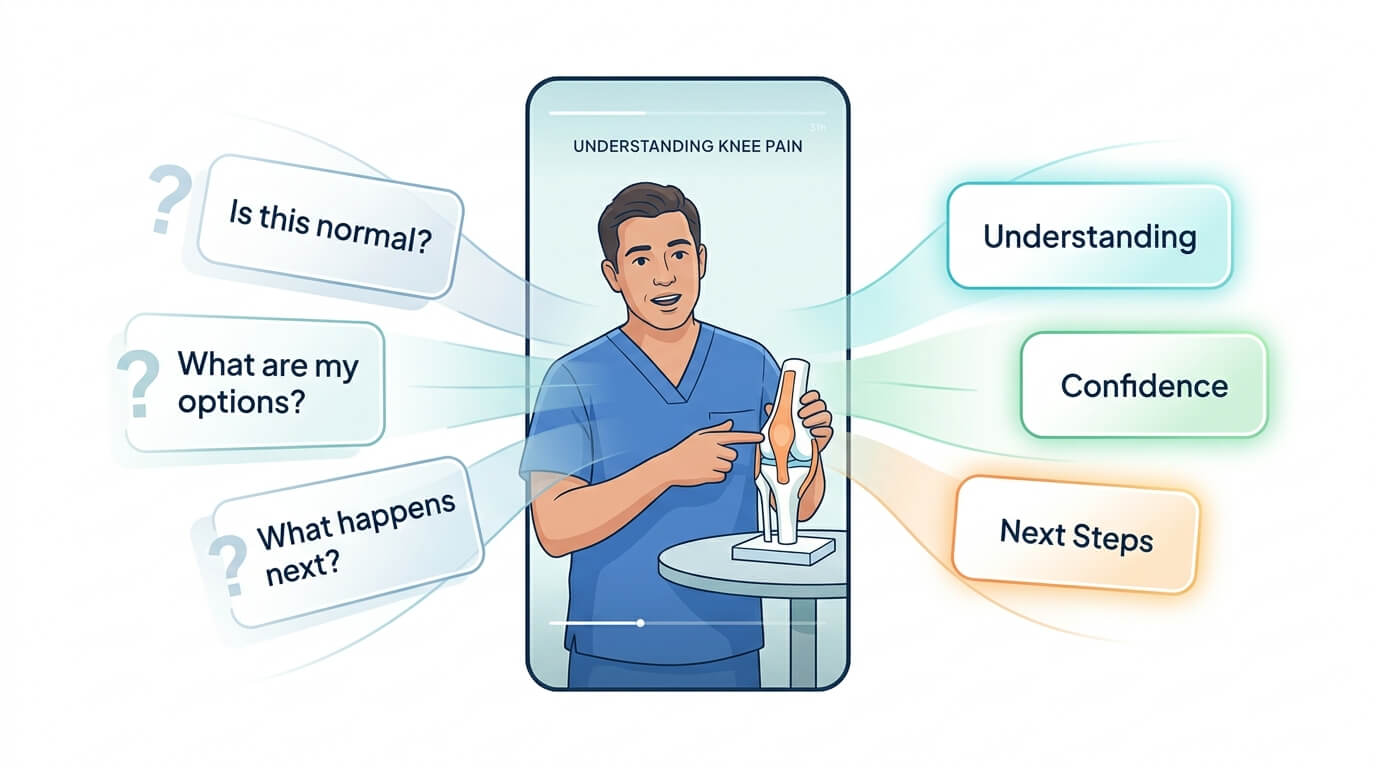
Content consumption is becoming faster, more visual, and more personal. Patients no longer want to read long explanations before making decisions, they want quick, clear answers they can understand instantly. This is where short-form, physician-led video is taking over.
Why It Matters for Healthcare Practices
In today’s landscape of healthcare digital advertising, video has become one of the most effective ways to capture attention and build trust quickly. Patients are far more likely to engage with a doctor explaining a procedure in simple terms than reading a block of text.
Video also humanizes your practice. It helps patients:
- See who they’ll be treated by
- Understand procedures more clearly
- Feel more confident before booking
And unlike static content, video performs strongly across multiple channels, from websites to social platforms to paid campaigns.
What to Do (Actionable)
- Create short (30–60 second) videos answering common patient questions
- Feature real physicians, not actors or scripted voiceovers
- Focus on clarity over production quality (authentic > polished)
- Repurpose videos across: Website pages, Social media, Ad campaigns
- Add captions for accessibility and better engagement
The goal is to make complex medical information simple, relatable, and easy to trust.
Example
A cosmetic clinic began publishing short videos where physicians explained procedures and recovery expectations. These videos were embedded on landing pages and used in ad campaigns, leading to higher engagement and improved conversion rates compared to text-only pages.
6. Marketing + operations alignment
What’s Changing
Marketing is no longer just about generating demand, it’s about directing it intelligently. Many healthcare organizations are dealing with uneven capacity: some providers are fully booked for weeks, while others have open slots that go unfilled.
This imbalance is forcing a shift toward tighter alignment between marketing efforts and operational realities.
Why It Matters for Healthcare Practices
When marketing operates in isolation, it creates two major problems:
- Overbooking high-demand providers (leading to long wait times and poor patient experience)
- Underutilizing available capacity (resulting in lost revenue opportunities)
Practices that align marketing with real-time availability grow more efficiently. Instead of pushing generic campaigns, they strategically guide patient demand to where it’s needed most.
What to Do
- Align campaigns with provider availability and scheduling data
- Promote: Underbooked providers, Locations with open capacity, High-margin or priority services
- Pause or reduce spend on overbooked services
- Coordinate regularly between marketing and operations teams
- Use data to continuously adjust campaigns based on demand
The goal is to match the right patient with the right provider at the right time.
Example
A multi-location practice noticed one clinic was consistently overbooked while another nearby location had open appointments. By shifting ad spend and updating location-specific messaging, they balanced patient flow and increased overall bookings without increasing their budget.
7. Online reputation strategy
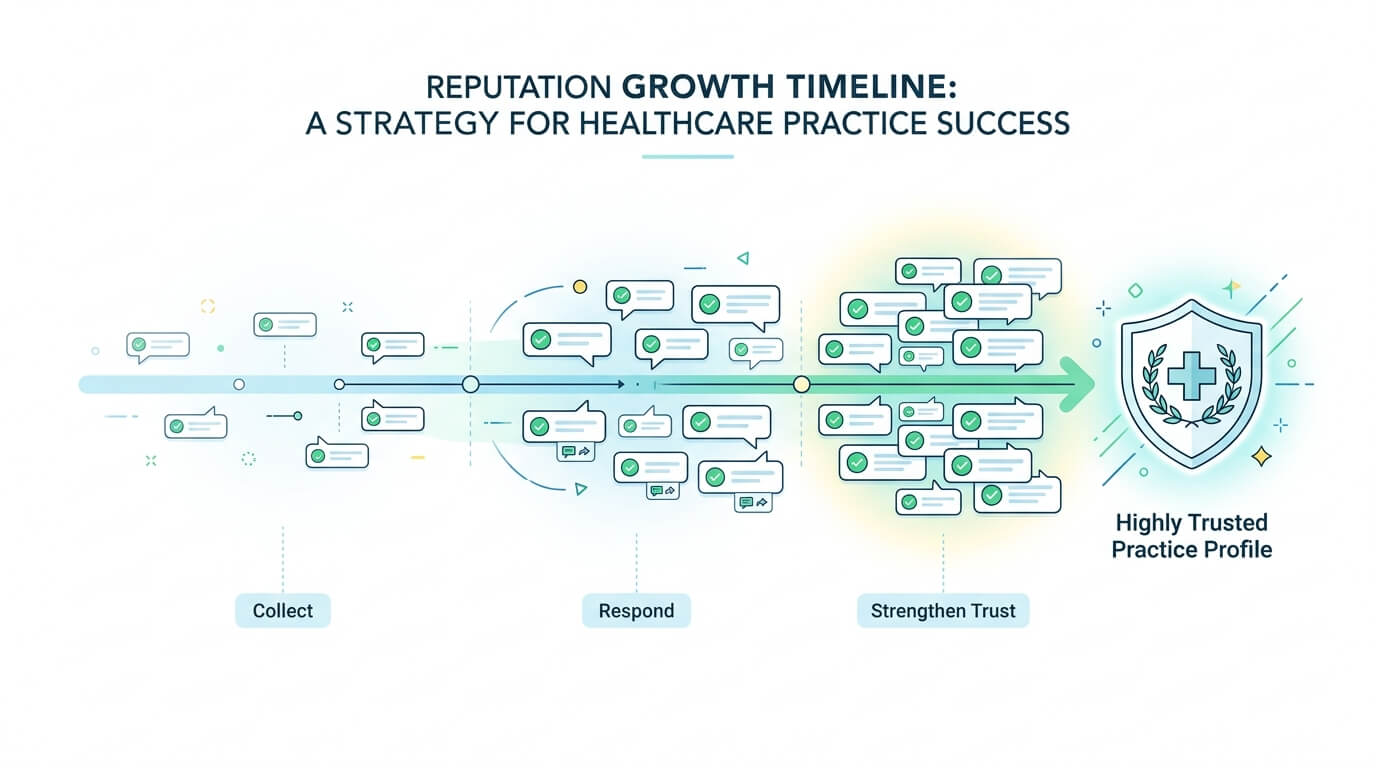
What’s Changing
Patient decision-making is increasingly driven by trust signals rather than just visibility. Before booking an appointment, most patients now compare providers based on online reviews, ratings, and recent patient feedback.
This makes reputation management a core part of growth, not just a supporting activity.
Search engines and AI systems also use review content to understand what a practice is known for, influencing both rankings and visibility in AI-generated answers.
Why It Matters for Healthcare Practices
Among all Healthcare Advertising Trends, reputation has become one of the strongest conversion drivers.
A practice can invest heavily in ads and SEO, but if reviews are weak or outdated, patients hesitate to book.
Reviews influence:
- Click-through rates from search results
- Trust during first-time discovery
- Local visibility in map results
- AI-driven summaries of provider quality
In short, reputation now directly impacts both visibility and conversion performance.
What to Do
- Implement a consistent post-visit review request system
- Encourage patients to leave specific feedback (not just star ratings)
- Respond professionally to both positive and negative reviews
- Monitor and improve listings across Google Business Profile and other platforms
- Maintain a steady flow of fresh reviews rather than occasional bursts
The goal is to build a credible, ongoing reputation signal, not a one-time effort.
Example
A specialty clinic introduced automated review requests sent after appointments. Over time, they significantly increased their monthly review volume, improving both local search visibility and patient confidence in choosing their services.
8. CTV & programmatic ads
What’s Changing
Healthcare marketing is moving beyond traditional digital channels like search and social. Streaming platforms and programmatic ad networks are now offering highly targeted advertising opportunities that were previously only available in traditional TV or broad display campaigns.
With more patients consuming content through streaming services instead of cable TV, attention has shifted, and so has advertising reach.
Why It Matters for Healthcare Practices
This is one of the fastest-growing Healthcare Advertising Trends, especially for practices offering high-value or elective procedures.
Connected TV (CTV) and programmatic advertising allow healthcare organizations to reach specific audiences based on:
- Age groups
- Geographic location
- Household income
- Interest and behavior signals
Instead of broad, expensive TV campaigns, practices can now deliver precise messaging to the right patient segments at a lower cost.
What to Do
- Use CTV campaigns to build awareness for high-value services
- Combine CTV with search and remarketing for full-funnel impact
- Target specific ZIP codes or demographics relevant to your specialty
- Focus messaging on education and trust-building, not hard selling
- Track performance alongside other digital channels for attribution clarity
The goal is to stay visible during the patient’s research phase across multiple devices.
Example
A specialty practice promoting elective procedures used CTV ads targeted to specific age groups and regions.
When combined with search campaigns, they saw stronger brand recall and increased inbound inquiries from patients who had previously seen their ads on streaming platforms
9. Educational content dominance
What’s Changing
Search behavior is becoming more location-driven and intent-focused. Patients are no longer just searching for general information; they’re looking for trusted providers near them, often with immediate intent to book.
At the same time, Google is increasingly rewarding practices that demonstrate local authority, consistency, and relevance.
This has made local SEO and content depth inseparable parts of patient acquisition.
Why It Matters for Healthcare Practices
Among evolving healthcare advertising trends, local visibility is one of the most consistent drivers of patient growth, especially for clinics, specialty practices, and multi-location providers.
When done right, local SEO helps you:
- Rank for high-intent searches like “doctor near me” or “[specialist] in [city]”
- Strengthen your visibility in map results and local packs
- Build trust through reviews, relevance, and proximity signals
- Convert searchers into booked patients faster
It’s not about competing nationally; it’s about owning your local patient demand.
What to Do
- Fully optimize your Google Business Profile (services, categories, photos, updates)
- Use location-specific keywords across service pages
- Build city and service combination pages (e.g., “Skin Treatment in Chicago”)
- Encourage consistent, high-quality patient reviews
- Publish helpful, search-optimized educational content regularly
- Ensure your website answers real patient queries clearly and quickly
The goal is to become the most trusted and visible option in your local area.
Example
A multi-location specialty practice improved its local SEO by creating dedicated location pages, optimizing its Google Business Profiles, and publishing patient-focused educational content.
Over time, they began ranking more consistently in local search results and saw a steady increase in appointment requests from nearby patients.
Biggest Mistakes Healthcare Practices Are Still Making in 2026
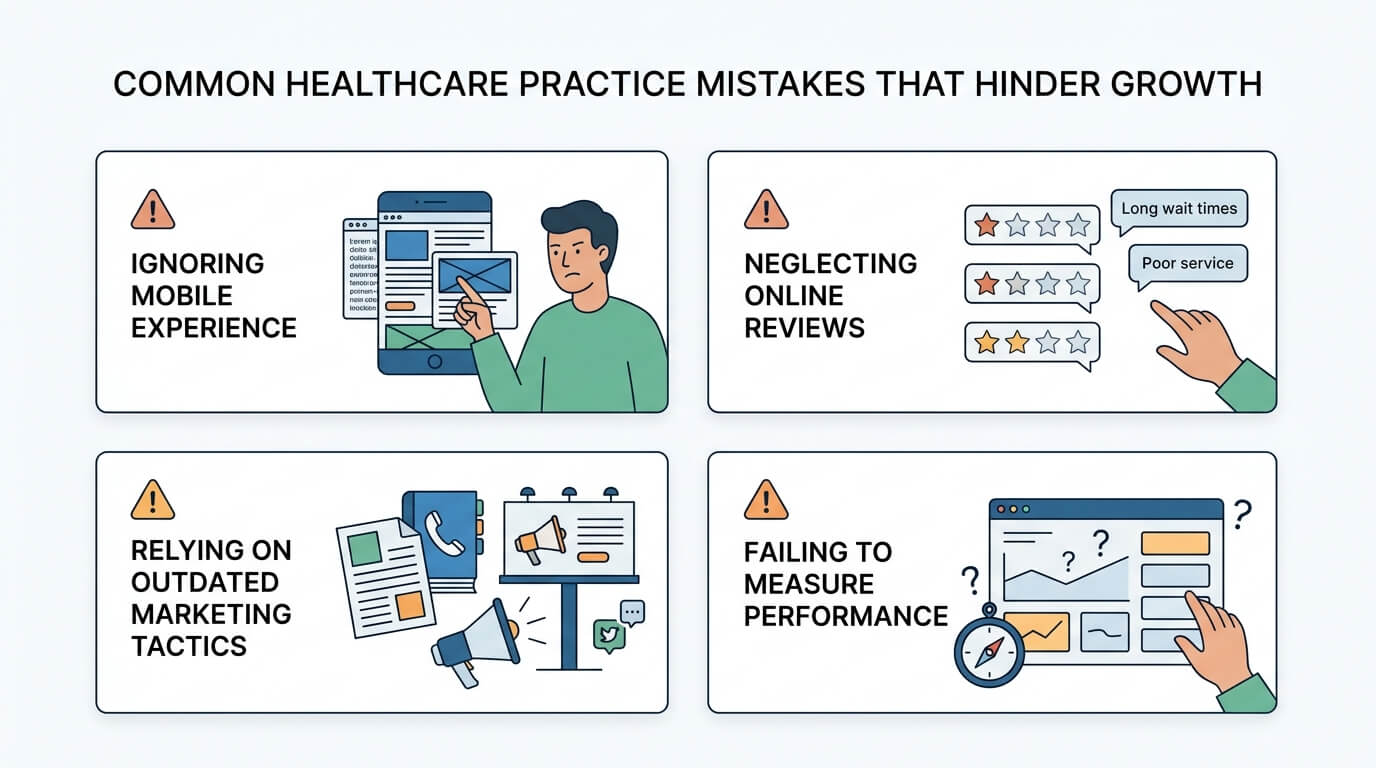
Even as tools, platforms, and patient expectations evolve, many practices are still approaching growth with outdated assumptions.
The result isn’t just slower performance, it’s wasted budget, missed patients, and weaker long-term positioning.
Here are the most common mistakes limiting success in Digital healthcare marketing today:
1. Treating SEO and AI Visibility as Separate Strategies
Many practices still think SEO ends with Google rankings. In reality, search engines and AI systems now overlap. If your content isn’t structured for both humans and AI systems, you’re limiting visibility at the earliest stage of discovery.
2. Over-Relying on Paid Ads Without Fixing Conversion Gaps
Driving traffic through ads but ignoring website experience, messaging clarity, or scheduling friction leads to expensive leads that don’t convert. Traffic without conversion optimization is wasted spend.
3. Ignoring Local Search Optimization
Some practices still underinvest in local SEO signals like Google Business Profile optimization, reviews, and location pages, despite these being the highest-intent traffic sources in healthcare.
4. Using Generic, Non-Patient-Focused Content
Content that talks about services instead of answering real patient questions fails to build trust. Patients want clarity on symptoms, outcomes, and expectations—not marketing language.
5. Treating Marketing and Operations as Separate Functions
When marketing drives demand without aligning with provider availability, it creates bottlenecks, long wait times, or underused capacity. This disconnect directly impacts revenue and patient experience.
6. Underestimating the Role of Trust Signals
Reviews, testimonials, physician credibility, and educational content are often treated as “nice to have,” when in reality they are core conversion drivers in healthcare decision-making.
Simple Framework for Healthcare Marketing in 2026
Instead of treating marketing as separate tactics, high-performing practices in 2026 are building a connected system. This framework breaks Digital healthcare marketing into four core pillars:
| Pillar | What It Means | What to Focus On | Goal |
| 1. Visibility | Being discoverable wherever patients start their search journey | SEO, Local SEO, structured content for AI systems, presence in map results, optimization for AI tools like ChatGPT and Google AI Overviews | Show up early in patient decision-making |
| 2. Trust | Building confidence before a patient ever contacts your practice | Online reviews, physician-led educational content, video content, clear explanations of treatments and outcomes | Become the most trusted option |
| 3. Conversion | Turning interest into booked appointments with minimal friction | Online self-scheduling, fast mobile UX, clear CTAs, simplified booking journey | Convert visitors into patients easily |
| 4. Optimization | Continuously improving performance using real data | Campaign tracking, conversion rate optimization, budget allocation based on performance, ongoing testing | Scale what actually works |
Conclusion
Healthcare marketing in 2026 is no longer about doing more; it’s about doing what actually works with precision, clarity, and alignment.
As patient behavior shifts toward AI-assisted discovery, faster decision-making, and higher expectations, practices that rely on outdated tactics will continue to fall behind.
The real opportunity lies in connecting the entire patient journey: being visible where patients start searching, building trust before the first interaction, making booking effortless, and continuously optimizing based on real data.
When these elements work together, marketing becomes more than just lead generation; it becomes a predictable growth system.
Ultimately, the practices that will lead in this new era are the ones that adapt early, simplify their strategy, and focus on delivering clarity at every stage of the patient experience.
Let’s increase appointment bookings
At MedClicx, we help medical practices connect with more patients.

Senior Digital Marketing Strategist &
Healthcare SEO Consultant
James Walker is a Senior Digital Marketing Strategist and Healthcare SEO Consultant at MedClicx. He specializes in helping healthcare organizations and service-based businesses grow their online presence through SEO, content marketing, local SEO, AI search optimization, (GEO), technical SEO, website optimization, and digital marketing strategies.
Over the years, James has worked on improving organic visibility, lead generation, and brand authority by combining search engine optimization, website performance, content strategy, conversion optimization, and AI-ready content. His expertise also includes Google Business Profile optimization, schema markup, user experience (UX), analytics, and modern digital marketing best practices.
At MedClicx, James writes educational articles covering SEO, content marketing, digital marketing, AI search optimization, social media marketing, web design, advertising strategies, podcasts, and online business growth. His goal is to simplify complex marketing concepts and help businesses make data-driven decisions that generate sustainable long-term results.
- James Walker
- James Walker
- James Walker
- James Walker