The Ultimate Guide to Home Healthcare Marketing in 2026
-
 James Walker
Table of Contents:
- What is Home Health Care Marketing?
- Why Home Health Marketing Matters More Than Ever in 2026
- 14 Effective Home Health Marketing Strategies for 2026
- How to Build a Scalable Home Health Marketing Strategy
- Conclusion
The home healthcare industry is growing rapidly, driven by rising demand for in-home care and an aging population.
At the same time, competition is increasing, making it essential for agencies to stand out.
Providing quality care alone is no longer enough, success now depends on strong home healthcare marketing that builds visibility, trust, and accessibility.
Today’s patients and caregivers actively research options online, compare providers, and make decisions based on digital presence.
With more choices than ever, relying on outdated approaches is no longer effective. This shift makes it critical for agencies to adopt modern, data-driven home care marketing strategies that align with how people search for and evaluate care.
In this guide, we’ll explore the most effective strategies for 2026 to help home health agencies attract patients, strengthen referral networks, and achieve sustainable growth in an increasingly competitive landscape.
What is Home Health Care Marketing?
Home healthcare marketing refers to the strategies and activities used to promote in-home care services to patients, caregivers, and referral sources.
It goes beyond traditional advertising and focuses on building awareness, trust, and credibility in a highly personal and decision-driven healthcare environment.
Unlike other industries, marketing in home health care targets a unique audience that often includes
- Elderly individuals
- Patients with chronic conditions
- Family members making care decisions on their behalf.
Since home health care is delivered in a patient’s home, trust is a critical factor in decision-making. Patients and families need reassurance that they are choosing a reliable provider.
Strong marketing helps convey your expertise, compassion, and ability to deliver personalized care, while also differentiating your agency in an increasingly competitive market.
This type of marketing can take many forms, including digital channels like search engines and social media, as well as offline efforts such as community outreach and referral partnerships.
Why Home Health Marketing Matters More Than Ever in 2026
Today’s healthcare consumers are more informed and selective. Families research providers online, compare options, and rely on digital signals such as reviews, website experience, and content credibility before making decisions.
Without a strong marketing presence, even the most capable agencies risk being overlooked. At the same time, the industry is becoming more crowded, with new providers entering the market and existing organizations expanding their services.
A well-defined marketing strategy helps agencies clearly communicate what sets them apart, whether it’s specialized care programs, experienced staff, or personalized patient support.
Effective marketing also supports broader business goals. It helps:
- Attract new patients and referral partners
- Build a strong, trustworthy brand reputation
- Improve patient retention through consistent engagement
Support recruitment by showcasing your organization’s values and culture
In an increasingly digital and competitive landscape, marketing is no longer optional; it is essential for visibility, credibility, and sustainable growth in the home health sector.
14 Effective Home Health Marketing Strategies for 2026
Healthcare organizations use multiple channels and strategies to promote their services, each with its own strengths, limitations, and best practices for goals like patient acquisition, referrals, and brand visibility.
However, HIPAA compliance must be maintained across all marketing activities to protect patient privacy and ensure regulatory standards are met.
Alongside compliance, trust and credibility remain central to effective healthcare marketing.
The following section covers the most effective home healthcare marketing strategies for 2026:
1. Build a High-Trust Website Experience
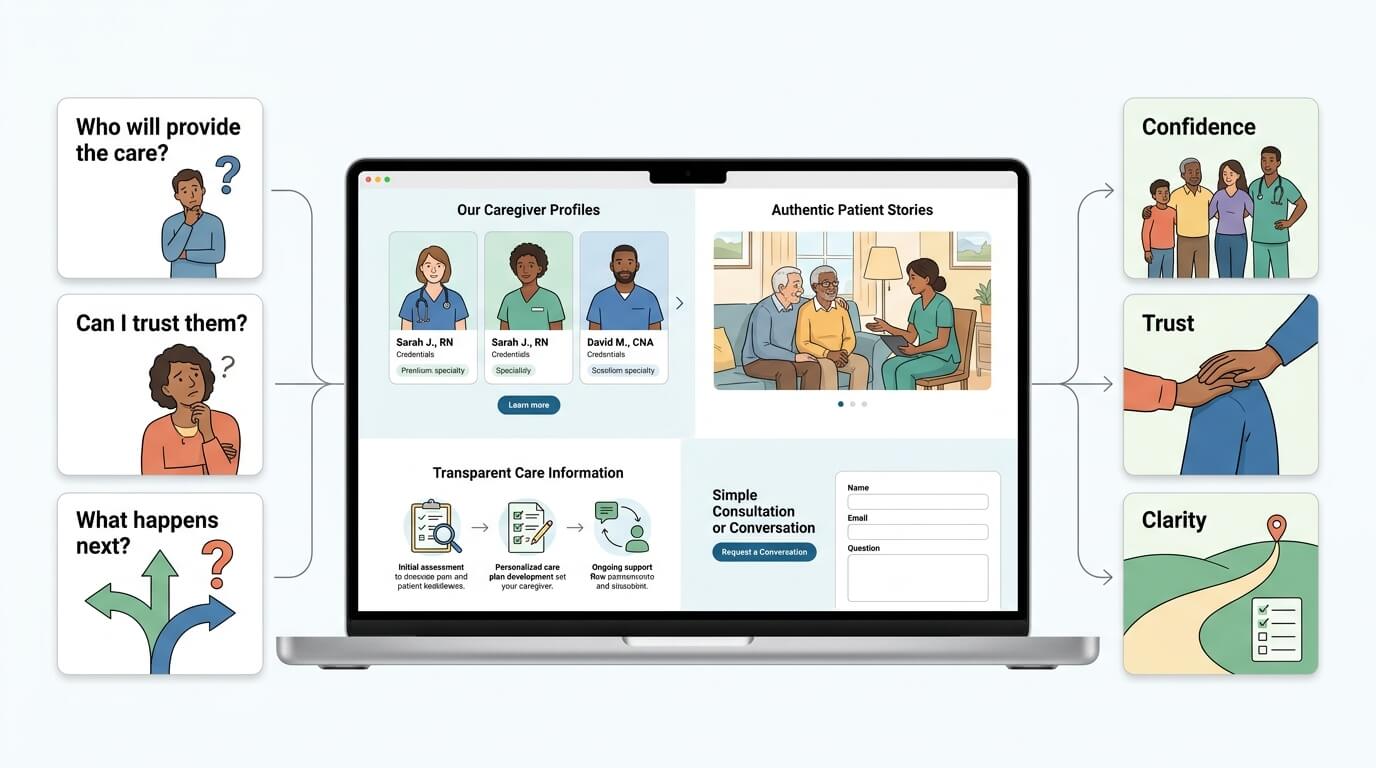
A strong website is the foundation of effective home health marketing strategies, as it often serves as the first interaction patients have with your agency.
In 2026, your website is not just an information source, it functions as a digital intake and trust-building platform.
To convert visitors into inquiries,
- The experience must be fast, clear, and patient-focused.
- Mobile responsiveness is critical, as most users search for care services on smartphones.
Equally important is reducing friction in the decision-making process. Clear calls-to-action, simple contact options, and easy-to-navigate service pages help users move from interest to action without confusion.
Trust signals such as testimonials, credentials, and real caregiver or patient stories further strengthen credibility.
A high-performing website should ultimately answer three questions within seconds:
- Can I trust this agency?
- Do they provide the care I need?
- How do I contact them quickly?
2. Strengthen Local SEO Visibility
Local search visibility plays a key role in helping home health agencies connect with patients and caregivers who are actively looking for care in their area.
Most searches today are location-based, with users looking for services “near me” or within specific cities.
To capture this demand, agencies need to ensure their website and online presence are properly search engine optimized.
A strong approach includes creating dedicated location pages that clearly outline services, coverage areas, and contact details.
This helps search engines understand where the agency operates and improves visibility in local results and map listings.
When done correctly, local SEO ensures your agency appears in front of the right audience at the right time, when they are actively searching for care options in their area.
3. Optimize Your Google Business Profile
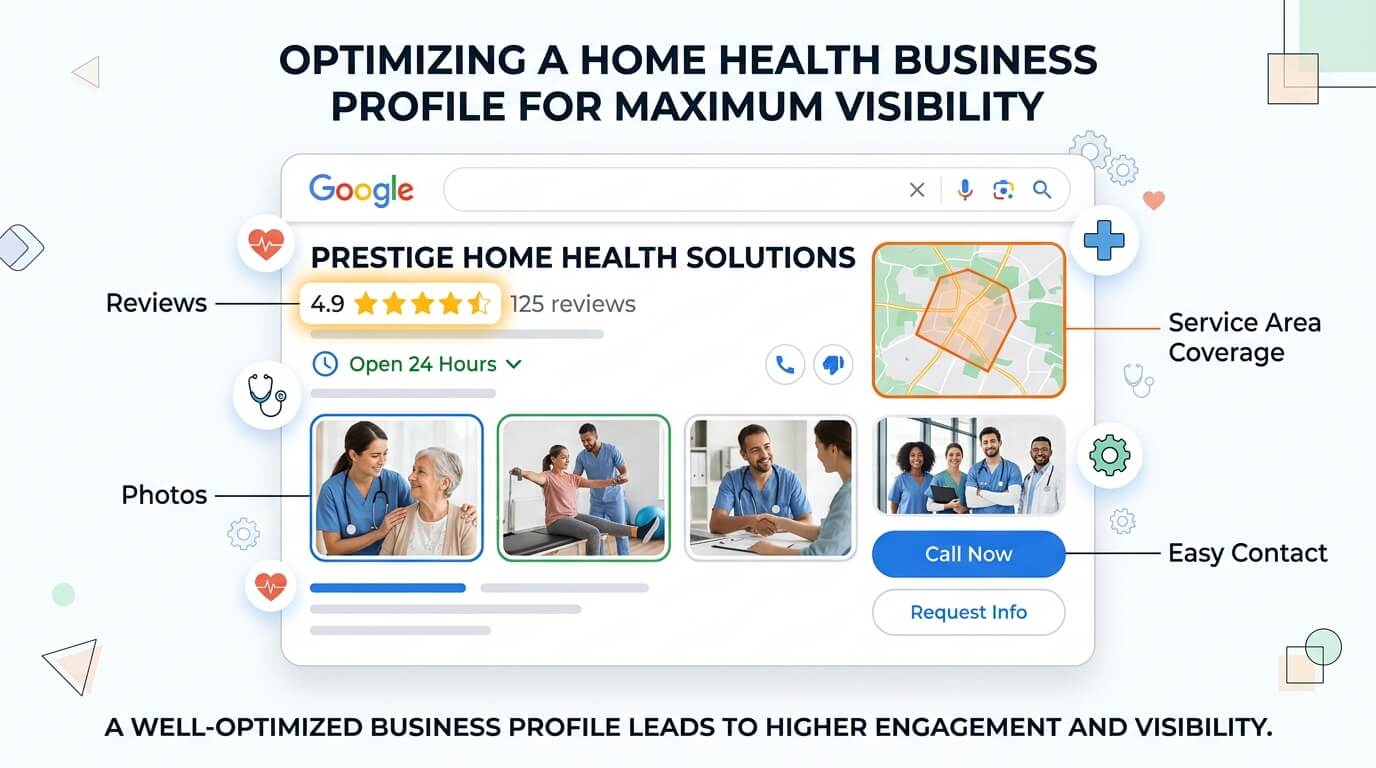
Your Google Business Profile is one of the most powerful tools for improving local visibility and attracting patients who are actively searching for care.
It allows your agency to appear in Google’s local map results, where many high-intent searches happen.
To get the most value from your profile, start by completing all essential information. This includes your business
- Name
- Address
- Phone number
- Website
- Services
- operating hours
- Regular Posting
A fully completed profile not only improves visibility but also builds trust.
Make it easy for users to contact you directly from your profile. Features like click-to-call and messaging reduce friction and allow people to reach out quickly, especially during urgent care situations.
Keeping your profile active is equally important. Regularly update photos, post updates, and ensure your hours and service details remain accurate.
Profiles with fresh content and images tend to attract more engagement and stand out in search results.
Additionally, choosing the right business category also plays a key role in visibility. Being specific about your services helps Google match your profile with relevant searches, increasing the chances of appearing in front of the right audience.
4. Create AI-Optimized Content
Content is a key driver of online visibility, especially as more patients and caregivers rely on AI-powered tools and search engines to find answers.
Instead of browsing multiple websites, users now ask direct questions and expect clear, reliable responses.
To stay competitive, your content should focus on answering real questions your audience is already searching for, such as care options, costs, eligibility, and what to expect from services.
This approach not only improves search rankings but also increases the chances of your content being used in AI-generated responses.
Make sure to:
- Use clear headings, simple language, and focused sections so both users and search engines can easily understand your content.
- Organize blog posts, service pages, and FAQs around specific topics rather than broad, generic information.
- Regularly publish helpful, relevant content as it builds authority over time and keeps your website aligned with evolving search trends.
When combined with practical home care marketing ideas, this approach helps position your agency as a trusted source of information while driving steady organic traffic.
5. Run High-Intent Paid Search Campaigns
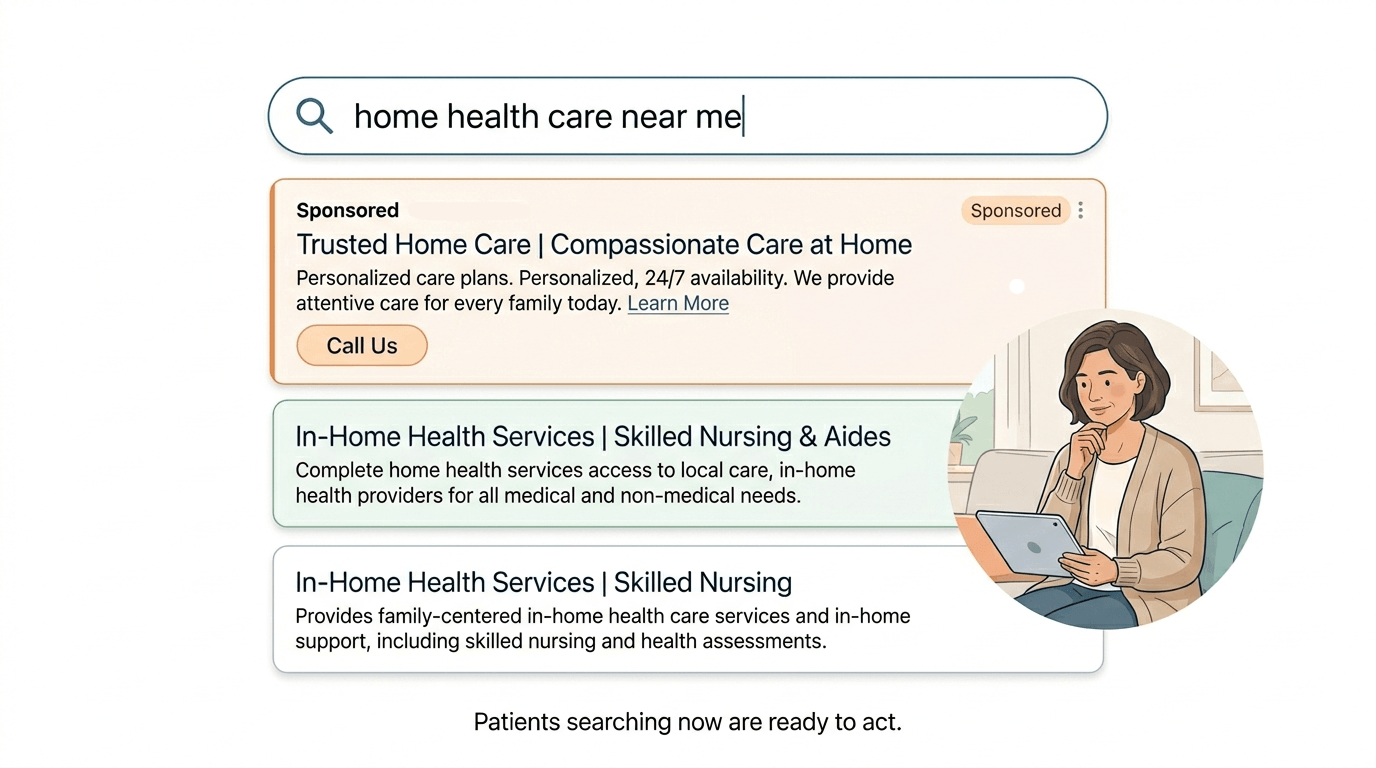
Paid search campaigns are one of the fastest ways to reach patients who are actively looking for care. An effective campaign is built on three core elements.
- First, keyword selection drives the right traffic.
- Second, ad copy must clearly communicate trust, availability, and value to encourage clicks. Highlighting factors like 24/7 care, experienced staff, or flexible services can make your ad stand out.
- Third, the landing page must deliver a seamless experience, with clear service details, strong trust signals, and easy contact options to convert visitors.
Location targeting also plays an important role. Aligning your ads with specific service areas and linking them to relevant pages improves both visibility and conversion rates.
Connecting your ads with your business profile can further strengthen local presence in search results.
When managed effectively, paid search campaigns help capture high-intent demand, generate consistent leads, and complement long-term organic efforts.
6. Retarget Website Visitors
Most website visitors do not convert on their first visit. In fact, a large percentage leave without taking action, even if they are interested in your services.
Retargeting helps bring these users back and increases the chances of conversion.
This strategy works by showing ads to people who have already visited your website or specific pages, such as service or location pages.
Since these users are already familiar with your agency, they are more likely to engage when they see your brand again.
Effective retargeting focuses on relevant and timely messaging. For example, you can show ads featuring patient testimonials, caregiver introductions, or short videos that reinforce trust and encourage the next step, such as scheduling a consultation or making a call.
Social media platforms like Google, YouTube, and Facebook allow you to run targeted retargeting campaigns based on user behavior.
By re-engaging this warm audience, you can stay top-of-mind during the decision-making process and significantly improve overall conversion rates.
7. Build a Social Media Presence
Social media plays an important role in increasing visibility and building trust. While it may not always drive immediate conversions, it helps reinforce credibility and keeps your agency top-of-mind during the decision-making process.
A consistent presence is key. Agencies that invest in healthcare social media marketing often build stronger long-term engagement and visibility.
Focus on platforms where your target audience is most active, and share content that is informative, relevant, and easy to understand.
This can include caregiver tips, patient education, safety advice, and updates about your services.
Visual content is especially effective. Photos, short videos, and simple graphics help capture attention and make your content more engaging.
Showcasing your team, sharing patient success stories (while maintaining privacy), and highlighting day-to-day care experiences can help humanize your brand.
8. Strengthen Referral Networks
Referral networks remain one of the most reliable sources of patient acquisition for home health agencies.
Many care decisions are influenced by healthcare professionals, past patients, and caregivers, making relationship-building a critical part of long-term growth.
Referrals from current and past clients are especially valuable, as they are built on trust and real experiences.
Positive outcomes, strong communication, and consistent care make it easier to generate word-of-mouth referrals and testimonials over time.
Professional referrals are equally important. Physicians, hospital discharge planners, social workers, and rehabilitation centers often guide patients toward care providers.
Building strong relationships with these sources ensures your agency stays top-of-mind when referrals are needed.
By investing in both patient and professional relationships, agencies can create a steady and scalable referral pipeline that supports consistent growth.
9. Use Email Marketing for Engagement
Email marketing remains one of the most reliable ways to stay connected with patients, caregivers, and referral partners.
Unlike social media, where visibility can vary, email provides a direct and consistent communication channel.
Building a strong email list is the first step. Instead of treating all contacts the same, segment your audience into groups such as patients, family caregivers, referral partners, and past clients. This allows you to send more relevant and personalized content.
The focus should always be on delivering value. Educational resources, care tips, service updates, and helpful guides keep your audience engaged without overwhelming them.
Simply asking users to subscribe is not enough. Offering useful content or incentives can significantly improve sign-ups.
10. Improve Reputation With Reviews
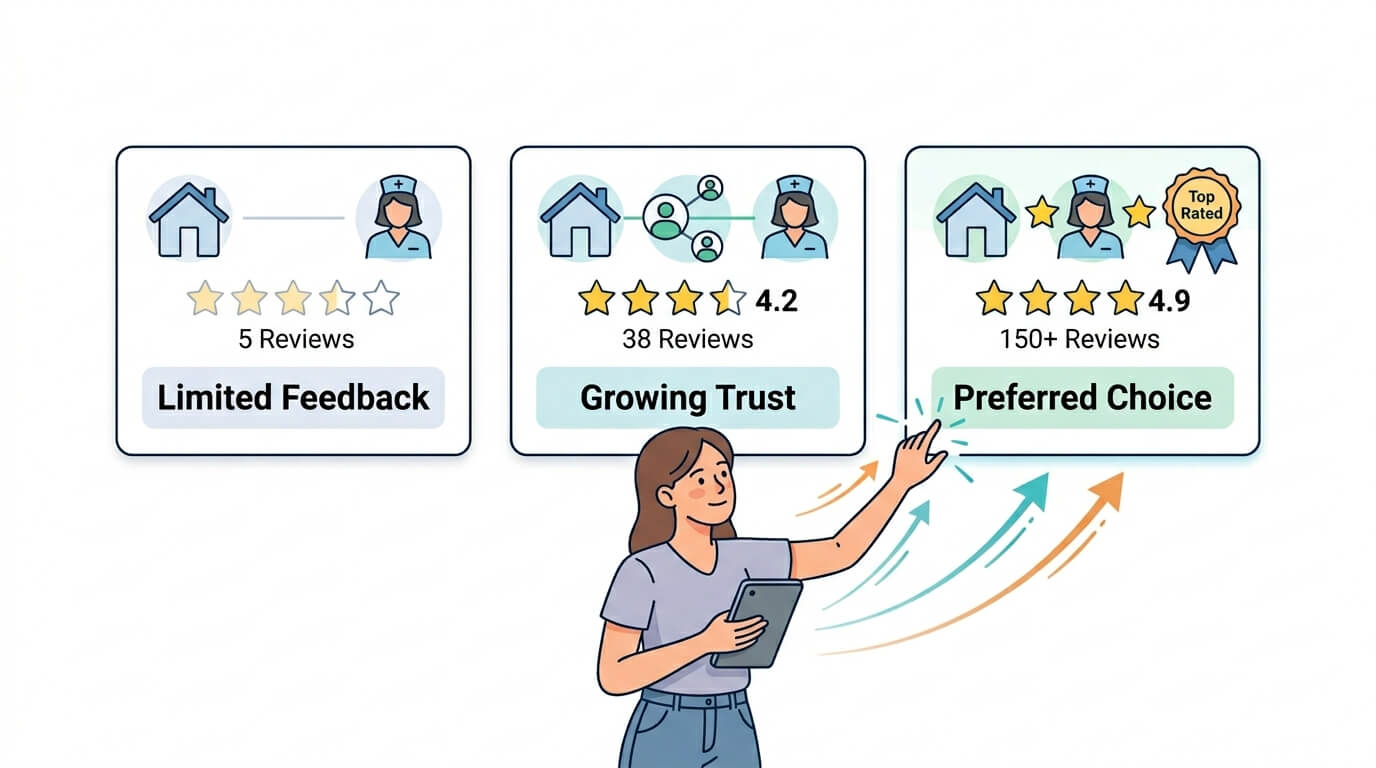
Online reviews are one of the strongest trust signals in healthcare, often influencing whether a patient or caregiver chooses your agency.
Most people rely on platforms like Google Maps, Yelp, and industry-specific directories to evaluate providers before making a decision.
A consistent flow of positive reviews can significantly impact both visibility and conversions. Even small improvements in ratings can lead to increased engagement and inquiries, as users tend to trust providers with higher and more recent reviews.
To build a strong reputation, actively encourage satisfied patients and families to share their experiences.
The best time to ask is after a positive interaction or successful outcome, followed by a simple email or message with a direct review link. This makes the process easy and increases response rates.
Additionally, responding to reviews is equally important. Acknowledging positive feedback shows appreciation, while addressing negative reviews professionally demonstrates accountability and commitment to quality care.
Finally, showcasing reviews on your website and service pages reinforces credibility and supports decision-making.
11. Amplify Content Through Paid Channels
Creating valuable content is important, but without distribution, its reach can remain limited. Paid channels help extend the visibility of your content and ensure it reaches the right audience at the right time.
Platforms like Google, Facebook, and YouTube allow you to promote blog posts, videos, and patient resources to highly targeted audiences based on location, interests, and behavior.
This is especially useful for reaching caregivers and family members who may not be actively searching but are still in the awareness stage.
Promoting high-quality content, such as educational blogs, patient guides, and testimonials, can drive more traffic to your website while building trust and brand recognition.
12. List on Healthcare Directories
Listing your agency on reputable healthcare and senior care directories is an effective way to increase visibility and generate qualified leads. Platforms such as
Often rank highly in search results and are frequently used by families researching care options.
These directories are trusted because they act as third-party sources, helping validate your services in the eyes of potential patients and caregivers.
In many cases, directory listings can also drive high-intent traffic, as users visiting these sites are already actively looking for care providers in their area.
Maintaining accurate, complete, and up-to-date listings across multiple directories helps strengthen your online presence and supports overall discoverability across search engines.
13. Use Visual Storytelling
Visual storytelling is becoming an essential part of modern healthcare communication, helping agencies build trust, improve engagement, and simplify complex care services for patients and families.
Instead of relying only on text, use images and videos to show real experiences such as caregiver interactions, patient journeys (while maintaining privacy compliance), facility visits, and day-to-day support at home.
This helps humanize your agency and makes your services easier to understand. Consistent visual content also strengthens brand identity.
When patients repeatedly see authentic, helpful, and relatable content, it builds familiarity and trust over time.
Incorporating creative home health marketing ideas like behind-the-scenes videos, caregiver spotlights, and patient education visuals can significantly improve audience engagement and help differentiate your agency in a competitive market.
14. Expand Professional Partnerships
Expanding professional partnerships is a key driver of sustainable growth for home health agencies, as a significant portion of patient referrals comes from healthcare professionals and related organizations.
- Hospitals
- Physicians
- Rehabilitation centers
- Skilled nursing facilities
- Social workers
Often play a central role in directing patients toward home care services. Building strong, consistent relationships with these referral sources helps ensure your agency is top-of-mind when care decisions are being made.
Attending local healthcare events, networking with providers, and maintaining structured follow-ups can further strengthen relationships over time. The goal is to position your agency as a reliable extension of the care continuum.
Strong professional partnerships not only increase referral volume but also improve the quality of leads, creating a more stable and predictable growth pipeline.
How to Build a Scalable Home Health Marketing Strategy
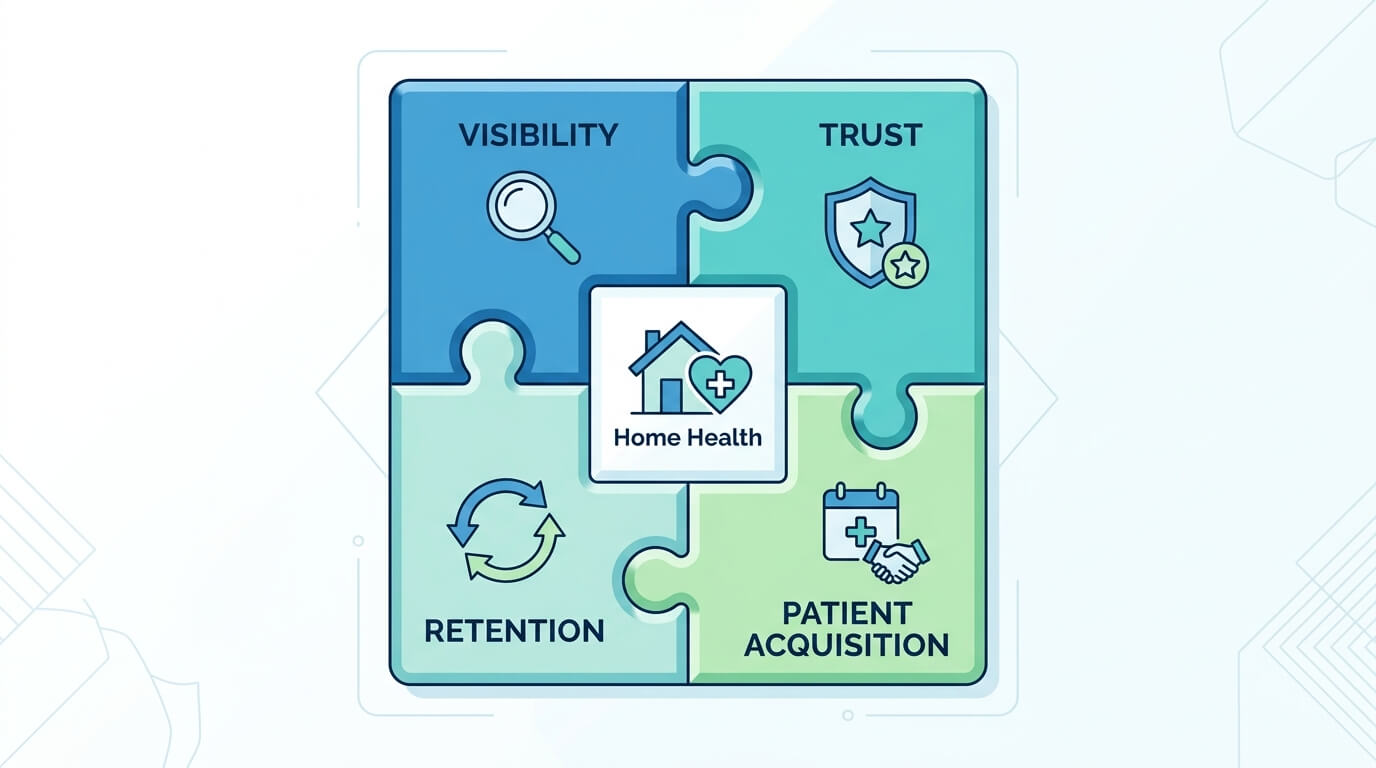
Building a scalable marketing approach requires a structured home health marketing plan that aligns brand positioning, audience insights, and channel execution.
A well-planned strategy ensures consistent growth, improved visibility, and stronger patient acquisition over time.
Define Your Brand Clearly
A scalable strategy starts with a clear understanding of your brand identity. Your mission, values, and differentiators should be clearly defined so all marketing efforts communicate a consistent message.
Key questions to guide this:
- What makes your agency different from competitors?
- What values define your approach to care?
- How do you demonstrate trust, quality, and expertise?
A strong brand foundation allows you to create consistent messaging across websites, content, ads, and social platforms, helping build long-term recognition and authority.
Understand Your Target Audience
Effective marketing depends on knowing exactly who you are trying to reach. In home health, this often includes seniors, family caregivers, and healthcare referral sources.
To build accurate audience insights, identify:
- Demographics (age, location, care needs)
- Key pain points and concerns
- Decision-making factors (trust, reviews, responsiveness)
- Preferred communication channels
This understanding helps tailor messaging, improve engagement, and ensure your content speaks directly to real needs.
Build a Strong Digital Presence
A scalable strategy requires a consistent and optimized online presence across multiple channels, including:
- A well-structured, SEO-optimized website
- Informative blog content and resources
- Active social media profiles
- Email newsletters for ongoing engagement
- Paid search and display campaigns
Educational content is especially important, as it builds trust and positions your agency as a reliable source of information, not just a service provider.
Strengthen Referral Relationships
Referral networks play a major role in long-term growth. Building relationships with physicians, hospitals, discharge planners, and other healthcare professionals ensures a steady flow of qualified referrals.
Effective approaches include:
- Regular networking with healthcare providers
- Attending industry and community events
- Sharing updates and service capabilities
- Maintaining consistent follow-ups with referral partners
Strong partnerships help increase both the volume and quality of patient referrals.
Maintain a Strong Reputation
Reputation directly impacts patient trust and decision-making. Positive reviews and feedback help validate your services and improve conversion rates.
To manage reputation effectively:
- Encourage satisfied patients and families to leave reviews
- Respond professionally to all feedback
- Collect regular patient satisfaction insights
- Showcase testimonials across your website and marketing channels
A strong reputation not only improves credibility but also supports long-term patient acquisition.
Conclusion
The home healthcare industry is entering a highly competitive and digitally driven era where visibility, trust, and accessibility determine long-term success.
As patient behavior continues to shift toward online research and AI-assisted decision-making, agencies must move beyond traditional outreach and adopt a structured, multi-channel marketing approach.
The strategies outlined in this guide highlight what it takes to build sustainable growth in 2026, from strengthening your digital presence and improving local search visibility to leveraging paid campaigns, content, and referral networks.
When these elements work together, they create a consistent system for attracting, converting, and retaining patients.
Ultimately, success in this space depends on how well an agency can position itself as a trusted, accessible, and authoritative provider.
By combining data-driven insights with patient-focused communication, home health organizations can improve their reach, strengthen their reputation, and achieve long-term growth in an increasingly competitive market.
Let’s increase appointment bookings
At MedClicx, we help medical practices connect with more patients.

Senior Digital Marketing Strategist &
Healthcare SEO Consultant
James Walker is a Senior Digital Marketing Strategist and Healthcare SEO Consultant at MedClicx. He specializes in helping healthcare organizations and service-based businesses grow their online presence through SEO, content marketing, local SEO, AI search optimization, (GEO), technical SEO, website optimization, and digital marketing strategies.
Over the years, James has worked on improving organic visibility, lead generation, and brand authority by combining search engine optimization, website performance, content strategy, conversion optimization, and AI-ready content. His expertise also includes Google Business Profile optimization, schema markup, user experience (UX), analytics, and modern digital marketing best practices.
At MedClicx, James writes educational articles covering SEO, content marketing, digital marketing, AI search optimization, social media marketing, web design, advertising strategies, podcasts, and online business growth. His goal is to simplify complex marketing concepts and help businesses make data-driven decisions that generate sustainable long-term results.
- James Walker
- James Walker
- James Walker
- James Walker