Plastic Surgery Marketing for Cosmetic Surgeons: 12 Proven Strategies to Get More Patients in 2026
-
 James Walker
Table of Contents:
- How Patients Choose Cosmetic Surgeons Today
- 12 Plastic Surgery Marketing Strategies That Work
- How to Measure Marketing ROI for a Cosmetic Surgery Practice
- Common Plastic Surgery Marketing Mistakes to Avoid
- Conclusion
- FAQs
Plastic surgery is one of the most competitive and high-value sectors in healthcare marketing today.
Unlike general medical services, cosmetic procedures are elective, meaning patients are not searching out of urgency but out of desire, confidence, and aesthetic goals.
This makes trust, visibility, and perception extremely important in shaping patient decisions.
In this environment, plastic surgery marketing is about building a complete digital ecosystem that influences how potential patients discover, evaluate, and ultimately choose a surgeon.
Successful clinics now rely on strategic cosmetic surgery marketing systems for consistent patient acquisition and long-term practice growth.
In this blog, we will explore 12 proven plastic surgery marketing strategies that help cosmetic surgeons improve visibility, attract qualified patients, and increase consultations.
How Patients Choose Cosmetic Surgeons Today
Understanding patient behavior is the foundation of effective marketing for plastic surgeons. Today’s patient journey is more complex than a simple Google search and phone call.
Most patients begin by searching for a procedure, such as rhinoplasty or liposuction, rather than searching for a clinic directly. From there, they enter a multi-step decision process:
- They compare multiple surgeons in their area
- They evaluate before-and-after galleries
- They read Google reviews and testimonials
- They assess pricing transparency and consultation experience
- They revisit websites multiple times before deciding
Trust is the deciding factor, not just visibility.
This is where marketing for cosmetic surgeons must go beyond basic promotion. It must address emotional reassurance, clinical credibility, and visual proof of results.
12 Plastic Surgery Marketing Strategies That Work
1. Build Procedure-Specific SEO Landing Pages
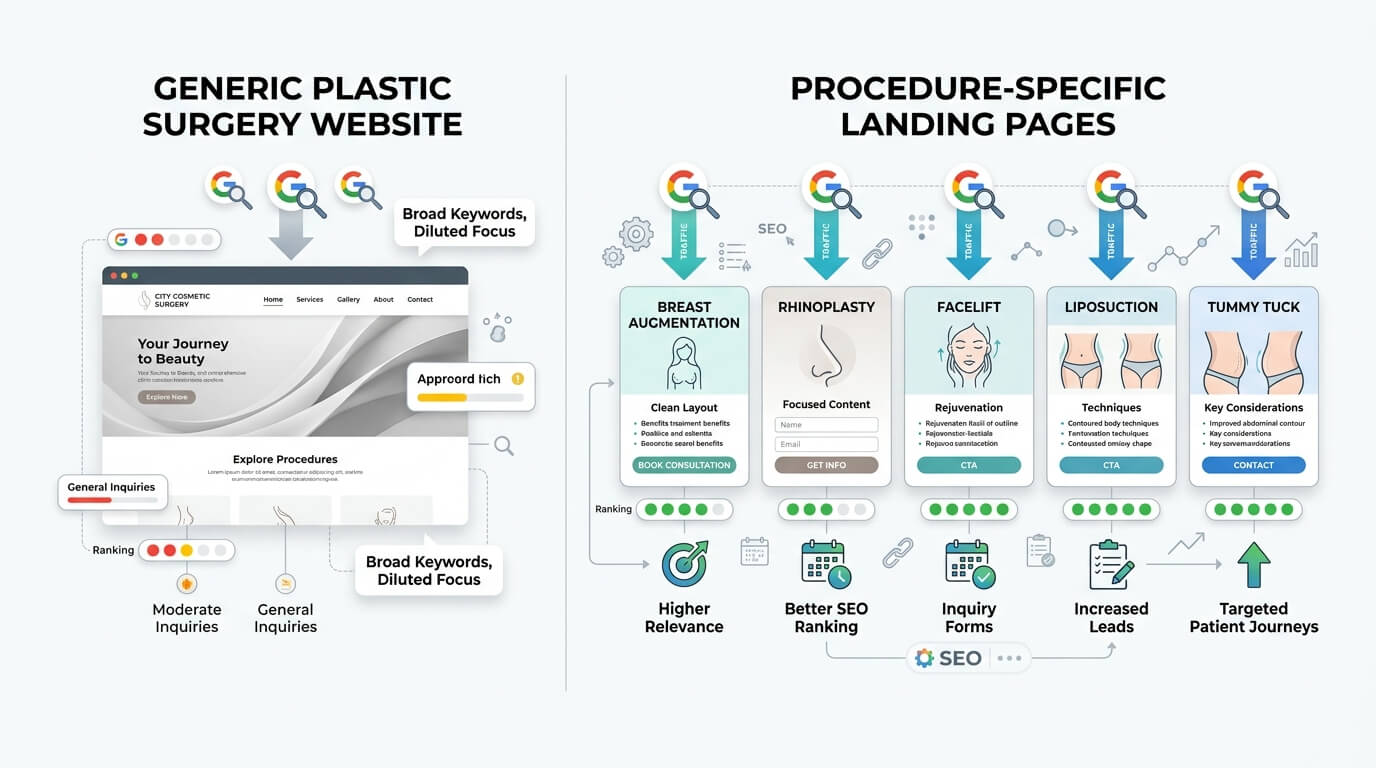
One of the most powerful plastic surgery marketing strategies is creating dedicated SEO landing pages for each procedure.
Instead of a single generic services page, clinics should build individual pages for treatments like rhinoplasty, facelift, and breast augmentation.
These pages should include procedure details, benefits, recovery information, FAQs, and before-and-after images.
This improves search relevance, helps patients find the exact information they need, and allows you to target highly specific patient intent.
2. Optimize Your Google Business Profile
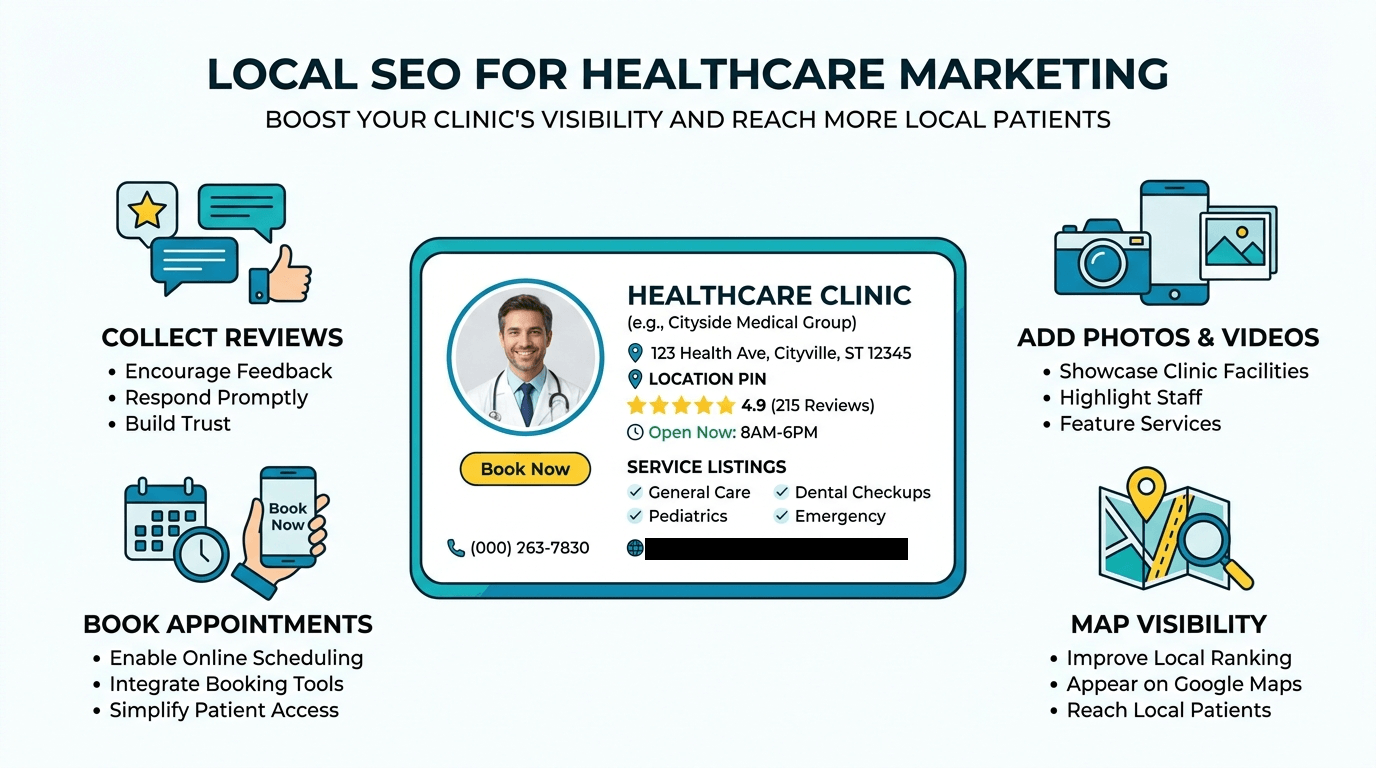
Your Google Business Profile is often the first impression patients see before clicking your website. A fully optimized profile with updated images, services, office hours, and reviews builds immediate trust.
A strong Google Business Profile for plastic surgeons increases visibility in local map results and improves click-through rates from high-intent searches.
Regularly posting updates and responding to reviews can further strengthen engagement and credibility.
3. Invest in High-Intent Google Ads
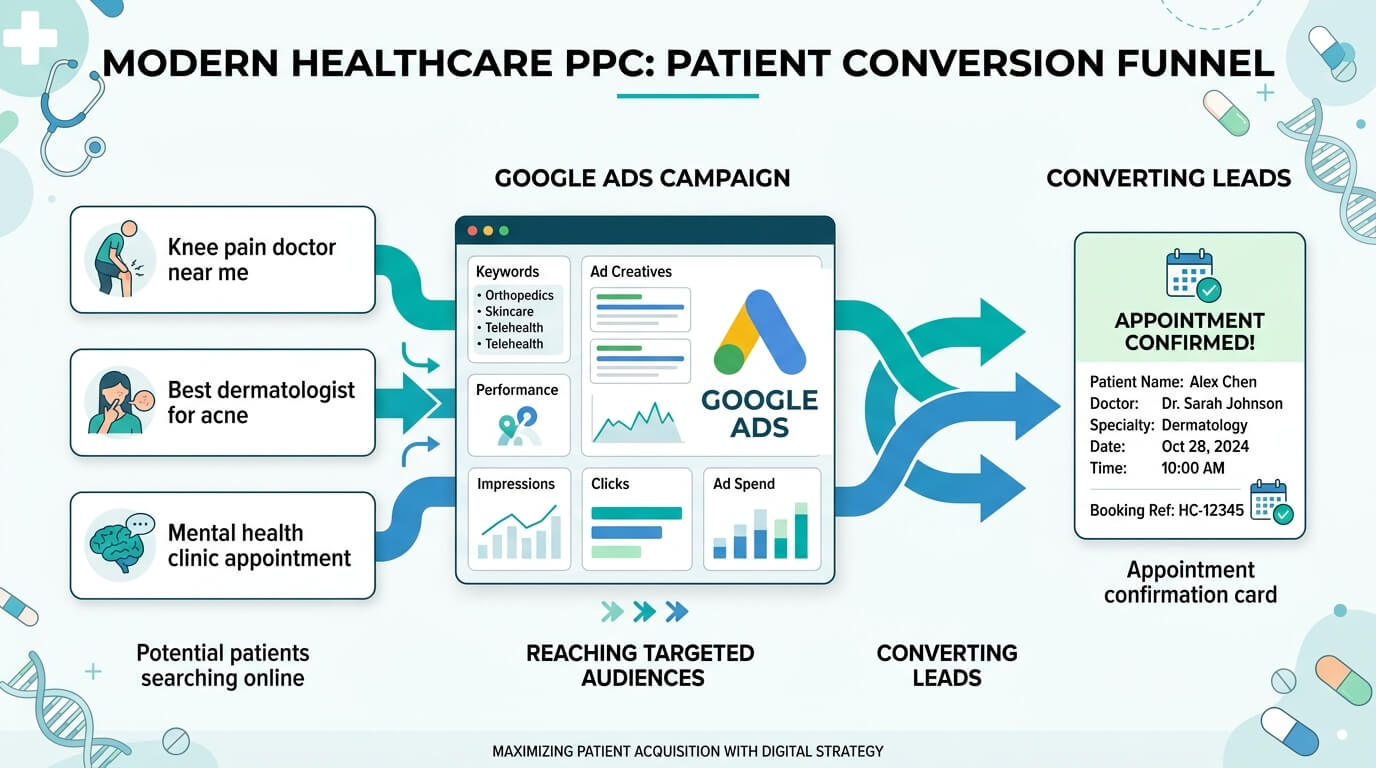
Paid search remains one of the fastest ways to generate consultations. A well-structured campaign targeting procedure-based keywords ensures your ads appear when patients are actively searching for treatments.
Effective plastic surgeon advertising focuses on high-conversion keywords rather than broad awareness traffic.
Dedicated landing pages, compelling ad copy, and conversion tracking are essential for maximizing return on ad spend.
4. Create Before-and-After Galleries That Convert
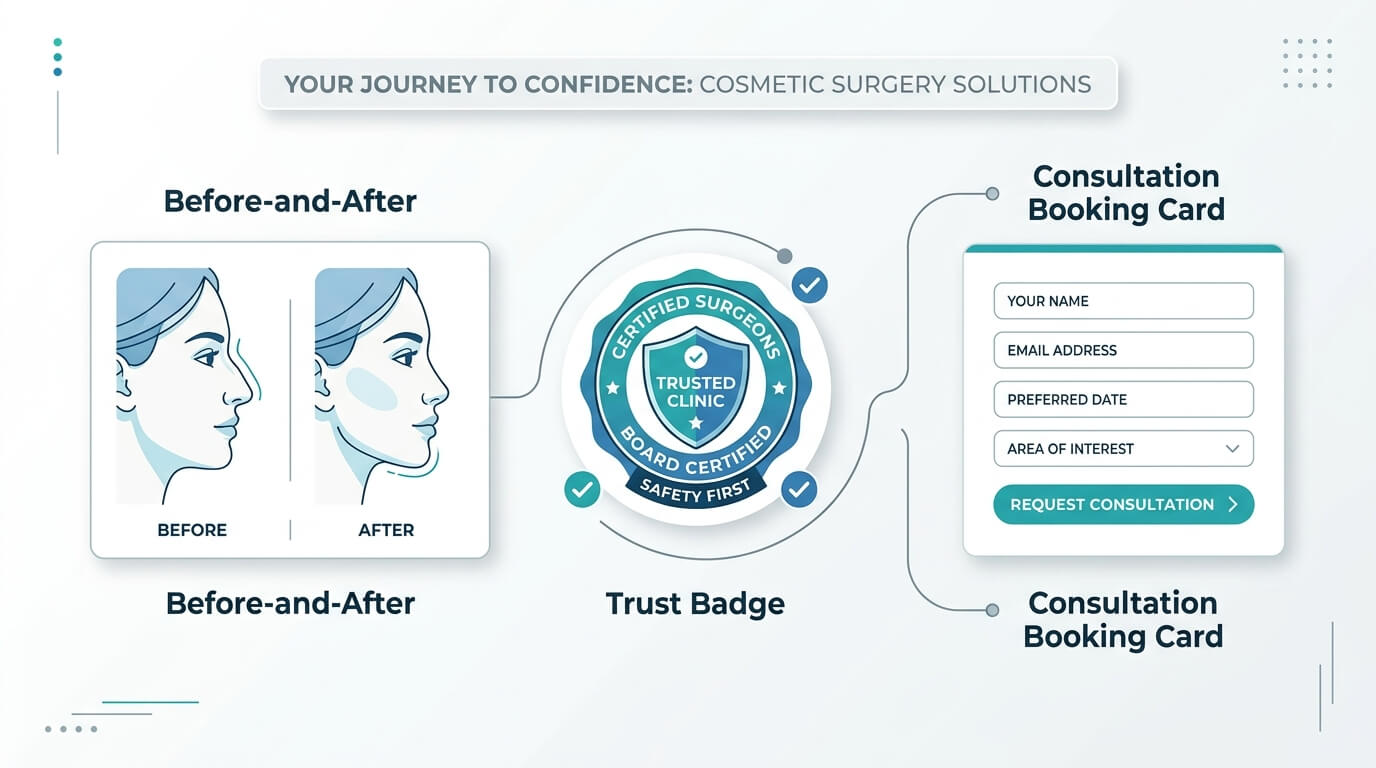
Visual proof is one of the strongest conversion drivers in cosmetic surgery. Before-and-after galleries help patients visualize outcomes and build confidence in your expertise.
To maximize effectiveness, organize galleries by procedure and include brief case descriptions when appropriate.
This is a critical part of plastic surgery advertising because it directly impacts emotional decision-making and patient trust.
5. Use Video Marketing to Build Trust
Video content allows surgeons to connect with patients on a personal level. Educational videos, procedure explanations, office tours, and patient testimonials increase engagement and reduce hesitation.
Videos also help showcase your personality and communication style, which can make prospective patients feel more comfortable before scheduling a consultation.
6. Strengthen Your Online Reputation
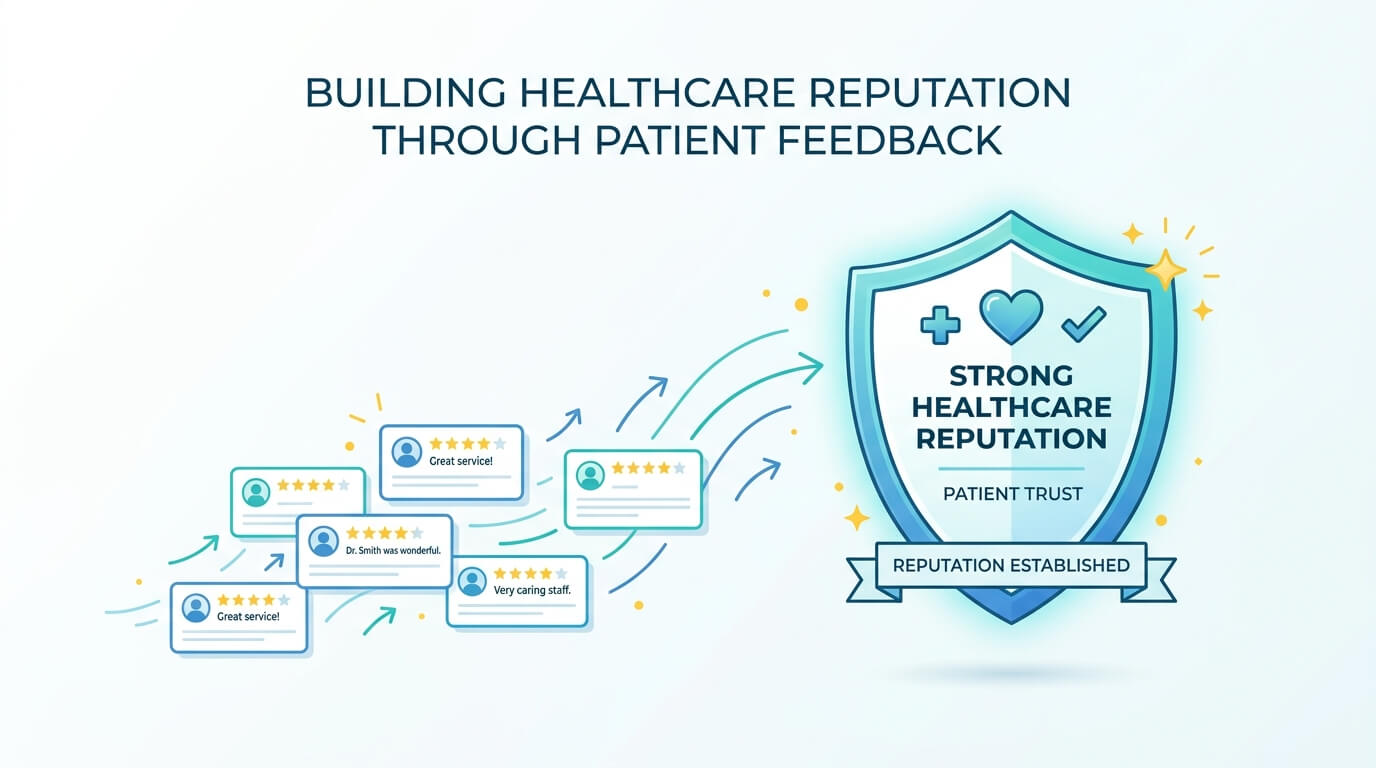
Reviews are one of the most influential ranking and conversion factors in healthcare marketing. A strong review profile builds credibility and reduces perceived risk.
Effective online reputation management includes consistently requesting feedback from satisfied patients, monitoring review platforms, and responding professionally to both positive and negative reviews.
7. Publish Educational Content Around Cost, Recovery, and Results
Patients often search for cost and recovery details before booking. Educational blogs addressing these concerns improve trust and organic visibility.
Topics such as procedure costs, recovery timelines, candidacy requirements, and expected results can answer common questions before a consultation.
This is a core pillar of plastic surgery digital marketing because it captures patients early in their decision journey.
8. Improve Local SEO Signals
Local visibility is essential for attracting nearby patients searching for procedures. Consistent citations, location pages, and optimized listings improve rankings in map results.
Strong local SEO for plastic surgeons also involves maintaining accurate business information across directories, earning local backlinks, and creating content relevant to your service areas.
9. Use Social Media to Showcase Expertise
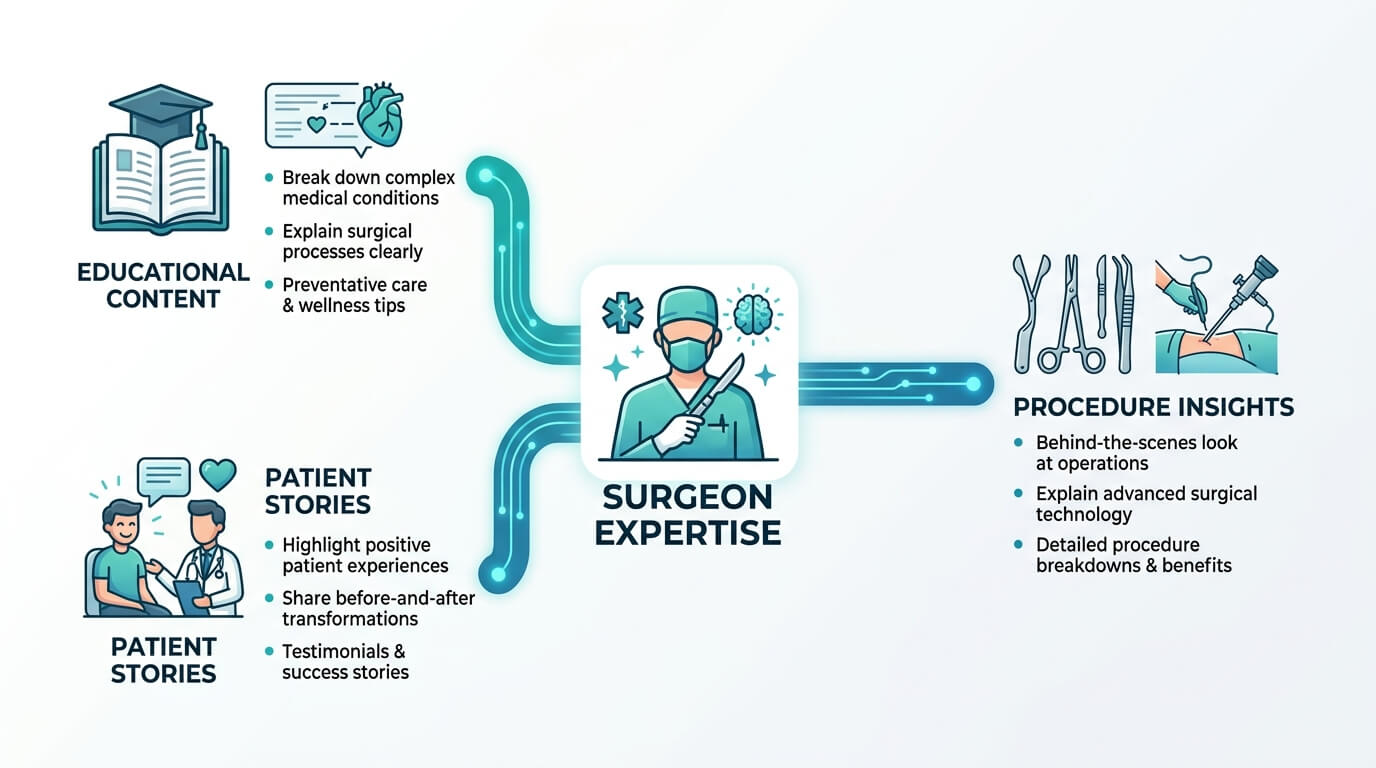
Social media platforms like Instagram and TikTok are powerful for showcasing transformations and building authority. Consistent posting increases brand familiarity and trust.
Sharing educational content, patient success stories, behind-the-scenes insights, and procedure highlights can help keep your practice visible while demonstrating expertise.
10. Implement Retargeting Campaigns
Most patients do not book after their first visit. Retargeting helps keep your clinic visible as they continue researching other providers.
These campaigns can display tailored ads to previous website visitors, reminding them of your services and encouraging them to return.
This strategy is especially effective in cosmetic surgery PPC campaigns where consideration cycles are longer.
11. Optimize Your Website for Consultation Conversions
Your website should be designed to convert visitors into booked consultations. This includes fast loading speed, clear calls-to-action, mobile responsiveness, and simplified booking forms.
An effective plastic surgery website design focuses on user experience and conversion flow rather than aesthetics alone. Every page should make it easy for visitors to take the next step.
12. Prepare for AI Search and AI Overviews
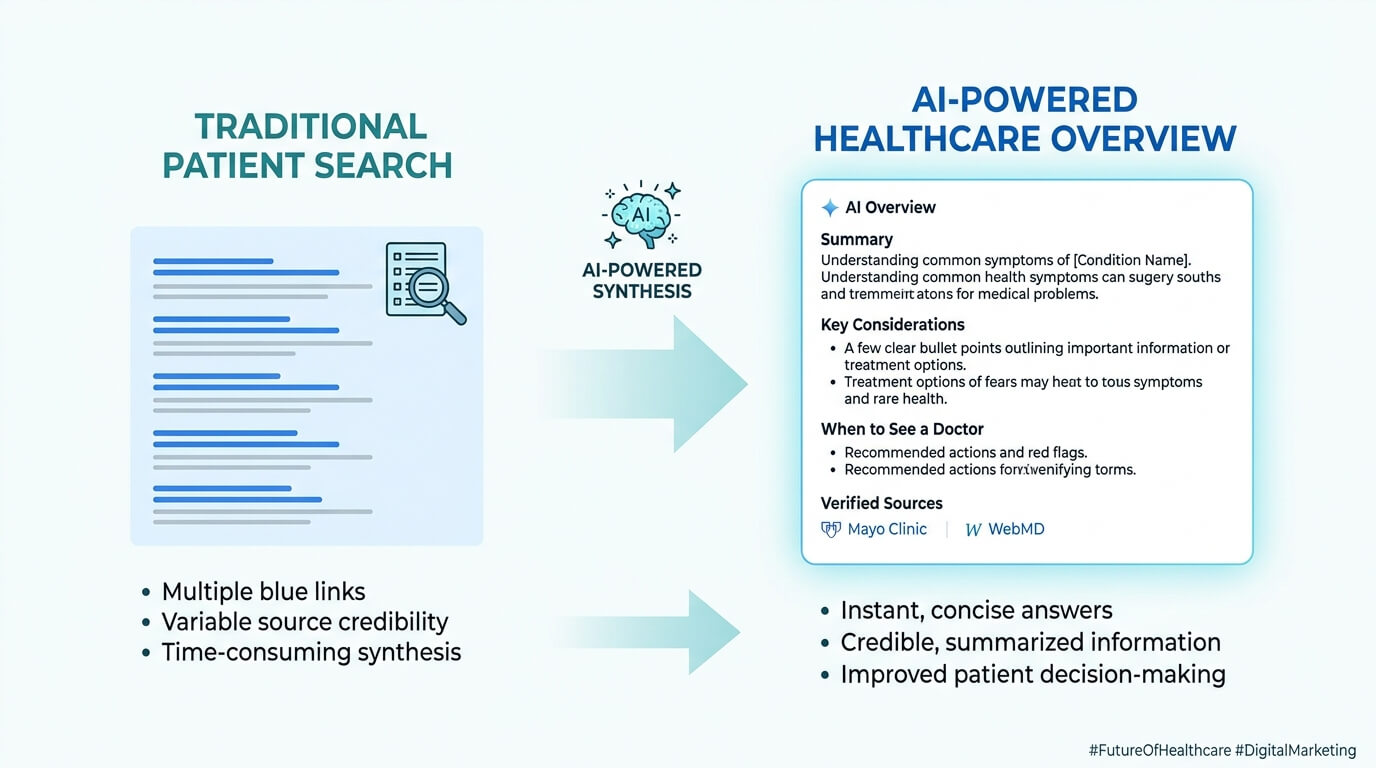
Search behavior is evolving with AI-driven results. Clinics must optimize content for AI summaries, conversational queries, and entity-based search results.
Creating clear, authoritative content that directly answers patient questions can improve visibility in AI-generated search experiences.
This shift makes AI search optimization a critical part of a long-term visibility strategy, especially as AI Overviews become more prominent in Google search results.
How to Measure Marketing ROI for a Cosmetic Surgery Practice
Measuring return on investment is essential for understanding what actually drives patient acquisition. Without proper tracking, clinics often invest in marketing channels without knowing which ones generate real revenue.
Key metrics to track include:
- Cost per consultation
- Conversion rate from website visits
- Return on ad spend
- Lead-to-patient ratio
- Lifetime patient value
A strong healthcare SEO strategy should always connect visibility metrics to real-world patient bookings, not just traffic.
Using call tracking, form tracking, and CRM reporting can provide a clearer picture of which marketing efforts are producing results.
Common Plastic Surgery Marketing Mistakes to Avoid
Here are the most common marketing mistakes that plastic surgeons often make:
Using a generic website with no procedure-specific pages
- Ignoring Google reviews or failing to respond
- Running ads without conversion tracking
- Poor mobile website experience
- Inconsistent branding across platforms
- Weak or outdated content strategy
- No follow-up system for leads
- Ignoring local search optimization
Conclusion
Effective marketing in the cosmetic surgery industry requires more than visibility; it requires trust, education, and strategic positioning across every digital channel.
Clinics that invest in structured marketing systems consistently outperform those relying on referrals alone.
By combining SEO, paid ads, reputation building, and conversion-focused website design, surgeons can create a predictable patient acquisition system that supports long-term growth.
FAQs
How do plastic surgeons get more patients?
What is the best marketing strategy for a plastic surgery practice?
Does SEO work for plastic surgeons?
How can plastic surgeons rank higher on Google?
Are Google reviews important for plastic surgery marketing?
How can a plastic surgery website generate more consultations?
How do AI Overviews affect plastic surgery marketing?
Let’s increase appointment bookings
At MedClicx, we help medical practices connect with more patients.


Senior Digital Marketing Strategist &
Healthcare SEO Consultant
James Walker is a Senior Digital Marketing Strategist and Healthcare SEO Consultant at MedClicx. He specializes in helping healthcare organizations and service-based businesses grow their online presence through SEO, content marketing, local SEO, AI search optimization, (GEO), technical SEO, website optimization, and digital marketing strategies.
Over the years, James has worked on improving organic visibility, lead generation, and brand authority by combining search engine optimization, website performance, content strategy, conversion optimization, and AI-ready content. His expertise also includes Google Business Profile optimization, schema markup, user experience (UX), analytics, and modern digital marketing best practices.
At MedClicx, James writes educational articles covering SEO, content marketing, digital marketing, AI search optimization, social media marketing, web design, advertising strategies, podcasts, and online business growth. His goal is to simplify complex marketing concepts and help businesses make data-driven decisions that generate sustainable long-term results.
- James Walker
- James Walker
- James Walker
- James Walker