13 Best LASIK Marketing Strategies for Ophthalmology Practices
-
 James Walker
Table of Contents:
- What Is LASIK Marketing?
- Why LASIK Marketing Requires a Different Approach
- Best LASIK Marketing Strategies for Ophthalmology Practices
- Conclusion
- FAQs
LASIK is one of the most popular elective procedures in ophthalmology, but growing demand has also increased competition among providers.
Unlike many healthcare services, LASIK patients typically spend time researching options, comparing providers, reading reviews, and evaluating costs before booking a consultation.
As a result, successful LASIK marketing requires more than a website or a few ads. Practices need a strategy that improves visibility, builds trust, and converts interested prospects into consultations. This includes a combination of SEO, paid advertising, reputation management, content marketing, and conversion optimization.
In this guide, we’ll cover the best LASIK marketing strategies for ophthalmology practices, from attracting qualified leads to increasing consultation bookings and driving practice growth.
What Is LASIK Marketing?
LASIK marketing is the process of attracting, educating, and converting prospective patients interested in laser vision correction procedures. Its primary goal is to generate qualified leads and turn them into consultation bookings.
Unlike general ophthalmology marketing, LASIK marketing promotes an elective procedure. Patients are not seeking urgent treatment; they are evaluating whether LASIK is the right choice for their lifestyle, vision needs, and budget.
Effective LASIK marketing uses multiple channels, including local SEO, content marketing, Google Ads, social media, email marketing, online reviews, and conversion-focused website design.
Because LASIK patients often compare providers, read reviews, and research costs before making a decision, successful marketing must address their concerns, demonstrate expertise, and build confidence at every stage of the patient journey.
Why LASIK Marketing Requires a Different Approach
LASIK marketing is different from traditional medical marketing because it promotes an elective procedure rather than a medically necessary treatment.
Patients often spend weeks or months researching providers, comparing costs, and evaluating their options before booking a consultation.
Because vision correction is a significant personal investment, trust plays a critical role in the decision-making process.
Patients want confidence in the surgeon’s expertise, technology, safety standards, and expected outcomes. Competition is also high in many markets, making it important for practices to clearly communicate their unique value and patient experience.
As a result, successful LASIK marketing requires a full-funnel approach that attracts potential patients, builds trust, and converts consultations into procedures.
Best LASIK Marketing Strategies for Ophthalmology Practices
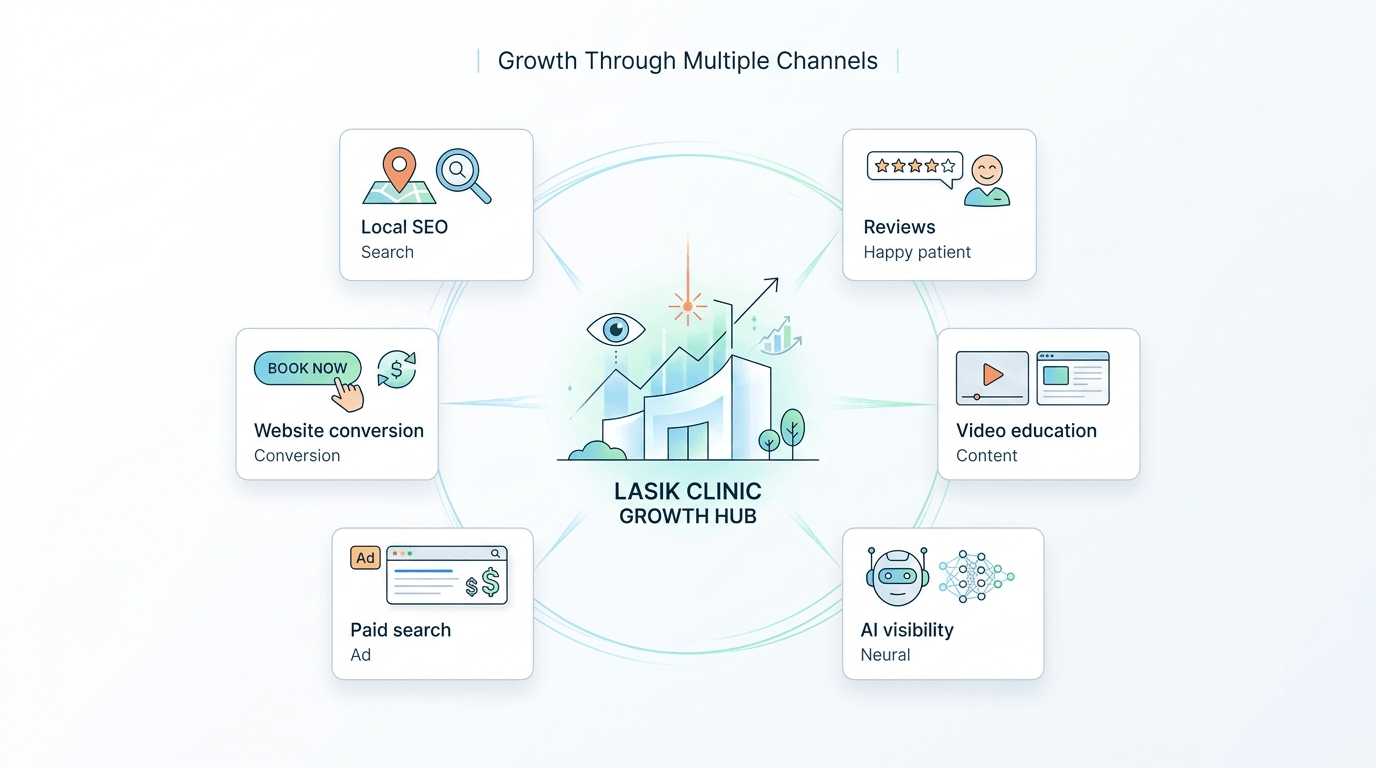
The most effective LASIK marketing strategies are organized into three stages:
- Top of Funnel (Awareness): Increase visibility and attract potential patients.
- Middle of Funnel (Consideration): Build trust and credibility.
- Bottom of Funnel (Conversion): Turn prospects into consultations and procedures
Top of Funnel (Awareness Stage)
1. Local SEO for Ophthalmology Practices
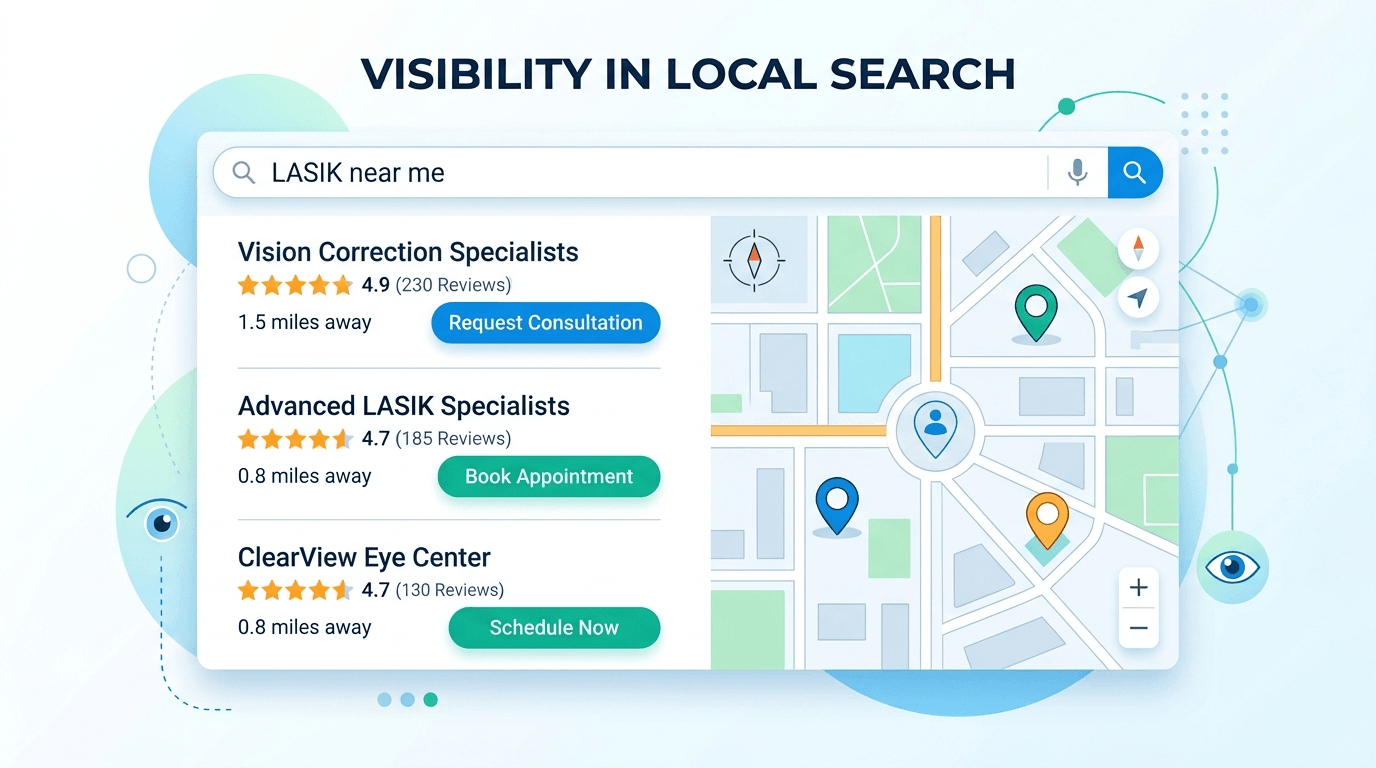
Local SEO helps your practice appear for searches such as “LASIK near me,” “LASIK surgeon in Manhattan,” “LASIK eye surgery near me,” and “best LASIK clinic in Texas.”
Since these searches often come from patients actively looking for a provider, improving your local search presence can significantly increase consultation requests and patient acquisition.
Optimize Your Google Business Profile
Your Google Business Profile (GBP) is one of the most important local SEO assets for a LASIK practice.
To optimize your profile:
- Ensure your practice name, address, and phone number (NAP) are accurate and consistent.
- Add high-quality photos of your clinic, staff, and equipment.
- Include a detailed description of your LASIK services.
- Keep business hours and contact information updated.
- Add links to your website and appointment scheduling page.
A well-optimized Google Business Profile can improve your visibility in Google’s Local Pack and Google Maps results.
Create Location-Specific LASIK Pages
If your practice serves multiple cities or surrounding communities, create dedicated location pages for each area, such as LASIK in Dallas or LASIK Surgeon in Fort Worth.
- Each location page should include:
- Unique, location-specific content.
- Patient testimonials from the area, when available.
- Location-specific FAQs.
Publish Localized Content
Localized content helps your practice rank for geographically relevant searches and strengthens your local SEO strategy. Consider creating content around topics such as:
- LASIK costs in your city
- How to choose a LASIK surgeon in your area
- LASIK candidacy requirements
- Patient success stories from your community
- Local LASIK FAQs
Use local keywords naturally throughout the content and link relevant articles to your service and location pages to reinforce local relevance.
2. LASIK SEO Content Strategy
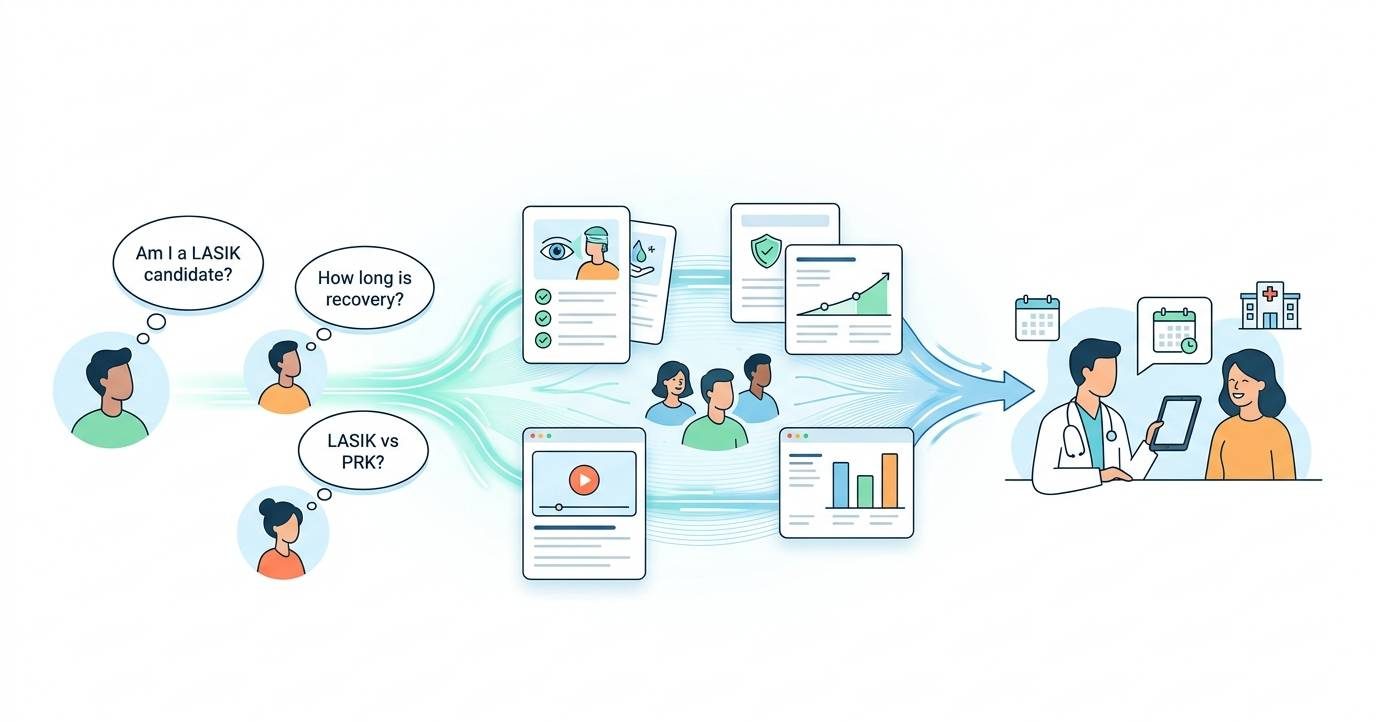
A strong SEO content strategy helps your practice attract prospective patients throughout the research phase of their journey.
Before scheduling a consultation, many patients search for information about candidacy, costs, recovery times, risks, and alternative vision correction procedures.
Creating high-quality content around these topics allows your practice to rank for relevant searches while establishing authority and trust.
Target High-Intent LASIK Keywords such as “LASIK cost,” “LASIK vs PRK,” or “best LASIK surgeon.” These searches often occur during the consideration phase and can drive highly qualified traffic to your website.
Create Educational Content
Educational content helps answer common patient questions and overcome objections.
Consider publishing articles on topics such as:
- What to expect during LASIK surgery
- LASIK vs PRK: Which is right for you?
- How long does LASIK recovery take?
- Common LASIK myths and misconceptions
Optimize Content for Search Intent
Each piece of content should match the user’s search intent. Informational searches require educational content, while commercial searches may benefit from service pages, consultation-focused landing pages, and patient success stories.
By consistently publishing valuable content, ophthalmology practices can improve organic visibility, attract qualified traffic, and generate more consultation opportunities.
3. AI Search Optimization for LASIK
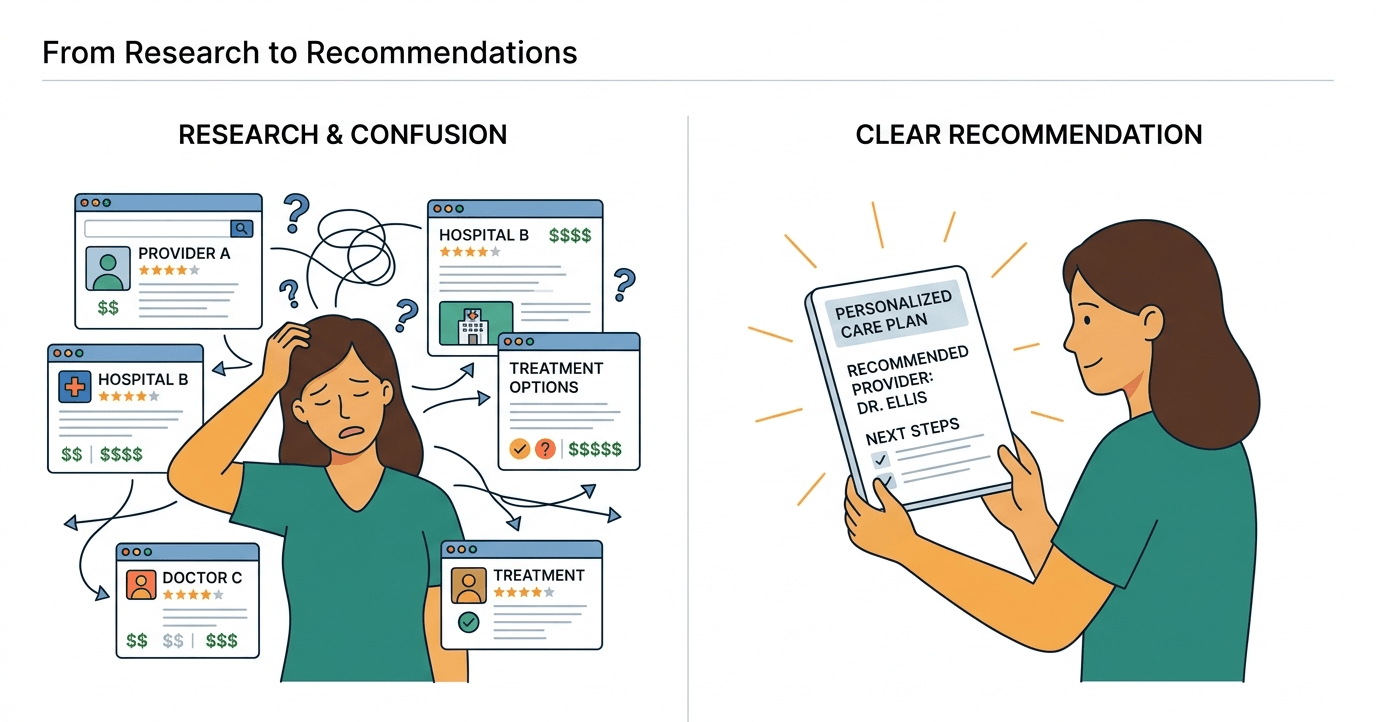
Search behavior is evolving rapidly as patients increasingly use AI-powered search experiences to research healthcare providers and procedures.
Optimizing for AI search can help your practice maintain visibility as traditional search continues to change.
Create Comprehensive, Patient-Focused Content
AI systems prioritize content that provides clear, direct answers to user questions. Structure your content around common patient concerns. The more useful and complete your content is, the more likely it is to appear in AI-generated responses.
Implement Structured Data
Schema markup helps search engines understand your content and services. Consider implementing:
- FAQ schema
- Medical organization schema
- Physician schema
- Review schema
- Local business schema
Structured data can improve visibility in both traditional and AI-driven search results.
Strengthen E-E-A-T Signals
Experience, expertise, authoritativeness, and trustworthiness remain critical for healthcare websites. Strengthen these signals by:
- Highlighting surgeon credentials
- Publishing expert-reviewed content
- Showcasing patient testimonials
- Displaying awards and certifications
- Maintaining accurate provider information
Strong E-E-A-T signals help improve credibility with both users and search engines.
Optimize for conversational queries.
4. Google Ads for High-Intent LASIK Patients
Google Ads remains one of the fastest ways to generate qualified LASIK leads because it allows practices to appear when patients are actively searching for treatment. Unlike awareness-focused channels, paid search often captures users with strong purchase intent.
Create Dedicated Landing Pages
Every ad campaign should direct users to a dedicated landing page rather than a generic homepage. Effective LASIK landing pages should include:
- Clear value propositions
- Surgeon credentials
- Patient testimonials
- Financing information
- Strong calls to action
- Consultation request forms
The closer the landing page aligns with the ad, the better the conversion rate.
Use Conversion Tracking
Tracking allows practices to understand which campaigns generate actual consultations.
Monitor metrics such as:
- Form submissions
- Phone calls
- Appointment requests
- Consultation bookings
This data helps optimize spending and improve campaign performance over time.
5. Social Media Awareness Campaigns
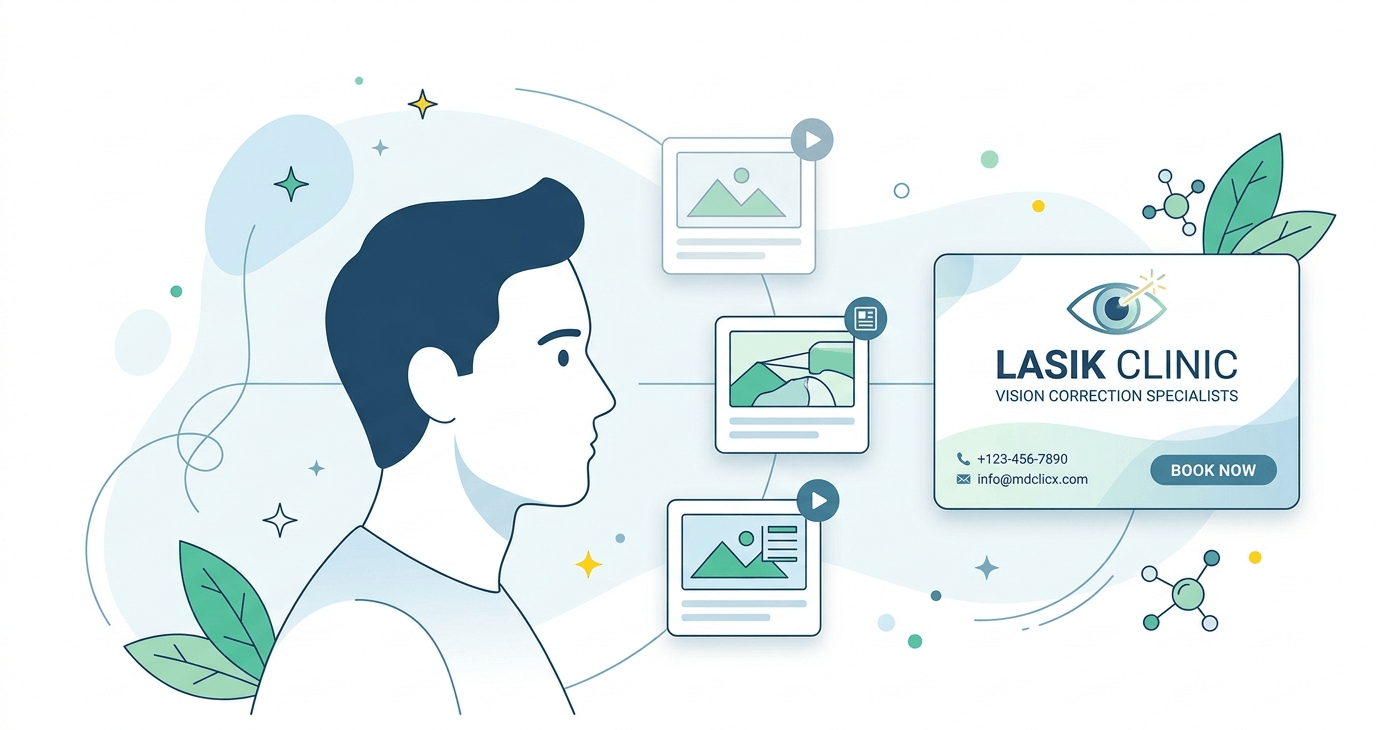
Social media provides an opportunity to increase brand awareness, educate potential patients, and build familiarity before they begin actively searching for LASIK services.
While social media may not always generate immediate consultations, it can influence future decision-making and strengthen overall marketing performance.
Share Educational Content
Educational posts across social media platforms such as Facebook, Instagram, TikTok, and LinkedIn can help introduce prospective patients to LASIK and address common concerns. It helps position your practice as a trusted resource.
Showcase Patient Success Stories
Patient testimonials and success stories are highly effective because they provide social proof. Consider sharing:
- Video testimonials
- Before-and-after experiences
- Recovery updates
- Patient interviews
Authentic stories often resonate more strongly than promotional content.
Build Surgeon Authority
Patients want confidence in their provider before scheduling a consultation.
Use social media to highlight:
- Surgeon expertise
- Professional achievements
- Speaking engagements
- Community involvement
- Educational videos
This helps humanize your practice and strengthen credibility.
Leverage Short-Form Video Content
Short-form videos on platforms like Instagram Reels, Facebook Reels, and TikTok can help expand reach and engagement. Video content can significantly increase visibility while helping prospective patients become more comfortable with your practice.
Middle of Funnel (Consideration Stage)
6. High-Converting LASIK Website Strategy
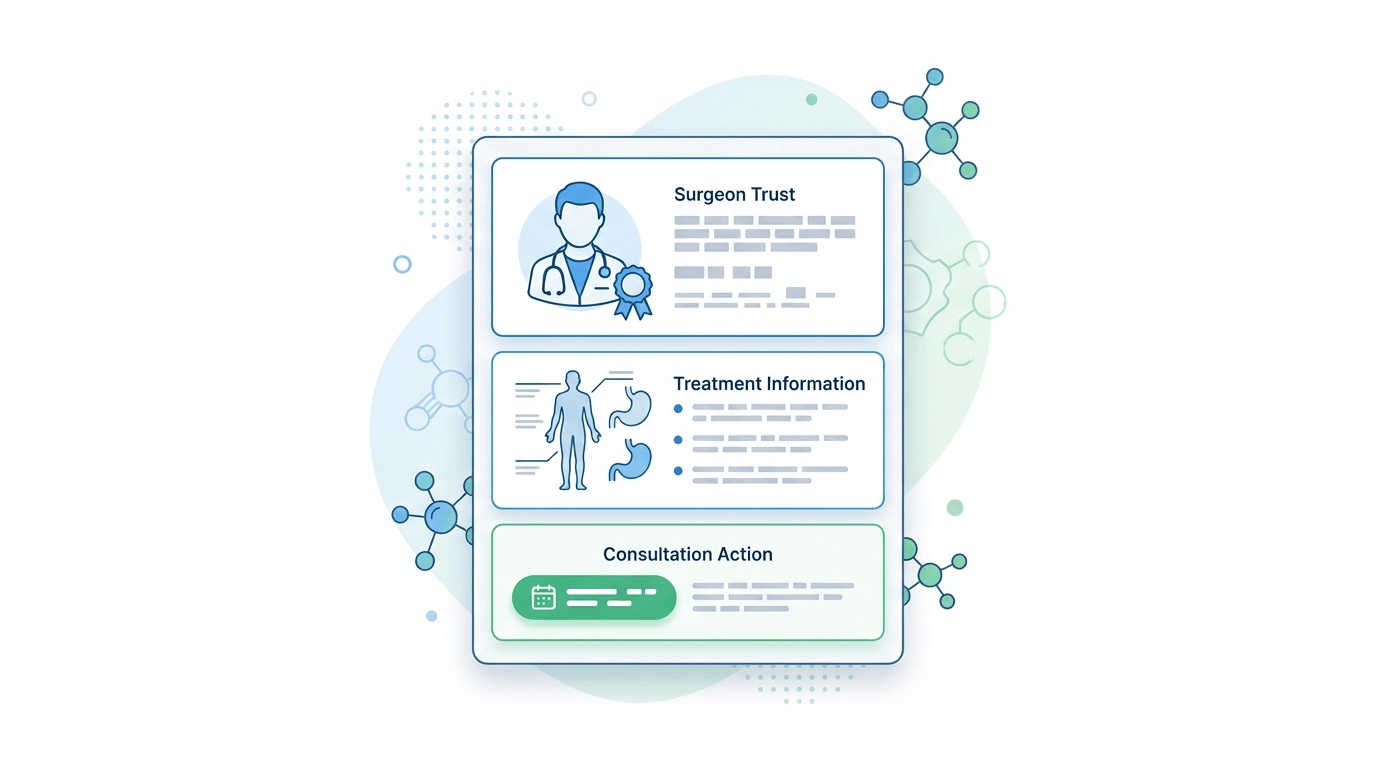
Your website is often the deciding factor between a prospective patient scheduling a consultation or continuing their search elsewhere.
Even if patients discover your practice through Google, social media, referrals, or paid advertising, they will typically visit your website before making a decision.
A high-converting ophthalmology website should do more than provide information. It should build trust, answer patient questions, and guide visitors toward taking action.
Prioritize User Experience, Patients expect a website that is easy to navigate, mobile-friendly, and fast-loading.
Make it easy for visitors to find:
- LASIK procedure information
- Surgeon credentials
- Financing options
- Patient testimonials
- Consultation scheduling
A seamless user experience helps reduce friction and keeps prospective patients engaged.
Highlight Surgeon Expertise
Trust is one of the biggest factors influencing LASIK decisions.
Showcase:
- Surgeon biographies
- Board certifications
- Years of experience
- Surgical volume
- Advanced technology used
Providing this information helps reassure patients that they are choosing a qualified and experienced provider.
Include Strong Calls to Action
Every important page should encourage visitors to take the next step. Clear calls to action help convert website visitors into qualified leads.
7. Video Marketing to Build Trust and Authority

Video marketing is one of the most effective ways to educate prospective patients and establish credibility. Because LASIK is a highly personal healthcare decision, patients often feel more comfortable moving forward when they can see and hear directly from surgeons and former patients.
Video content allows practices to build trust faster than text alone while helping patients better understand the procedure and expected outcomes.
Feature Patient Testimonials
Video testimonials often feel more authentic and persuasive than written reviews.
Consider sharing stories that highlight:
- Why patients choose LASIK
- Their experience during the procedure
- Recovery milestones
- Life after vision correction
Authentic patient experiences can significantly influence decision-making.
Share Procedure Walkthroughs
Fear of the unknown is a common barrier to LASIK consultations. Procedure walkthrough videos can explain:
- What happens before surgery
- What patients experience during treatment
- Recovery expectations
- Follow-up care
Providing transparency can reduce anxiety and improve patient confidence.
8. Reputation Management for LASIK Clinics
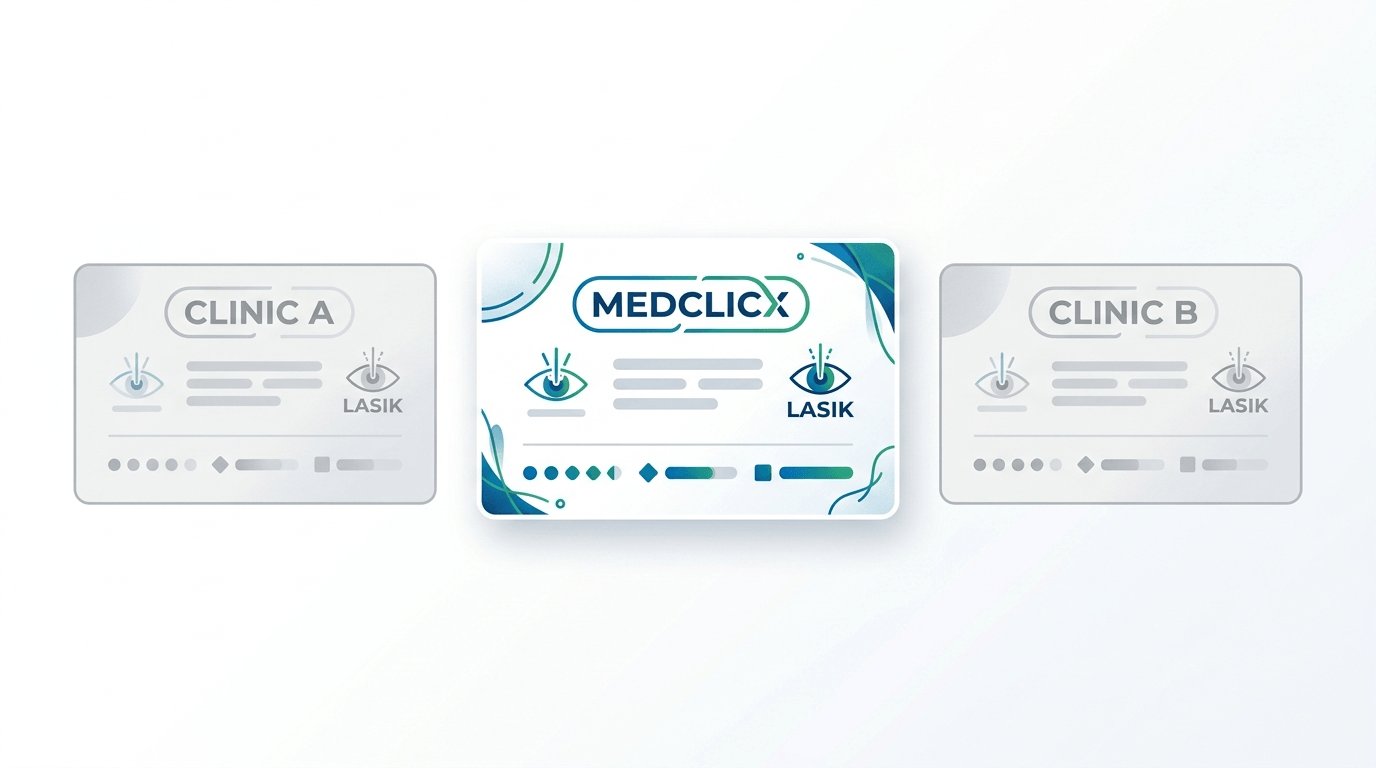
Online reviews play a major role in the LASIK decision-making process. Prospective patients often compare ratings, testimonials, and patient experiences across multiple providers before choosing a clinic.
A strong reputation management strategy helps build trust while improving both local search visibility and conversion rates.
Monitor Review Platforms
Patients may evaluate your practice across several review sites.
Regularly monitor platforms such as:
- Yelp
- Healthgrades
Active monitoring allows your team to respond quickly and maintain a positive online presence.
Address Negative Feedback Professionally
Negative reviews should be handled promptly and respectfully. When responding:
- Remain professional
- Avoid defensive language
- Acknowledge concerns
- Encourage offline resolution when appropriate
Thoughtful responses demonstrate your commitment to patient satisfaction and professionalism.
Showcase Positive Reviews
Positive reviews can be powerful trust-building assets. Feature testimonials on:
- Service pages
- Consultation landing pages
- Social media profiles.
9. Email Marketing for LASIK Patient Nurturing
Many prospective patients are interested in LASIK but are not ready to schedule a consultation immediately. Email marketing allows practices to stay connected with these leads while providing valuable information throughout the decision-making process.
A well-designed email nurturing strategy can help move prospects from consideration to consultation.
Promote Consultation Opportunities
Email campaigns can encourage action by highlighting:
Free consultations
LASIK screening events
Educational webinars
Financing promotions
Timely reminders can help convert interested prospects into scheduled appointments.
Segment Your Audience
Different patients have different concerns and motivations. Segmenting your email list allows you to deliver more personalized content based on factors such as:
- Procedure interest
- Consultation status
- Geographic location
- Engagement history
Personalized messaging often leads to higher engagement and conversion rates.
10. Optometrist (OD) Referral Network Strategy
Building strong relationships with local optometrists can be a valuable source of LASIK patient referrals. Many patients trust their eye care providers and rely on their recommendations when considering vision correction surgery.
A well-developed referral network can create a consistent stream of qualified patients while strengthening your presence within the local healthcare community.
Deliver Exceptional Patient Experiences
Referral growth often depends on patient satisfaction and provider trust. Focus on:
- Excellent clinical outcomes
- Clear communication
- Seamless referral processes
- Timely follow-up with referring providers
When patients and referral partners have positive experiences, long-term referral relationships are more likely to develop and grow.
Bottom of Funnel (Conversion Stage)
11. LASIK Landing Page Optimization
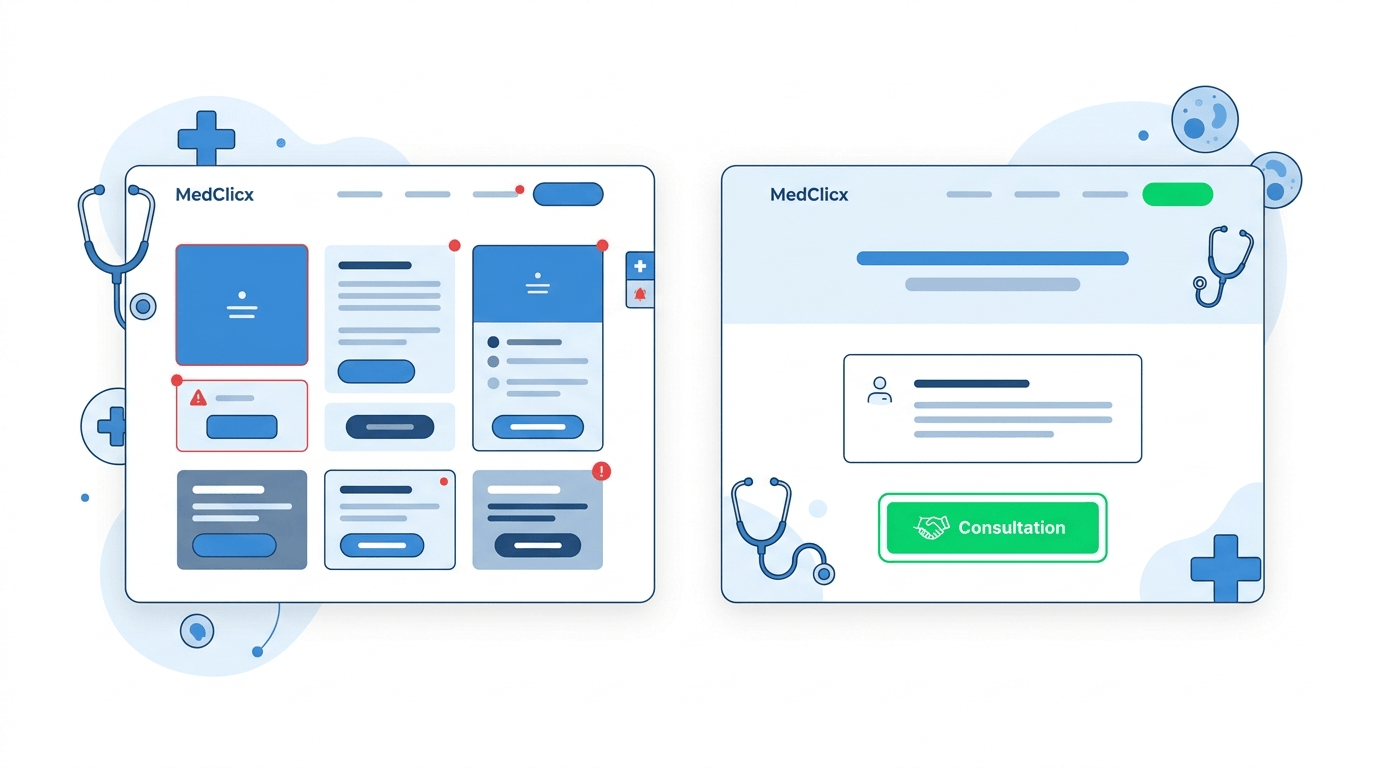
Your landing pages play a critical role in converting website visitors into consultation requests. Whether traffic comes from Google Ads, SEO, social media, or email campaigns, a well-optimized landing page can significantly improve lead generation and consultation bookings.
Create a Clear Value Proposition
Visitors should immediately understand why they should choose your practice.
Highlight key differentiators such as:
- Surgeon’s experience and credentials
- Advanced LASIK technology
- Proven patient outcomes
- Financing options
- Personalized patient care
A strong value proposition helps build confidence and encourages visitors to take the next step.
Use Strong Calls to Action
Every landing page should guide visitors toward a specific action. Calls to action should be prominently displayed throughout the page.
Optimize for Mobile Users
Many prospective patients will visit your landing pages from mobile devices.
Ensure pages are:
- Fast-loading
- Mobile responsive
- Easy to navigate
- Simple to complete forms on
A seamless mobile experience can have a significant impact on lead generation performance.
12. Retargeting Strategy for LASIK Leads
Most prospective LASIK patients do not schedule a consultation during their first interaction with your practice. Retargeting helps keep your practice visible to interested prospects as they continue researching and evaluating their options.
Re-Engage Website Visitors, Retargeting ads allow you to reconnect with users who have previously visited your website.
You can create campaigns targeting visitors who:
- Viewed LASIK service pages
- Started but did not complete a consultation form
- Visited pricing pages
- Engaged with educational content
These audiences are often more likely to convert than cold traffic.
Deliver Relevant Messaging
Retargeting campaigns should address the specific stage of the patient journey. Personalized messaging can help move prospects closer to scheduling.
13. Conversion Rate Optimization (CRO) for LASIK Practices
Conversion Rate Optimization (CRO) focuses on improving the percentage of website visitors who take meaningful actions, such as requesting a consultation or contacting your practice. Even small improvements in conversion rates can significantly increase patient acquisition without increasing advertising spend.
Simplify Lead Capture Forms
Long or complicated forms can discourage prospective patients from converting. Focus on collecting only essential information, such as:
- Name
- Contact information
- Preferred appointment time
- Basic eligibility questions
Reducing friction often leads to higher form completion rates.
Analyze User Behavior
Understanding how visitors interact with your website can reveal opportunities for improvement.
Use tools such as:
- Heatmaps
- Session recordings
- Conversion tracking
- Analytics platforms
These insights can help identify obstacles that prevent users from converting.
Continuously Optimize for Growth
CRO is not a one-time project. Regular testing, analysis, and refinement help practices maximize the value of their existing traffic and marketing investments.
By improving conversion rates across landing pages, forms, and user journeys, ophthalmology practices can generate more consultations, increase procedure volume, and achieve stronger returns from their ophthalmology marketing efforts.
Conclusion
In conclusion, effective LASIK marketing in 2026 is no longer about relying on a single channel or isolated campaigns; it requires a coordinated, full-funnel strategy that guides patients from awareness to consultation.
Ophthalmology practices that combine strong local SEO, authoritative content, AI-ready optimization, and high-intent paid advertising with reputation management, video marketing, and conversion-focused website design are best positioned to stand out in competitive markets.
When these efforts are supported by consistent patient education and strong referral networks, practices can build sustained growth rather than short-term spikes in leads.
FAQs
What is LASIK marketing for ophthalmology practices?
How do LASIK patients usually find a surgeon?
Why is local SEO important for LASIK marketing?
Are Google Ads effective for LASIK clinics?
How do reviews impact LASIK marketing success?
What type of content works best for LASIK marketing?
How does a LASIK website affect patient conversions?
What role do optometrist referrals play in LASIK marketing?
What is the most important LASIK marketing strategy overall?
Let’s increase appointment bookings
At MedClicx, we help medical practices connect with more patients.

Senior Digital Marketing Strategist &
Healthcare SEO Consultant
James Walker is a Senior Digital Marketing Strategist and Healthcare SEO Consultant at MedClicx. He specializes in helping healthcare organizations and service-based businesses grow their online presence through SEO, content marketing, local SEO, AI search optimization, (GEO), technical SEO, website optimization, and digital marketing strategies.
Over the years, James has worked on improving organic visibility, lead generation, and brand authority by combining search engine optimization, website performance, content strategy, conversion optimization, and AI-ready content. His expertise also includes Google Business Profile optimization, schema markup, user experience (UX), analytics, and modern digital marketing best practices.
At MedClicx, James writes educational articles covering SEO, content marketing, digital marketing, AI search optimization, social media marketing, web design, advertising strategies, podcasts, and online business growth. His goal is to simplify complex marketing concepts and help businesses make data-driven decisions that generate sustainable long-term results.
- James Walker

- James Walker

- James Walker
- James Walker